
Happy Birthday Google: Google’s story feels like the ultimate American dream. Tech giant is celebrating its 27th birthday with a special Doodle that takes users on a nostalgic trip back to its beginnings. What started in a small garage in Menlo Park has grown into the world’s most popular search engine, used by billions of people every day. For many in the United States, the Doodle served as a fun reminder of Google’s journey—from a tiny startup in California to a global tech giant. From Search and Gmail to Android and AI innovations like Bard and Gemini, Google’s story highlights the fast-changing world of technology. Happy Birthday Google Google was founded in September 1998 by Larry Page and Sergey Brin, starting as a research project in a small garage in Menlo Park, California. Today, it is part of everyday life, whether you are searching for the best pizza in New York, checking flight details to Los Angeles, or looking up a football score. Google is no longer just a search engine. It also includes Gmail, YouTube, Google Maps, Android, and even Google AI. This year’s birthday Doodle not only looks back but also connects the past with the future. Add Zee News as a Preferred Source The Math Behind Google’s Name Google is a clever play on the word ‘Googol,’ a mathematical term for the number 1 followed by 100 zeros. The term ‘Googol’ was coined by Milton Sirotta, the nephew of mathematician Edward Kasner. Happy Birthday Google: How Spelling Mistake Shaped The Search Giant Google was not always called Google. When Sergey Brin and Larry Page, two PhD students at Stanford University, first thought of launching a search engine, the name Google was not even considered. The project was originally called BackRub. In 1997, the team began brainstorming a new name. They came up with Googolplex, a number so large it is nearly impossible to imagine, one followed by a Googol of zeros. They decided to use the shorter term Googol. Sean Anderson, another Stanford graduate involved in naming, searched online to see if the domain was available. By mistake, he typed Google instead of Googol. The name was available, Larry Page liked it, and google.com was registered within a few hours. In short, Google is a happy accident, a misspelled mathematical term that has grown into a global phenomenon. Google Future At 30 The Google’s 27th birthday Doodle is not just a look back it also points to the future. With AI smart devices and new innovations emerging every year it will be exciting to see where Google will be by its 30th birthday.
Indigenous 4G Stack, 97,500 Swadeshi BSNL Towers To Boost Digital Connectivity For All: Jyotiraditya Scindia
New Delhi: Union Communications Minister Jyotiraditya Scindia on Saturday said that Prime Minister Narendra Modi is set to inaugurate India’s fully indigenous 4G stack and more than 97,500 Swadeshi BSNL towers to bolster digital connectivity across the country. This rollout will ensure 100 per cent 4G saturation nationwide, strengthening digital connectivity for every citizen, said the minister in a post on X. “In a landmark moment for Bharat’s telecom sector, and celebrating 25 glorious years of BSNL, PM Modi will inaugurate India’s fully indigenous 4G stack and more than 97,500 Swadeshi BSNL towers across Odisha, Andhra Pradesh, Uttar Pradesh, Maharashtra, Rajasthan, Assam, Gujarat and Bihar,” Scindia said. These initiatives represent a giant leap towards Atmanirbhar Bharat, positioning India as a global leader in telecommunications, he added. Referring to an article by Scindia, PMO India said in a post on X that BSNL’s 4G stack embodies the swadeshi spirit. Add Zee News as a Preferred Source “With over 92,000 sites connecting 22 million Indians, it reflects India’s journey from dependence to confidence, driving employment, exports, fiscal revival and advancing the vision of Aatmanirbhar Bharat,” PMO said in the post. PM Modi is set to lay the foundation stone and inaugurate development projects worth over Rs 60,000 crore in Jharsuguda, Odisha. The projects cover key sectors such as telecommunications, railways, higher education, healthcare, skill development, and rural housing. Modi will also address a public gathering on the occasion. Scindia further stated that it is the result of the self-reliant India resolve of PM Modi that today, “India has developed an indigenous 4G stack in just 22 months.” “This indigenous stack of BSNL demonstrates that India is now capable not only of providing services but also of developing technology and is rapidly advancing towards becoming a global telecom leader,” the minister noted. “This is a new era for the telecom sector,” Scindia said earlier. “India now joins the elite group of countries producing telecom equipment, alongside Denmark, Sweden, South Korea, and China. India becomes the fifth nation in this category.” The minister revealed that the Prime Minister will also unveil India’s 100 per cent 4G network under the Digital India Fund, connecting around 29,000 to 30,000 villages through a mission-mode project. Telecom Secretary Neeraj Mittal earlier highlighted that India is the world’s largest telecom market, with the number of 5G users projected to surge from the current 300–400 million to 770 million by 2028. He credited the development of this indigenous 4G stack to the policies of Prime Minister Modi.
How Gen Z Is Forcing Smartphone Brands To Rethink AI, Design, And Pricing: Expert Sheds Light on Critical Aspects | Technology News
Gen Z Smartphone In India: Smartphones today are much more than just tools for calling or texting. They work like personal assistants, entertainment devices, and even mini studios for creating photos and videos. For India’s Gen Z, smartphones play a crucial role in daily life. Features like AI-powered cameras that make every picture look better and smart batteries that adjust to gaming or streaming habits are designed to match their fast and busy lifestyle. Gen Z wants modern features but at affordable prices, so brands are working hard to provide both quality and value. Companies are also adding stronger security, stylish designs, and better displays. With tough competition in the market, smartphone makers are focusing on building devices that are not only useful but also smart partners in everyday life. In the email interaction, Arijeet Talapatra, CEO of TECNO India, shares his insights on how brands are combining premium features with fair pricing for Gen Z, keeping designs trendy, and using AI to make smartphones smarter and more engaging. Add Zee News as a Preferred Source AI In Core Smartphone Features AI today isn’t just an add-on—it’s the invisible engine making smartphones smarter. For cameras, it adjusts lighting, colors, and even skin tones in real time so that young users can simply click and share without worrying about edits. On the battery side, AI learns daily habits—like when you game, stream, or multitask—and allocates power accordingly. This means longer usage without compromising performance. AI also strengthens phone security by making face and fingerprint recognition harder to trick and by adding smart features like spam call detection and automatic data masking. For a generation that values both self-expression and privacy, these features make smartphones more reliable and secure. In short, AI is helping phones become smarter, enabling cameras to think, batteries to learn, and security to work quietly in the background. Balancing Pricing With Premium Features Gen Z wants premium, but they also want value. Brands can achieve this by forming strong partnerships with chipset and camera makers, using local manufacturing to bring down costs, and tailoring product lines to specific needs—be it gaming, photography, or productivity. In fact, Gen Z contributed to about 44% of India’s smartphone sales in 2024, making them a decisive force in shaping the market. They are aspirational, tech-savvy, but also highly cost-conscious. For them, the challenge for brands is clear: deliver premium experiences at accessible prices. This balance can be achieved through three levers: Building strong partnerships with chipset makers, camera sensor firms, and AI pioneers to unlock access to next-gen technology at scale. Leveraging local manufacturing and efficient scaling to reduce duties and logistics expenses. Diversifying product lines to tailor models to specific requirements, such as gaming, photography, or AI productivity tools. At its core, the key is finding the right balance between efficiency and focus—forming strong partnerships, scaling smartly, and designing with intention to deliver innovation to a generation seeking more value for their money. AI-Powered Smartphone Cameras Most young Indians are into creating videos and content daily, and AI cameras now do the heavy lifting—adjusting light, color, and skin tones in real time so photos are instantly social-ready. Video stabilization, portrait modes, and night shots feel professional without extra effort. With 89% of Indian buyers ranking camera quality as a top priority, expectations have grown beyond basic functionality. Even budget smartphone users now look for advanced features like night mode, portrait effects, and AI-powered enhancements. (Also Read: Perplexity Rolls Out Comet AI Browser And Email Assistant In India For Windows and Mac Users- Details) To meet these evolving needs, AI-powered cameras now include real-time scene detection, lighting and color optimization, skin tone enhancement, and automatic exposure adjustments. Features like backdrop removal, generative expansion, and voice-guided filters allow creators to fine-tune content before sharing. Real-time video stabilization and night composite mode deliver results comparable to professional setups. In essence, AI supports the fast-paced, content-driven lifestyles of Gen Z by enabling instant capture, edit, and upload workflows. AI-Driven Advancements In Battery Efficiency Battery life is now as crucial as performance, especially for gamers and content creators who push their devices to the limit. In India, users spend an average of five hours a day on smartphones, nearly 70% of which goes to social media, gaming, and video streaming. AI-powered systems automatically allocate power based on usage patterns, reducing background energy consumption while maintaining peak performance for demanding tasks like video editing or gaming. Adaptive refresh rates, powered by AI, shift between low Hz for simple tasks and higher Hz for smoother gameplay—saving power without sacrificing experience. Similarly, AI-driven “smart charging” algorithms avoid overcharging and heat buildup, gradually improving battery lifespan. Together, these advancements ensure that even heavy users can enjoy uninterrupted experiences without constantly reaching for a charger. Smartphone Security and Privacy The smartphone industry is making major improvements to address privacy concerns, especially for younger users. Companies are adding advanced biometric authentication methods, such as AI-enhanced facial recognition and in-display fingerprint sensors, to make access both easy and secure. Machine learning now detects spoofing attempts, ensuring that systems distinguish real users from unauthorized ones. Data security is also evolving—organizations increasingly process information on-device, storing biometric data in secure hardware enclaves to minimize breach risks. Privacy-by-design approaches empower users to control their own data. On top of this, AI-driven threat detection systems spot and mitigate risks in real time, boosting user confidence. Together, these advancements show the industry’s commitment to balancing security with seamless usability. Balancing Design, Display, and Functionality Smartphone makers are now blending sleek, aesthetic design with high-performance features to meet Gen Z’s expectations. Beyond premium materials and bold colors, slim and curved builds improve both style and comfort. High refresh rate displays (120Hz–144Hz) are becoming standard, offering smoother scrolling and better responsiveness. To maintain energy efficiency, manufacturers are integrating adaptive brightness and LTPO AMOLED panels, which dynamically adjust refresh rates from as low as 1Hz
PM Modi To Unveil BSNL’s ‘Swadeshi’ 4G Network On September 27 | Technology News
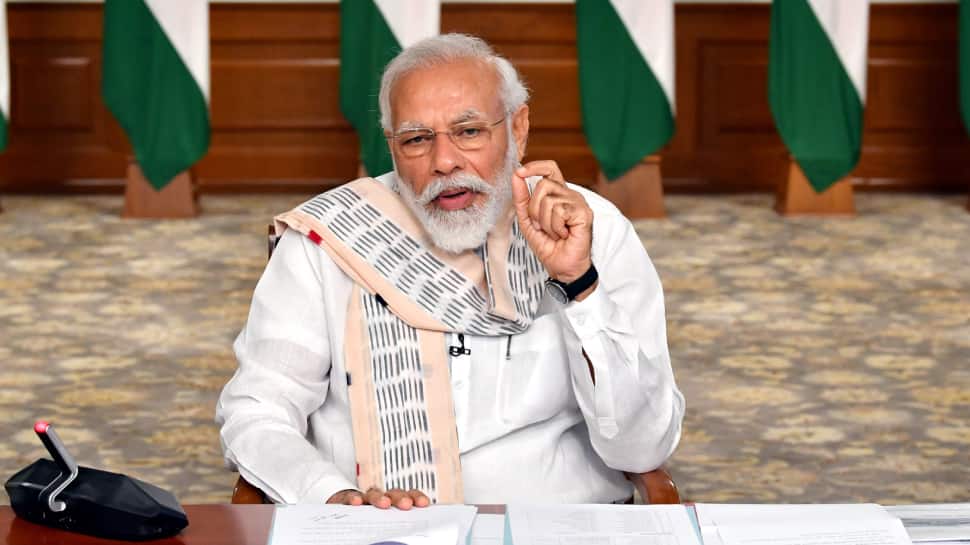
New Delhi: Prime Minister Narendra Modi will inaugurate the state-run telecom company BSNL’s fully indigenous 4G network on September 27, Union Telecom Minister Jyotiraditya Scindia said on Friday. With this milestone, India will join the league of select nations capable of building and manufacturing their own telecom networks and equipment. Speaking at a pre-launch event, Scindia said, “Tomorrow will be the day when the world will see India not just as a service provider but as a complete 4G stack developer and equipment manufacturer.” He added that India’s telecom network will be cloud-based, future-ready, and easily upgradeable to 5G. Scindia announced that BSNL’s 4G stack will be rolled out across nearly 98,000 sites nationwide on September 27, with simultaneous launches in several states. Add Zee News as a Preferred Source The Prime Minister will inaugurate the network from Jharsuguda in Odisha. “This is a new era for the telecom sector,” Scindia said. “India now joins the elite group of countries producing telecom equipment, alongside Denmark, Sweden, South Korea, and China. India becomes the fifth nation in this category.” The minister further revealed that the Prime Minister will also unveil India’s 100 per cent 4G network under the Digital India Fund, connecting around 29,000 to 30,000 villages through a mission-mode project. Telecom Secretary Neeraj Mittal highlighted that India is the world’s largest telecom market, with the number of 5G users projected to surge from the current 300–400 million to 770 million by 2028. He credited the development of this indigenous 4G stack to the policies of Prime Minister Modi. Sharing his views with IANS, BSNL’s UP East Chief General Manager Arun Kumar Garg said, “The launch of BSNL 4G is a matter of national pride since the technology behind it is entirely indigenous, developed by C-DOT, Tejas Networks, and TCS.”
Apple iPhone 17 Vs iPhone Air – Camera, Battery And Display | Technology News
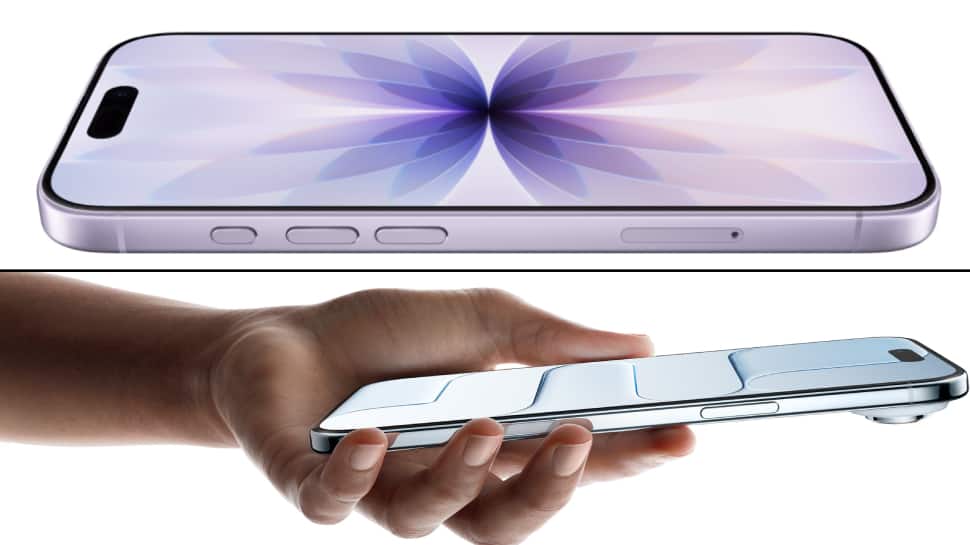
Apple iPhone 17 Vs iPhone Air: The Apple iPhone 17, priced from Rs 82,900 and the iPhone Air, priced from Rs 1,19,900, have significant differences across the camera, battery, and display. While iPhone 17 seems to be a more complete all-rounder, the iPhone Air focuses on a slim design and misses out on a few aspects. Here, in this article, we have compared the camera, battery, and display of both phones. iPhone 17 Vs iPhone Air Camera Comparison iPhone 17 comes with a dual rear camera setup with 48MP main (f/1.6) and 48MP Ultra Wide. It offers 2x optical-quality zoom in/out and digital zoom up to 10x. it comes with night mode, deep fusion, and smart HDR 5. It supports 4K Dolby Vision up to 60fps, Slow-motion at 1080p and 240fps for video. At the front, iPhone 17 gets an 18MP center stage camera. Add Zee News as a Preferred Source On the other hand, iPhone Air gets a single 48MP fusion rear camera (f/1.6), no Ultra Wide or Telephoto lens. 2x telephoto achieved via in-sensor crop (no dedicated lens). It offers 4K Dolby Vision video up to 60fps. Similar to the iPhone 17, it also gets an 18MP Center Stage front camera. iPhone 17 Vs iPhone Air Battery Comparison With a 3,692mAh battery, the iPhone 17 gives up to 30 hours of video playback (offline), while the iPhone Air, equipped with 3,149mAh, typically manages up to 27 hours. When it comes to charging, the 17 supports wireless charging up to 25W, whereas the Air is capped at 20W, making the 17 slightly faster when topping up. The iPhone Air can be charged up to 50% in 30 minutes with a 20W adapter or higher (available separately), while the iPhone 17 takes 20 minutes to charge up to 50% using a 40W adapter or higher. iPhone 17 Vs iPhone Air Display Comparison iPhone Air offers a slightly larger display at 6.5 inches vs 6.3 inches for the iPhone 17. Both have super retina XDR OLED panels with 120Hz (with ProMotion in iPhone 17), always-on capability, and 3000 nits peak brightness, but the Air’s thin bezel design maximizes screen footprint.

iPhone 17 Series Sale Draws Long Queues Outside Apple Stores In Bengaluru | Technology News
The iPhone lovers formed long queues outside the Apple Store in Bengaluru’s Phoenix Mall of Asia as the company commenced the sale of its new iPhone 17 series in India today. The tech giant Apple unveiled its brand-new iPhone 17, iPhone 17 Pro Max, AirPods 3, Watch Series 11, Watch SE3, and Watch Ultra 3 on September 9, 2025. As per visuals, people were seen standing in queues outside Apple Stores, waiting to buy the new iPhone 17 series. Tech lovers were also seen checking out the new features of the iPhone 17 inside the store. A potential iPhone buyer, Gauri Shankar from Bengaluru, expressed his excitement about the new Apple phone series, saying that he is now eagerly waiting for new and updated gadgets from Apple, especially the iPhone 18. Add Zee News as a Preferred Source “I have been buying iPhones for many years. This was a great experience. This is my first time in an Apple Store. I am very excited and now I am waiting for the iPhone 18,” said Gauri Shankar. Long queues of buyers were also seen outside Apple’s flagship store in Bandra-Kurla Complex (BKC) in Mumbai today. As per visuals, two long queues were formed outside Mumbai’s BKC to ensure a smooth entry of customers at the Apple flagship store. While many were eagerly waiting for their chance to enter Apple’s flagship store in BKC, others expressed disappointment with the lack of security for customers outside the store. Mohan Yadav, one of the potential iPhone buyers who came to Mumbai from Ahmedabad to buy Apple’s new phone, said that he had been waiting for his turn since 5 am. He claimed that due to a lack of security, people often cut the queues, leading to chaos at the entrance. “I have been waiting since the morning and standing in a queue, but the security here has no responsibility. People are breaking lines. Those standing behind don’t get the chance to buy the product due to a lack of responsibility among the security officials. I have been here since 5 am,” Yadav told ANI. Bayan Kapoor, a resident of Mumbai, also expressed his excitement for the new iPhone 17, saying that the reviews of the phone are good and he is eager to buy one if possible. “Apple fever is quite high among the public. The reviews of the phone are good. I just want to buy it now, provided I get a chance. I don’t know if I can buy it or not due to the large crowd,” said Bayan Kapoor. A similar rush was seen outside the Apple outlet at Select Citywalk Mall in Saket, New Delhi, where buyers waited overnight to get their hands on the new iPhone models. People were seen sitting outside Apple Stores, waiting for the gates to open so they could be among the first to buy the latest iPhone series. Apple has announced the iPhone 17 Pro and Pro Max, the top models in its new iPhone 17 lineup, alongside the regular iPhone 17 and the all-new iPhone Air. The Pro returns to an aluminium build, adds the biggest battery of any iPhone yet, and boasts what Apple is calling a “full-width camera plateau” on the back, as per the live event broadcast on Apple’s website and YouTube channel on September 9. The iPhone 17 Pro starts at 1,099 USD, with the Pro Max starting at 1,199 USD, both with 256GB of storage, according to The Verge.

India Becomes World’s 3rd Largest Tech Startup Ecosystem With $7.7 Bn Of Funding In 2025: Report | Technology News
New Delhi: India climbed to third position globally in terms of funding for tech startups, trailing only the United States and the United Kingdom but ahead of Germany and France, a report said on Thursday. Funding for Indian technology startups declined 23 per cent year-on-year to $7.7 billion in the first nine months of 2025, a report from market intelligence platform Tracxn said. This sector received $10.1 billion worth of funds in the corresponding period in 2024 and $8.3 billion in 2023. “India climbing to the third rank globally reflects the resilience and adaptability of our startup ecosystem. What we are witnessing is a clear shift toward maturity, with rising acquisitions, steady IPO activity, and continued unicorn creation providing balanced exit pathways for founders and investors,” said Neha Singh, Co-Founder of Tracxn. Sectors such as enterprise applications, retail, and transportation and logistics technologies are driving long-term investor confidence and fuelling India’s digital transformation, she added. Seed-stage funding witnessed a total of $727 million, a 39 per cent dip from the previous year. Early-stage funding touched $2.7 billion, marking a 10 per cent decline, while late-stage funding dropped 27 per cent to $4.3 billion, the report said. Add Zee News as a Preferred Source The count of rounds exceeding $100 million decreased to 10 from 16 last year and 15 in 2023, while the median round size doubled to $1.5 million. Enterprise applications topped sectoral funding with $2.3 billion, followed by retail at $2 billion and transportation and logistics technology at $1.79 billion, it noted. In terms of exits, 110 acquisitions took place during 2025, a 15 per cent increase over 96 from the corresponding period in the previous year. Enterprise applications continued to lead acquisition activity, driven by demand for cloud and AI solutions. India added four unicorns in 2025, raising the total to 122, the report noted. Bengaluru-based startups continued to dominate, accounting for 31 per cent of total funding, followed by Delhi at 18 per cent.

Nothing’s CMF To Become Indian Brand; Announces $100 Million JV With Optiemus | Technology News
New Delhi: Smartphone maker Nothing has given its affordable sub-brand CMF a big push by turning it into an independent subsidiary with India as its global base for operations, research, and manufacturing, the company said on Thursday. Alongside this move, the company has announced a $100 million joint venture with Indian electronics manufacturer Optiemus Infracom Limited. The partnership is expected to create more than 1,800 jobs in India over the next three years, as per the official statement. With this collaboration, India will not only serve as the headquarters for CMF’s manufacturing but will also play a central role in transforming the country into a global hub for smartphone production and exports. Nothing has already invested over $200 million in India — highlighting the country’s importance in its growth strategy. CMF, which was launched in 2023, has quickly made a mark in the budget smartphone and wearables segment. Add Zee News as a Preferred Source The phones are priced under $200, a sweet spot in India where more than 42 per cent of all phones sold in the second quarter of 2025 fell in the $100–$200 price range, according to IDC data. Carl Pei, CEO of Nothing, said the joint venture marks a significant milestone in building CMF into India’s first truly global smartphone brand. “India will play a key role in shaping the future of the global smartphone industry. With our end-to-end capabilities, we are uniquely positioned to build CMF into a global brand, and our joint venture with Optiemus is a key step in that journey,” he said. Optiemus, which has deep expertise in electronics manufacturing, will bring its engineering and production strengths to the partnership. Ashok Gupta, Executive Chairman of Optiemus, said the collaboration reflects the growing strength of the Indian ecosystem. “Global brands choosing India to build is a testament to the vision of Make in India and Atmanirbhar Bharat. This partnership goes beyond high-tech manufacturing – it will empower us to create export-ready products designed in India, showcasing the innovation and talent of our people to the world,” he said.

Smartphone Exports Rise 39 Per Cent In August Despite Claims Of Decline: ICEA | Technology News
New Delhi: Smartphone exports from India grew strongly in August, rising 39 per cent to about $1.53 billion compared to $1.09 billion in August 2024, according to new data from the India Cellular & Electronics Association (ICEA) on Wednesday. The industry body clarified that contrary to recent claims of a slowdown, exports have in fact surged, especially to the United States. ICEA highlighted that shipments to the US more than doubled in August, jumping 148 per cent from $388 million last year to $965 million this year. For the first five months of FY26, exports to the US reached $8.43 billion, a sharp rise of 193 per cent over the $2.88 billion recorded in the same period last fiscal. This figure has already touched nearly 80 per cent of the total exports to the US during the whole of FY25. Add Zee News as a Preferred Source Overall, India’s smartphone exports in April–August 2025 hit a record Rs 1 lakh crore, or around $11.7 billion. This marks a 55 per cent growth compared to $7.6 billion in the corresponding period last year. Responding to commentary that suggested a fall in exports, ICEA said such conclusions were based on selective monthly comparisons without considering sector-specific nuances. “Oversimplification of trade data — and worse, inferences based on monthly comparisons — is misleading and avoidable. It’s important that subject matter experts are consulted before drawing sector-specific conclusions,” said Pankaj Mohindroo, Chairman of ICEA. The association explained that August and early September are typically weak months for exports due to several factors. Companies prepare for new model launches in late September and October ahead of the festive season, which leads to lower demand for existing models and planned retrofitting of factories. In addition, domestic demand during festivals like Diwali diverts production toward the Indian market, with exports picking up again later in the year to meet global holiday season demand in the West. Despite these seasonal fluctuations, ICEA stressed that smartphones have been India’s best-performing export sector in recent years. Since the launch of the Production-Linked Incentive (PLI) scheme, smartphones have risen from being India’s 167th ranked export in FY15 to the country’s largest export category by FY25.

India Leads Global Charge In AI Adoption, 77% Knowledge Workers Use Generative AI Daily
New Delhi: As many as 77 per cent of Indian knowledge workers now use generative AI daily, a significant rise from 46 per cent in 2024, outpacing counterparts in regions including the US (59 per cent), Germany (54 per cent), France (47 per cent), and Australia (45 per cent), a report said on Wednesday. Even during the early stages of AI adoption, India’s workforce is seeing significant individual productivity benefits. Indian professionals are saving an average of 1.3 hours a day using AI – compared to a global average of just under one hour, Atlassian, a leading provider of team collaboration and productivity software, said in a report. The way Indian business leaders use AI models has had an immense impact on their teams. “Whose managers model AI use are four times more likely to integrate it throughout their daily workflows and three times more likely to become ‘strategic AI collaborators’, meaning they use AI as a team of expert advisors who can enhance decision making,” the report said. Add Zee News as a Preferred Source “India has become one of the fastest-growing regions for everyday AI use in the workplace. But our research shows that ramping up individual productivity with AI isn’t necessarily translating into real business impact. The next wave of value comes from using AI to connect knowledge, coordinate work, and align teams – bridging silos and driving action on shared goals – we must see knowledge workers shift to become strategic AI collaborators,” said Molly Sands, Head of the Teamwork Lab at Atlassian. Organisations that move beyond isolated efficiency gains, of simple AI users, and focus on AI-powered collaboration will unlock the full potential of their people and resources, he added. While Indian workers experienced an average 33 per cent productivity boost from using AI, only 3 per cent of executives globally see AI driving transformational improvements in efficiency, innovation, or complex problem-solving. The report highlighted that a critical gap between personal productivity and true team coordination, with leaders needing to embed effective AI teamwork practices to ensure long-term gains. With 86 per cent of Indian professionals supporting AI experimentation, compared to 74 per cent last year, India leads globally in creating a “safe space” for AI, compared to 75 per cent in the US and 66 per cent in France. Only 6 per cent of Indians abandon AI when results fall short, down from 12 per cent in 2024. Instead of giving up, Indians are more likely to refine prompts (30 per cent) or provide examples (33 per cent) to AI, the report said.