
New Delhi: India’s fintech ecosystem has witnessed the entry of over 11,000 new players in the past decade, which have raised nearly $200 billion in total capital, but a smaller number of platforms are emerging as dominant nodes, a report said on Tuesday. India’s fintech sector is at a critical inflexion point, influenced by open digital public infrastructure, progressive regulation, and a vast underserved consumer base, the report from Beams Fintech Fund and Alvarez & Marsal said. The report identified a dual dynamic driving the market. Interoperable frameworks like UPI, Aadhaar, and the Account Aggregator ecosystem have facilitated deep inclusion and rapid innovation, but advantages in data, distribution, and compliance are enabling a smaller number of platforms to become dominant players, it said. Add Zee News as a Preferred Source This duality can be seen even in the lending segment, which is the largest recipient of fintech funding, receiving around 38 per cent of total funding, with $7.2 billion raised since 2020. The report noted that the demand for seamless, digital-first personal credit fuels growth in this segment. “Capital continues to flow into areas where technology is reshaping financial services, from embedded finance and compliance-related platforms to B2B SaaS models that power risk, underwriting and integration,” said Sagar Agarvwal, Founder & Managing Partner, Beams Fintech Fund. India remains the world’s largest cross-border remittance market, with inflows of $33 billion in Q1 FY26 alone, creating tailwinds for cross-border payment tech platforms, the release further said. Co-lending and distribution tie-ups are becoming mainstream as banks and NBFCs partner with fintech originators, while super-apps channel credit for partner lenders Disbursements by fintech NBFCs have grown by a CAGR of 88 per cent between FY22 and FY24 to reach $17 billion, outpacing traditional players on growth by leveraging technology, alternative data, and digital-first distribution, it noted.

NPCI Introduces UPI Payments With Fingerprint And Face Authentication; No PIN Needed From October 8 | Technology News
UPI Payments Biometric Authentication India: The National Payments Corporation of India (NPCI) introduced biometric authentication for UPI payments at the Global Fintech Fest on October 7 in Mumbai. This new system allows authentication to be done on-device, replacing the traditional PIN that has been used since UPI was launched in April 2016. NPCI’s latest offerings include UPI with on-device biometric authentication for a secure and user-friendly alternative to PINs, Aadhaar-based face authentication for setting or resetting UPI PINs, UPI Lite support on smart glasses, and a new mode for cash withdrawal through micro ATMs at UPI Cash Points, such as business correspondent touchpoints. Notably, the facility will be made available to customers who choose to opt in, giving them control over their preferred mode of authentication. The new offering was launched by DFS Secretary M. Nagaraju. The on-device authentication for UPI enables customers to authorize payments directly through their smartphone’s built-in security features, such as fingerprint or face unlock, as an alternative to manually entering the UPI PIN. Add Zee News as a Preferred Source At the @GffFintechfest 2025 today, the Secretary, Department of Financial Services, Ministry of Finance, Shri M. Nagaraju, IAS, announced the launch of three new digital feature offerings: – UPI with On-Device Biometric Authentication – A seamless, secure, and user-friendly… pic.twitter.com/H2AZz4gKbA — NPCI (@NPCI_NPCI) October 7, 2025 It aims to make payments faster and more secure by reducing the need for repeated PIN entries. Each transaction is independently verified by the issuing bank using robust cryptographic checks, ensuring the highest level of safety while keeping the experience simple and seamless. Reset UPI PIN Directly Within UPI Apps Aadhaar-based face authentication in UPI offers users a new and secure way to set or reset their UPI PIN directly within UPI apps. Until now, creating a UPI PIN required entering debit card details or going through Aadhaar OTP verification. With Aadhaar-based face authentication, onboarding becomes faster, simpler, and more inclusive, especially for first-time users, senior citizens, and those without easy access to cards. Manage Multiple OTPs Or Card Details The solution leverages UIDAI’s FaceRD app for Aadhaar-based facial verification, eliminating the need to manage multiple OTPs or card details, thereby enhancing both convenience and security. This feature will later be extended to transactions requiring additional authentication. The DFS Secretary also introduced UPI as a new mode for cash withdrawals through micro ATMs at UPI Cash Points. This launch marks an important step toward making the cash withdrawal process more inclusive and user-friendly by leveraging UPI’s versatile digital payment ecosystem.

Smartphones Launching In October 2025: From OnePlus 15 To iQOO 15; Check Expected Camera, Display And Other Features | Technology News
List Of Smartphones Launching In October 2025: As Karwa Chauth, Diwali, and Chhath Puja are just a few weeks away, the smartphone industry is gearing up for an eventful October 2025, with major brands including OnePlus, Vivo, Realme, and Xiaomi preparing to unveil their next-generation devices. These smartphones promise cutting-edge features such as advanced AI integration, superior camera systems, and lightning-fast processors — perfect for power users seeking the ultimate mobile experience. Users can expect stunning displays, long-lasting batteries, and seamless 5G connectivity that could redefine premium Android flagships. With leaks and teasers already building hype, these launches highlight the fierce competition in China’s tech scene and its growing influence on global markets. iQOO 15 Specifications (Expected) Add Zee News as a Preferred Source iQOO is also set to unveil its flagship model this month, designed with a strong focus on performance and gaming. The iQOO 15 is expected to feature a 6.8-inch 2K LTPO AMOLED display with a 144Hz refresh rate, delivering an ultra-smooth visual experience. Under the hood, it will likely be powered by Qualcomm’s Snapdragon 8 Elite Gen 5 chipset, paired with 12GB of RAM for seamless multitasking and gaming. The device is rumoured to pack a 7,000mAh battery for extended usage, while an RGB lighting design may further enhance its gaming-centric appeal. Vivo X300 Pro Specifications (Expected) Vivo has confirmed that the X300 series will launch in India on October 13. The Vivo X300 Pro is expected to come with a 6.31-inch display and MediaTek’s Dimensity 9500 processor, paired with up to 12GB of RAM and 256GB of storage. It may also feature a 200MP periscope telephoto camera, highlighting Vivo’s continued focus on pushing the boundaries of mobile photography. (Also Read: Vivo V60e Launched In India With 50MP Eye Auto-Focus Group Selfie Camera – Check Display, Battery, Price, And Availability) OnePlus 15 Specifications (Expected) OnePlus is set to kick off the month with the global debut of its latest flagship, the OnePlus 15. The smartphone will reportedly launch first in China, powered by Qualcomm’s Snapdragon 8 Elite Gen 5 processor coupled with 12GB of RAM and 256GB of internal storage. It is expected to feature a 6.78-inch LTPO OLED display with a 165Hz refresh rate, ensuring a smooth and vibrant visual experience. On the photography front, the OnePlus 15 may sport a triple rear camera setup with 50MP sensors, while a 7,000mAh battery with 120W fast charging support is likely to keep it powered throughout the day. Xiaomi 17 Specifications (Expected) Xiaomi has confirmed that the Xiaomi 17 will launch in India soon, following its debut in China. The smartphone is powered by Qualcomm’s Snapdragon 8 Elite Gen 5 processor and comes with the company’s AI Engine for advanced on-device AI tasks. The Chinese variant features a 6.3-inch 1.5K OLED display and a 7,000mAh battery, and the Indian model is expected to offer similar specifications. Realme 15 Pro 5G Game of Thrones Edition (Expected) Realme is gearing up to launch a special edition of the Realme 15 Pro 5G later this month. Called the Game of Thrones Edition, this variant will feature unique design elements inspired by the hit TV series. The standard model includes a 6.8-inch 1.5K AMOLED display, Snapdragon 7 Gen 4 processor, dual 50MP cameras, and a 7,000mAh battery with 80W fast charging. It also boasts IP66, IP68, and IP69 ratings, offering strong protection against dust and water. (Also Read: Vivo V60 5G Review: Slim Phone With Big Battery And Pro Camera; Check 5 Pros And 3 Cons) Verdict: October’s smartphone lineup, featuring the iQOO 15, Vivo X300 Pro, OnePlus 15, Xiaomi 17, and Realme 15 Pro 5G Game of Thrones Edition, promises a powerful month for Android flagships. Most of these smartphones are coming with the Snapdragon 8 Elite Gen 5 processor and 7000mAh batteries, offering top performance in gaming, photography, and AI features.

India To Host Global Research Symposium On AI And Its Impact In Feb 2026 | Technology News
New Delhi: The government on Tuesday announced that the ‘Research Symposium on AI and Its Impact’ will take place on February 18, 2026, at Bharat Mandapam in the national capital. The event will be held alongside the India-AI Impact Summit 2026, which is scheduled for February 19–20, 2026. The Research Symposium aims to bring together top researchers and practitioners from India, the Global South, and other countries to discuss the impact of artificial intelligence (AI) on society and the economy. It will serve as a platform to share new findings, exchange ideas, and promote collaboration between research, policy, and real-world applications. The programme will include high-level plenary sessions featuring eminent Indian and international researchers, an International Research Showcase with short talks by global AI leaders, and a Global South Showcase that will highlight innovative research from developing regions, including India. Add Zee News as a Preferred Source Researchers from the Global South whose papers have been presented at leading AI conferences in 2024 or 2025 are invited to submit poster proposals for the Global South Showcase. The deadline for submissions is October 31, 2025, and the final posters must be submitted by January 5, 2026. More details and submission guidelines are available on the official website: [impact.indiaai.gov.in/research-symposium](https://impact.indiaai.gov.in/research-symposium). Speaking about the event, Abhishek Singh, Additional Secretary (MeitY), CEO (IndiaAI), and DG (NIC), said, “The Research Symposium will serve as a bridge between research, policy, and practice. By bringing together diverse perspectives, it will help shape actionable insights that align with India’s vision of AI for All, AI for Good, and AI for the World.” Prof. P.J. Narayanan from IIIT Hyderabad also highlighted the importance of the event, saying, “The Research Symposium gathers key global and Indian research leaders to share work and build future partnerships.” “India’s vibrant, inclusive research ecosystem is ready to take a leading role in advancing the global dialogue on responsible AI,” Narayanan added.The Research Symposium will conclude as a flagship event of the India-AI Impact Summit 2026, linking research discussions with high-level policy dialogues. Together, the two events are expected to outline a collaborative roadmap for an AI future that is responsible, inclusive, and impactful.

Vivo V60e Launched In India With 50MP Eye Auto-Focus Group Selfie Camera – Check Display, Battery, Price, And Availability | Technology News
Vivo V60e India Launch And Price: Vivo has launched the Vivo V60e smartphone under premium segment in India, expanding its mid-range smartphone portfolio ahead of the festive season. The Vivo V60e runs on Android 15-based FuntouchOS 15, promising smooth multitasking and enhanced user experience. Notably, the Chinese smartphone brand is arriving just three months after the launch of the Vivo V60 in August. The Vivo V60e will be available in Elite Purple and Noble Gold colour options. It is offered in three storage options: 8GB+128GB, 8GB+256GB and 12GB+256GB. The phone is 7.55mm thick and weighs 190 grams. Moreover, the company has introduced a suite of AI features like AI Captions, AI Erase 3.0, AI Smart Call Assistant, and Gemini. It is IP68 + IP69 rated for dust and water resistance as well. Furthermore, the company said that it is India’s first phone to be equipped with AI Festival Portrait, AI Four Season Portrait, and Image Expander features. Add Zee News as a Preferred Source Vivo V60e Specifications The device comes with a 6.77-inch Quad Curved AMOLED display, offering a 120Hz refresh rate, 1,600 nits of peak brightness, 1.07 billion colors, and Low Blue Light certifications for comfortable viewing. It is powered by the MediaTek Dimensity 7360-Turbo chipset, paired with up to 12GB of RAM and up to 256GB of internal storage. The device houses a 6,500mAh battery with 90W wired fast charging support and supports features like NFC, an IR Blaster, and a 360-degree Omnidirectional Antenna for enhanced connectivity. On the photography front, the smartphone comes with a 200-megapixel primary camera with OIS—Vivo’s first in the V series—alongside an 8-megapixel ultra-wide lens. On the front, it sports a 50-megapixel Eye Auto-Focus Group Selfie Camera with AI Aura Light Portrait support for crisp and vibrant selfies. (Also Read: OxygenOS and OriginOS Android 16 Update Launching In October: Will OnePlus Follow Apple With Its Own Dynamic Island? Check Eligible Smartphones) Vivo V60e Price In India And Availability The Vivo V60e is priced in India starting at Rs. 29,999 for the base variant with 8GB RAM and 128GB storage. The 8GB RAM + 256GB storage model comes at Rs. 31,999, while the top-end 12GB RAM + 256GB storage variant is priced at Rs. 33,999. The smartphone will be available from October 10 via the Vivo India online store, Flipkart, Amazon, and offline retail outlets.

OxygenOS and OriginOS Android 16 Update Launching In October: Will OnePlus Follow Apple With Its Own Dynamic Island? Check Eligible Smartphones | Technology News
OnePlus OxygenOS 16 Update: OnePlus has officially confirmed that its next major software update, OxygenOS 16, will roll out in India on October 16, 2025, just a day after Oppo unveils ColorOS 16 in China. The company also announced that Google Gemini integration will debut with OnePlus AI inside OxygenOS 16. Meanwhile, for the first time, Vivo is introducing OriginOS, replacing Funtouch OS, with its Android 16-based update for users in India in next few weeks. Responding to long-standing user requests, the company will now make OriginOS available for both Vivo and iQOO smartphones, marking a major step toward expanding its premium software experience beyond China. In recent months, Google, Samsung, and Xiaomi have all released their latest software versions, and with the Vivo X300 and OnePlus 15 launches on the horizon, the arrival of a new OxygenOS version was widely anticipated. The use of Android 16 on these devices will allow them to power more AI features and give Gemini AI more tools to succeed and become more functional for millions. Add Zee News as a Preferred Source What Is OxygenOS 16 And Features OxygenOS 16 is the newest version of OnePlus’ custom Android skin. The new update is fast and responsive, and over the years, OxygenOS has become known as one of the smoothest and most efficient Android interfaces. On the feature front, the update brings enhanced AI-powered functionality, closer integration with Google Gemini, and improved overall UI fluidity and responsiveness, offering a smoother and more intelligent user experience. OnePlus OxygenOS Beta Version The OxygenOS 16 is currently undergoing closed beta testing on select devices, including the OnePlus 13 and OnePlus 13S. Currently, the update is accessible only to registered closed beta testers. However, OnePlus has yet to announce an official timeline for the stable rollout of OxygenOS 16 to the public. OnePlus To Introduce Apple’s “Dynamic Island” Like Feature OnePlus is reportedly planning to introduce a feature similar to Apple’s Dynamic Island on iPhones. This new functionality could create a small interactive area at the top of the screen, showing live sports scores in real time. It would allow users to track ongoing matches without opening separate apps or using widgets, offering a more seamless and convenient experience for sports fans. (Also Read: Vivo V60 5G Review: Slim Phone With Big Battery And Pro Camera; Check 5 Pros And 3 Cons) OnePlus OxygenOS: Eligible Devices The OxygenOS 16 update is expected to roll out across a wide range of OnePlus smartphones and tablets, ensuring a broader user base gets access to the latest features. The update will likely be available for flagship models such as the OnePlus 13, 13R, and 13S, as well as the OnePlus Open foldable. It will also extend to previous generations, including the OnePlus 12, 12R, 11, and 11R. In the Nord lineup, devices like the OnePlus Nord 5, OnePlus Nord 4, and OnePlus Nord 3, along with the Nord CE5, CE4, and CE4 Lite, are expected to receive the update. Adding further, OnePlus tablets including the Pad 3, Pad Lite, Pad 2, and Pad are likely to be part of the OxygenOS 16 rollout. Furthermore, the OxygenOS 16 update will serve as the final software upgrade for the OnePlus Nord CE 4, Nord CE 4 Lite, and Nord 3, in keeping with the company’s two-to-three-year software support policy.
Vivo V60 5G Review: Slim Phone With Big Battery And Pro Camera With Wedding Vlog Mode; Check 5 Pros And 3 Cons | Technology News
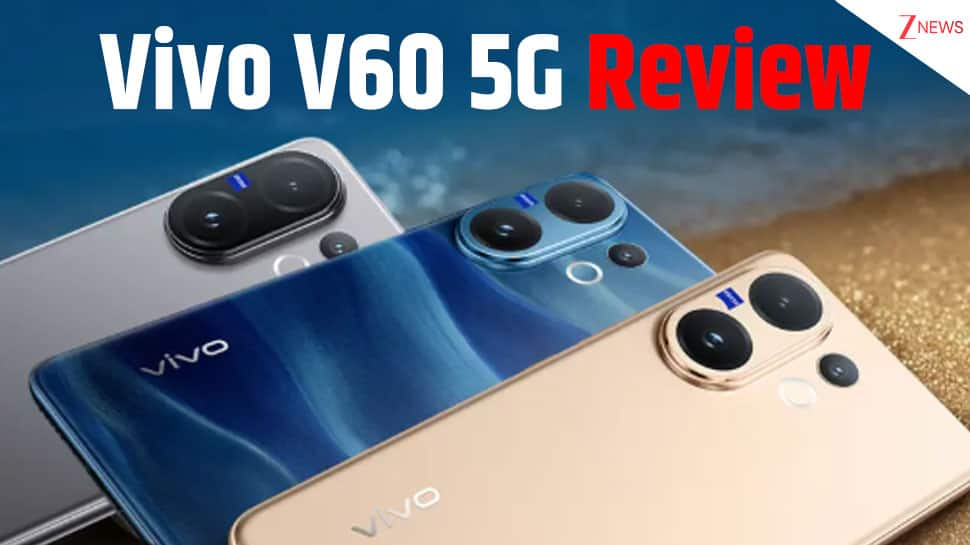
Vivo V60 5G Review: In the crowded mid-range smartphone market, where brands compete with flashy features and value-for-money specs, the Vivo V60 5G stands out for its stylish design, strong battery life, and excellent cameras, all packed into a slim and elegant body. Launched in August 12, 2025 as the successor to the popular V50, it houses a massive 6500mAh silicon-carbon battery inside a 7.53mm thin body weighing just 192 grams, making it one of the slimmest phones with a large battery. Its Zeiss-tuned triple 50-megapixel camera setup promises high-quality photos for portrait lovers and content creators. The Vivo V60 continues its legacy as the go-to wedding phone, now with significant upgrades. The device offers multiple focal lengths from 23mm to 100mm, along with an India-exclusive Wedding Vlog Mode. Notably, the Vivo V60 5G is priced at Rs 36,999 for the 8GB RAM+128GB storage variant, Rs 38,999 for the 8GB RAM+256GB storage variant, Rs 40,999 for the 12GB RAM+256GB storage model, and Rs 45,999 for the top-end 12GB RAM+512GB storage option. It is available in three colour options: Mist Gray, Moonlit Blue, and Auspicious Gold. The phone can potentially withstand submersion in up to 1.5 metres of water for around 80 minutes. Add Zee News as a Preferred Source Vivo V60 5G: Design And Build The Vivo V60 features a sleek, premium design with a thickness of just 7.53mm and a weight of 192g, housing a massive 6500mAh battery without feeling bulky. Its quad-curved body in colors like Moonlit Blue offers a comfortable grip and fingerprint-resistant back, enhanced by IP68+IP69 water and dust resistance for durability against high-pressure jets and submersion up to 1.5m for 120 minutes. The Schott Diamond Shield glass provides 37% better drop resistance than predecessors, though the camera bump may wobble on flat surfaces without a case. Vivo V60 5G: Display The smartphone is equipped with a 6.77-inch AMOLED panel at 1080×2392 resolution and 388ppi, the Vivo V60 delivers vibrant colors with HDR10+ support and a 120Hz adaptive refresh rate for smooth scrolling. Peak brightness reaches 5000 nits, ensuring visibility in direct sunlight, while the quad-curved edges create an immersive experience for videos and gaming without frequent accidental touches due to software optimizations. Overall, it’s well-suited for multimedia consumption on platforms like YouTube and Netflix, with P3 wide color gamut for accurate visuals. Vivo V60 5G Performance The smartphone is powered by the Snapdragon 7 Gen 4 chipset with up to 12GB RAM and UFS 2.2 storage, the Vivo V60 handles everyday tasks like browsing, calls, and light multitasking with snappy responsiveness. It performs adequately in casual gaming but may lag in intensive titles due to the older storage standard, which is slower than UFS 3.1 or 4.0 found in competitors. For non-gamers, the upgrade from the previous Gen 3 ensures reliable daily use without overheating issues. Vivo V60 5G Camera The ZEISS-co-engineered triple rear setup includes a 50MP main Sony IMX776 sensor, 50MP telephoto Sony IMX882 with 3x optical zoom (up to 10x digital), and 8MP ultrawide, producing sharp daylight shots and precise portraits with natural bokeh. The 50MP front camera captures detailed selfies, supported by AI tools like Four-Season Portrait for seasonal effects, Image Expander for edge reconstruction, and Magic Move for subject repositioning. While low-light ultrawide performance lacks detail and the field of view isn’t expansive, video recording in 4K suits vlogs, though AI sharpening can sometimes soften high-zoom images. Vivo V60 5G Battery And Charging The 6500mAh silicon-carbon battery offers exceptional endurance, lasting over 24 hours with mixed usage including social media, streaming, and casual gaming. It supports 90W FlashCharge, achieving a full charge from 0-100% in about an hour, which is efficient for quick top-ups. This large capacity sets it apart in the mid-range, ensuring reliability for heavy users without frequent recharges. Vivo V60 5G Software The smartphone run Android 15-based Funtouch OS 15. The smartphone provides a clean, animated interface with four years of OS updates and six years of security patches for long-term support. AI integrations like Erase for removing objects and Super Telephoto for enhancing distant shots add practical value, though some bloatware from Vivo apps requires manual disabling. The UI is customizable with widgets, but it can feel slightly cluttered compared to stock Android alternatives. Vivo V60 5G Pros The Vivo V60 features a 7.53mm thin quad-curved body at 192g, offering durability against water jets and submersion up to 1.5m for 120 minutes, ideal for everyday rugged use. It delivers 5000 nits peak brightness, HDR10+ support, and 120Hz refresh rate for sharp, immersive visuals even in sunlight, with DCI-P3 color gamut for accurate media viewing. The silicon-carbon battery provides over 24 hours of mixed usage, enhanced by 90W FlashCharge for a full charge in about an hour, ensuring reliable power for heavy users. The 50MP main, 50MP telephoto with 3x zoom, and 50MP selfie setup excels in portraits and daylight shots, with AI tools like object removal and underwater mode for versatile photography. The chipset handles multitasking and casual gaming smoothly with up to 12GB RAM, supported by Android 15 Funtouch OS 15 offering four years of updates and AI productivity features. Vivo V60 5G Cons The older storage standard results in slower app loading and file transfers compared to UFS 3.1 in rivals, affecting intensive tasks despite adequate daily performance. Without a microSD slot, users are limited to internal 128GB or 256GB variants, which may not suffice for media-heavy users needing more space. The 8MP sensor lacks detail and autofocus in dim conditions, producing noisy images and limiting its utility for landscapes or group shots at night. Vivo V60 5G Verdict And Alternative Options The Vivo V60 stands out as one of the most balanced mid-range smartphones of 2025, delivering premium design, exceptional battery life, and versatile ZEISS-tuned cameras that punch above its Rs 36,999 price point, making it ideal for photographers and daily users seeking style and endurance without flagship costs. While

India’s Active Mobile Subscribers Cross 1,086.18 Million In August 2025 | Technology News
New Delhi: India’s telecom sector continued its upward trajectory in August, with the number of active mobile subscribers reaching 1,086.18 million, representing approximately 93.07 per cent of the total 1,167.03 million wireless subscriber base. The data, released by the Telecom Regulatory Authority of India (TRAI), highlights steady growth in mobile, broadband, and wireless services across both urban and rural regions. During the month, 15.05 million subscribers submitted requests for Mobile Number Portability (MNP), reflecting ongoing consumer demand for improved connectivity and services. The total number of wireless (mobile + fixed wireless access) subscribers grew from 1,171.91 million in July 2025 to 1,178.03 million in August 2025, marking a monthly growth rate of 0.52 per cent. Urban wireless subscriptions rose by 0.66 per cent, from 641.03 million to 645.27 million, while rural subscriptions increased by 0.36 per cent, from 530.88 million to 532.76 million. Urban areas continued to dominate with a 54.78 per cent share, while rural users accounted for 45.22 per cent of total wireless subscribers. Add Zee News as a Preferred Source Wireless tele-density — a measure of mobile penetration — increased to 83.12 per cent, up from 82.75 per cent in July. Urban wireless tele-density climbed to 126.38 per cent, while rural tele-density slightly improved to 58.76 per cent. In the broadband segment, subscriptions saw modest but positive growth, rising from 984.69 million in July to 989.58 million in August, translating to a 0.50 per cent monthly growth rate. Data was reported from 1,426 operators across the country. In contrast, the wireline subscriber base declined during the same period, dropping from 48.11 million to 46.51 million, marking a net decrease of 1.61 million subscribers and a 3.34 per cent monthly contraction. India’s overall wireline tele-density fell to 3.28 per cent, down from 3.40 per cent in July. Urban wireline tele-density stood at 8.13 per cent, while rural wireline tele-density remained significantly lower at 0.55 per cent. Urban subscribers made up 89.28 per cent of the total wireline base, whereas rural users accounted for 10.72 per cent. Public Sector Undertakings (PSUs) — including BSNL, MTNL, and APSFL — continued to maintain a presence with a 20.53 per cent share of the wireline market.

India’s Broadband Subscriber Base Reaches 989.58 Million In August | Technology News
New Delhi: The total number of broadband subscribers in India increased from 984.69 million at the end of July 2025 to 989.58 million at the end of August, with a monthly growth rate of 0.50 per cent, government data showed on Monday. Segment-wise, the fixed wireless broadband subscribers (5G, Wi-Fi, Wi-Max, etc) numbers saw a robust 29.69 per cent month-on-month (MoM) growth to 11.40 million from 8.79 million in July. While fixed wire access subscribers’ numbers dipped 3.13 per cent to 44.07 million, as compared to 45.49 million in the previous month. Meanwhile, the number of mobile wireless access users saw a minimal growth to reach at 934.11 million from 930.41 million by July 31. Reliance Jio Infocomm Ltd maintained the top spot among the broadband (wired + Wireless) providers with a 501.31 million subscriber base. Bharti Airtel (309.22 million), Vodafone Idea (127.48 million), Bharat Sanchar Nigam Limited (34.31 million) and Atria Convergence Technologies (2.35 million) are the other top contributors. Add Zee News as a Preferred Source Earlier, the government informed that India’s broadband subscriber base grew to 984.69 million by the end of July from 979.71 million at the end of June. With 930.41 million users, mobile broadband services led the growth. Fixed wired broadband came in second with 45.49 million, and fixed wireless broadband with 8.79 million. Mobile broadband increased by 0.39 per cent, wired broadband increased by 1.80 per cent per month, and fixed wireless broadband increased the fastest in July, by 7.09 per cent. Meanwhile, by June 30, 2025, India had more than 1 billion internet users, up 3.48 per cent from March to reach 1,002.85 million. This growth was fueled by the expansion of broadband. Of these more than 100 crore users, 4.47 crore had wired internet connections, while 95.81 crore had wireless connections, according to a report from the Telecom Regulatory Authority of India (TRAI). According to an official release, this increased the overall tele-density to 86.09 per cent, up from 85.04 per cent in the prior quarter. According to demographics, there are approximately 57.94 crore internet users in cities and 42.33 crore in rural areas, respectively, the report stated.
‘India Mobile Congress 2025’ To Showcase Nation’s Tech Strengths To World: CEO | Technology News
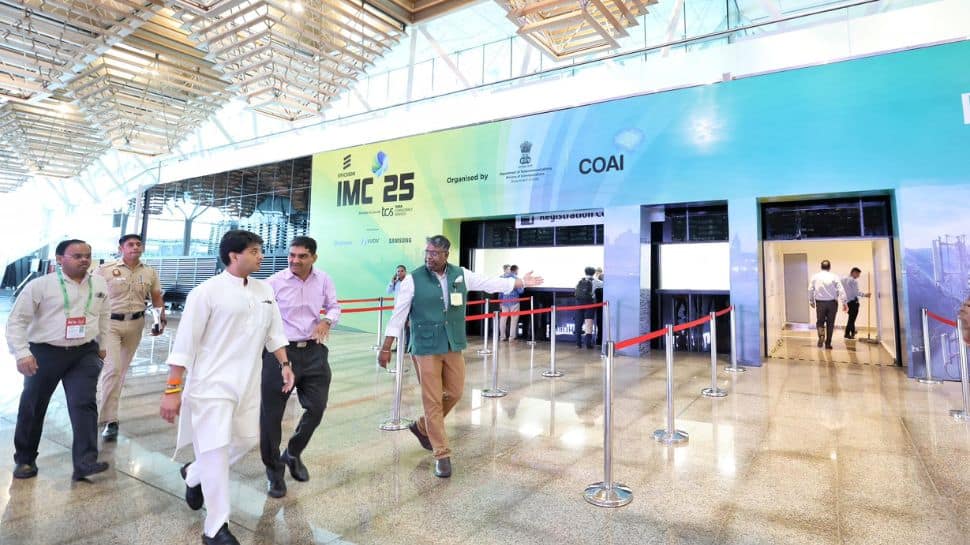
New Delhi: The Indian Mobile Congress (IMC) CEO, P. Ramakrishna, said on Monday that the flagship annual event this year will showcase the country’s technological strengths to the world. This year’s edition will also showcase how the Indian mobile and telecom ecosystem is evolving to meet global needs. He further stated that indigenous platforms are certainly essential for self-reliance, but they will also strengthen India’s position as a global telecom hub. Speaking to the media, Ramakrishna said that an expo will also be held at the event, showcasing numerous use cases of AI in 5G. Additionally, use cases for 6G will also be showcased at the IMC 2025. He urged visitors to experience how technology is evolving and how it will meet the needs of society. “It will be simpler to assess how new-age technologies will be utilised to enhance services for citizens if use cases are presented,” he said. The CEO informed that Prime Minister Narendra Modi will inaugurate the IMC, to be held between October 8-11 at Yashobhoomi in the national capital. Add Zee News as a Preferred Source Meanwhile, Union Minister of Communications Jyotiraditya Scindia said that IMC is Asia’s biggest technology event, which will bring together global telecom leaders, innovators, startups, and policymakers under one roof. The four-day mega event will focus on shaping the future of 6G, AI-native networks, satellite communications (Satcom), and next-generation digital infrastructure, he added. Reviewing the preparations for the event, Scindia said that IMC 2025 will reaffirm India’s leadership in the global telecom sector. The IMC is considered a significant technology event in the country, attracting participation from both domestic and international companies. Last year, the IMC was held between October 15 to 18. It featured over 400 exhibitors, nearly 900 startups, and participation from over 120 countries. The event aimed to highlight over 900 technology use-cases and featured over 100 sessions and discussions with over 600 global and Indian speakers.