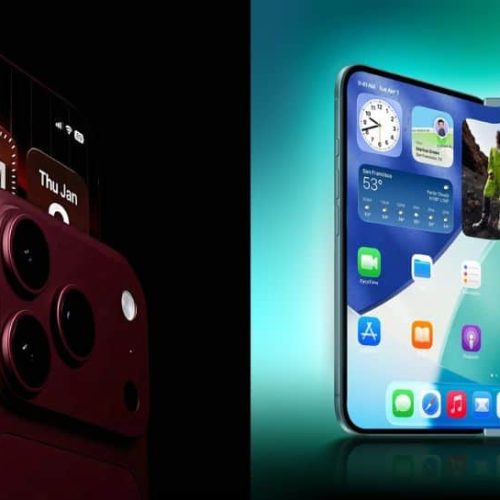
New Delhi: The India Mobile Congress (IMC) 2025 concluded in New Delhi on October 11 after four days of discussions, exhibitions, and demonstrations. The event, which began on October 8 at the Yashobhoomi Convention Centre, is Asia’s most influential technology and telecom forum and hosted its largest edition this year. IMC 2025 aimed to bring together global stakeholders, innovators, and industry leaders to collaborate and shape India’s digital and technological future. Prime Minister Narendra Modi attended the inaugural ceremony on Wednesday and highlighted India’s remarkable achievements in the technology sector. Addressing the gathering, PM Modi emphasized India’s progress in developing indigenous technologies and the significance of initiatives like Atmanirbhar Bharat and Make in India. He noted that Indian industry, startups, and academia are collaborating across sectors to develop and scale homegrown technologies and create intellectual property through research and development. Add Zee News as a Preferred Source The Prime Minister said, “Today, with government support, Indian industry, startups, and academia are working together across many sectors. Bharat is moving forward in every dimension. India is emerging as an effective platform for innovation and progress.” He added that this is the best time to invest, innovate, and manufacture in India, citing opportunities in manufacturing, semiconductors, mobile technology, and startups. Union Communications Minister Jyotiraditya Scindia also addressed the event, stating that India has transformed from a “technology taker” to a “digital flag bearer of the world.” He highlighted India’s remarkable growth in mobile and broadband connectivity over the past 11 years, noting that mobile data costs have fallen by 98 percent. India is now home to 20 percent of the world’s mobile population, with 1.2 billion subscribers, and broadband users have grown from 60 million in 2014 to 944 million today. Scindia also announced that India has built the world’s largest digital highway, connecting millions of people and placing the country at the center of the global digital map. IMC 2025 featured India’s first-ever Satcom Summit, themed “Space Networks for Universal Connectivity.” The summit brought together policymakers, industry leaders, and global innovators to discuss how satellite technology can bridge India’s digital divide and accelerate inclusive growth. Scindia said that satellite communication has become a national necessity and the backbone of resilient infrastructure, stating, “Satcom means a doctor in every home and a teacher in the remotest classroom. With the first-of-its-kind NISAR mission, we showcased how we are not merely participating — we are innovating. India has become the world’s pace-setter.” India is also moving closer to launching 6G trials, with experts emphasizing the importance of 5G use-case saturation before the 6G rollout. Ashutosh Dutta, Chief 5G Strategist at Johns Hopkins University Applied Physics Laboratory, said that ubiquitous connectivity would be a key pillar of 6G, highlighting the role of satellites in areas without cell towers or Wi-Fi. At the International Bharat6G Symposium 2025, held alongside IMC 2025, global research alliances — including Bharat 6G, 6G Smart Networks and Services Industry Association, ATIS’ Next G Alliance, XGMF, 6G Forum, 6G Brazil, UKI-FNI, and others — issued a joint statement endorsing principles for 6G design. The statement emphasized that next-generation connectivity must be trusted, secure, resilient, open, interoperable, inclusive, sustainable, and globally connected. Experts noted that India already has a strong 5G user base, with more than 65 million users, and that the current focus is on service utilization and the development of future 6G networks. Prof. Mahesh Marina from the University of Edinburgh praised India’s rapid 5G rollout and highlighted the country’s potential to influence global 6G development. Several technology and telecom companies showcased their innovations during the event. MediaTek unveiled its Dimensity 9500 flagship chipset, designed for next-generation 5G smartphones with enhanced AI, gaming, and power efficiency. Tejas Networks showcased its Direct-to-Mobile (D2M) technology, an indigenously developed deep-tech stack ready for deployment after nearly eight years of development and trials. BSNL announced that its 5G pilot project is complete and that trials for 4G network upgrades have been conducted, with 5G services set to roll out soon. India is also moving swiftly to establish clear regulatory frameworks for its satellite communication (Satcom) sector. Department of Telecommunications (DoT) Secretary Neeraj Mittal said the government is finalizing rules, pricing, and security compliance in consultation with key stakeholders. ISRO Chairman V. Narayanan stated that India aims to achieve parity with developed spacefaring nations by 2040 in terms of launcher capability, satellite technology, scientific missions, and ground infrastructure, crediting PM Modi for providing vision and direction. The India Mobile Congress 2025 successfully showcased India’s rapid technological growth, indigenous innovation, and emergence as a global leader in digital connectivity, satellite communication, and next-generation telecom technologies.

India’s Indigenous 4G Stack Deployed On Nearly 1 Lakh BSNL Towers, Ready For Exports | Technology News
New Delhi: India’s fully indigenous 4G technology stack, namely Bharat Telecom Stack, has been deployed across about 1 lakh BSNL towers, and it has been proven ready for global export, a report has said. This technology can become a significant source of foreign exchange earnings and enhance India’s tech export portfolio, according to the report from India Narrative. India’s 4G technology stack promises faster and more reliable internet speeds, seamless connectivity, and improved network resilience. This achievement positions the country among an elite group of five nations with end-to-end telecom stack capability, strengthens digital sovereignty by reducing reliance on foreign technology and mitigates cybersecurity risks. The system utilises core network technology from C-DOT, radio equipment from Tejas Networks, and received systems integration by Tata Consultancy Services (TCS). It is upgradable to 5G, enhancing India’s preparedness for future telecom advancements while boosting national security, the report added. Add Zee News as a Preferred Source The operational rollout of the 4G stack has improved connectivity in rural and remote areas, enhancing broadband coverage and inclusion. Further, it said that developing a full 4G stack domestically is a remarkable technological feat because telecom infrastructure traditionally relies heavily on foreign technology suppliers, usually from the US, China, Europe, and South Korea. By mastering this complex technology, India closes a critical dependency gap and gains full control over the telecom infrastructure that underpins much of its digital ecosystem, it noted. The system’s upgradability to 5G and plans for 6G provide a roadmap for India’s continued leadership in telecom technology. The government and industry expect the line of telecom equipment manufacturing, supported by schemes like the Production-Linked Incentive (PLI), to attract more investments, stimulate high-skill jobs, and catalyse a high-value manufacturing ecosystem.
Samsung Galaxy M17 5G Launched In India With Gemini Live Feature; Check Design, Display, Camera, Price And Other Features | Technology News
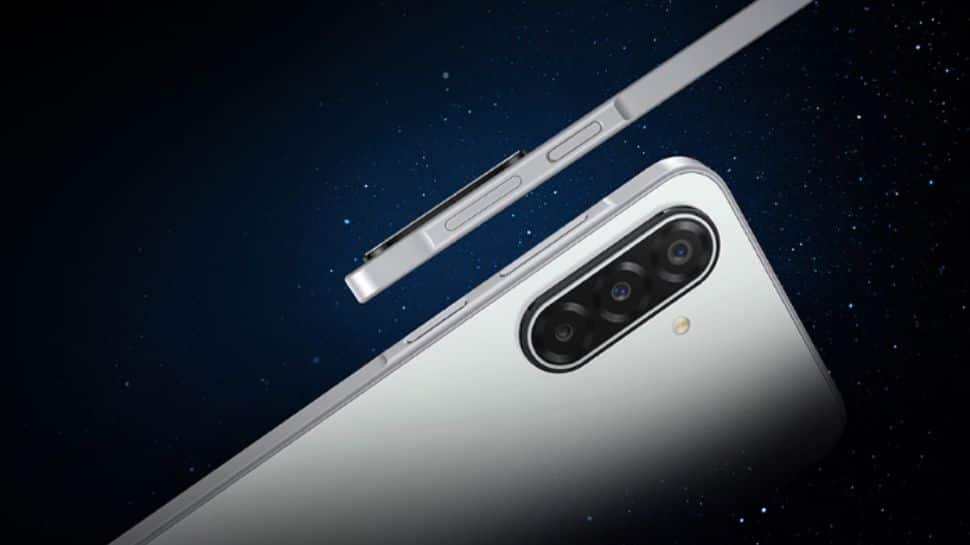
Samsung Galaxy M17 5G India Launch: South Korean giant Samsung has expanded its M-series of smartphones with the new Galaxy M17 5G in the Indian market. The device runs on the Exynos 1330 processor and includes a triple-camera system featuring a 50MP main sensor with OIS. The Samsung Galaxy M17 5G runs on Android 15 with OneUO 7.0 out of the box. It is offered in two distinct colour options Moonlight Silver and Sapphire Black. Adding further, the company promises six OS upgrades, along with six years of security updates for the Galaxy M17 5G smartphone. Samsung Galaxy M17 Specifications Add Zee News as a Preferred Source It features a 6.7-inch Super AMOLED display with a full-HD+ (1,080×2,340 pixels) resolution and 1,100 nits HBM peak brightness, offering a vivid and immersive viewing experience. It is powered by the Samsung’s Exynos 1330 chipset paired with up to 8GB of RAM and 128GB of internal storage, ensuring smooth performance and efficient multitasking. The smartphone houses a 5,000mAh battery that supports 25W wired fast charging, although the charger is not included in the box. For photography, the smartphone sports a triple rear camera setup comprising a 50-megapixel primary sensor with OIS, a 5-megapixel ultrawide lens, and a 2-megapixel macro camera. On the front, it features a 13-megapixel selfie shooter housed in a teardrop notch. The Galaxy M17 5G also brings a range of AI-powered tools such as Circle to Search with Google and Gemini Live for enhanced user experience. Additional features include On-device Voice Mail, Samsung Knox Vault, Voice Focus, and Samsung Wallet, enabling users to make secure “Tap & Pay” transactions. Connectivity options are robust with NFC, Bluetooth 5.3, 12 5G bands, Dual 4G VoLTE, and Wi-Fi 802.11, while a single bottom-mounted speaker completes the setup. (Also Read: Apple iOS 26.1 Beta 2 Update: Check Features, Eligible iPhone Models And How To Install) Samsung Galaxy M17 Price In India And Launch Offers The smartphone is priced at Rs 12,499 for the 4GB RAM + 128GB storage variant, Rs 13,999 for the 6GB RAM + 128GB storage option, and Rs 15,499 for the top-end 8GB RAM + 128GB storage model. As part of the launch offers, buyers can avail a ₹500 instant bank discount along with up to three months of no-cost EMI on leading bank cards. The Galaxy M17 5G will go on sale starting October 13 across Amazon, Samsung’s official website, and select retail stores nationwide.
From Edge AI To 6G: Qualcomm Showcases Broad Innovations At IMC 2025 | Technology News
New Delhi: Qualcomm India showcased a wide range of innovations, from Edge AI and 6G to smart homes, connected devices, and advanced compute platforms — at the India Mobile Congress (IMC) 2025, highlighting how its technologies are driving India’s digital transformation. The company presented its vision for an intelligent and connected India through three pillars — Personal AI, Physical AI, and Industrial AI — reflecting Qualcomm’s focus on providing scalable, secure, and India-first solutions across consumer, enterprise, and infrastructure domains. Qualcomm has been a long-time partner in India’s technology journey, supporting the country from 3G to 5G, while actively preparing for 6G through early-stage research, strategic partnerships, and local R&D investments. At IMC 2025, Qualcomm highlighted the power of Edge AI combined with 5G as the twin pillars of India’s digital future. Its platforms are enabling real-time, low-latency intelligence across industries, including automotive, industrial IoT, mobile devices, and compute solutions. Add Zee News as a Preferred Source Demonstrations included on-device generative AI for smartphones and industrial devices, AI-powered surveillance, intelligent wearables like smartwatches and earbuds, and connected vehicles, all delivering seamless, multimodal experiences. Savi Soin, Senior Vice President and President of Qualcomm India, said, “IMC 2025 reflects India’s strong digital momentum. Qualcomm is proud to lead with technologies that are cutting-edge and India-first, from Edge AI and 6G to smart homes and secure video solutions.” The company also announced key collaborations with Indian partners to expand its ecosystem. To nurture the next generation of AI talent in India, Qualcomm launched the Qualcomm AI Upskilling Programme: Technical Foundation, aimed at students, developers, and professionals. The program covers AI and ML fundamentals, Edge AI, generative AI, and practical experience with Qualcomm’s AI Hub, helping participants build on-device AI applications. Through these initiatives, Qualcomm India is reinforcing its role as a digital transformation partner for the nation. By supporting Make in India, advancing 6G, enabling AI upskilling, and working closely with partners and policymakers, Qualcomm is contributing to an inclusive, innovative, and globally competitive digital future for India.

Google Tightens ‘Work From Anywhere’ Policy; One Remote Day Will Count As Full Week | Technology News
Google has revised its Work from Anywhere (WFA) policy, a popular benefit that allowed employees to work from a location outside their main office for up to four weeks a year. Under the new rule, even one day of remote work will now count as a full week, according to internal company documents. The change, which came into effect recently, means employees can no longer use WFA days to work from home or nearby locations. The policy was designed for staff to work temporarily from a different city, state, or country, not as an extension of regular work-from-home days. A company document reportedly stated, “Whether you log one WFA day or five WFA days in a given standard work week, one WFA week will be deducted from your annual balance.” This means that an employee using just a single day remotely in a week will lose a full week from their WFA allowance. Add Zee News as a Preferred Source Google first introduced the WFA program during the Covid-19 pandemic, along with its hybrid work schedule, which allows employees to work from home two days a week. The hybrid policy remains unchanged. However, the WFA update is part of Google’s broader push to bring employees back to offices. Earlier this year, Google also offered voluntary buyouts to some U.S.-based full-time employees and warned that remote workers who failed to follow the hybrid schedule could face layoffs. Under the new rules, employees cannot work from a Google office located in another state or country during their WFA period due to “legal and financial implications of cross-border work.” Those who choose to work from another location must follow local business hours corresponding to that time zone. (Also Read: Google Doodle Celebrates 27th Birthday: How Spelling Mistake Shaped The Search Giant – All You Need to Know) The company has clarified that violations of the updated WFA policy could lead to disciplinary action or even termination. However, the rules may not apply to all staff members, for instance, data center employees and those required to be physically present in offices may be excluded. The revised policy has reportedly caused confusion among employees. During a recent all-hands meeting, one employee asked why a single WFA day would count as an entire week. In response, John Casey, Google’s Vice President of Performance and Rewards, said that WFA was always meant to be taken in week-long blocks and not as a replacement for standard work-from-home arrangements.
Motorola Rolls Out Android 16 – Check What’s New | Technology News
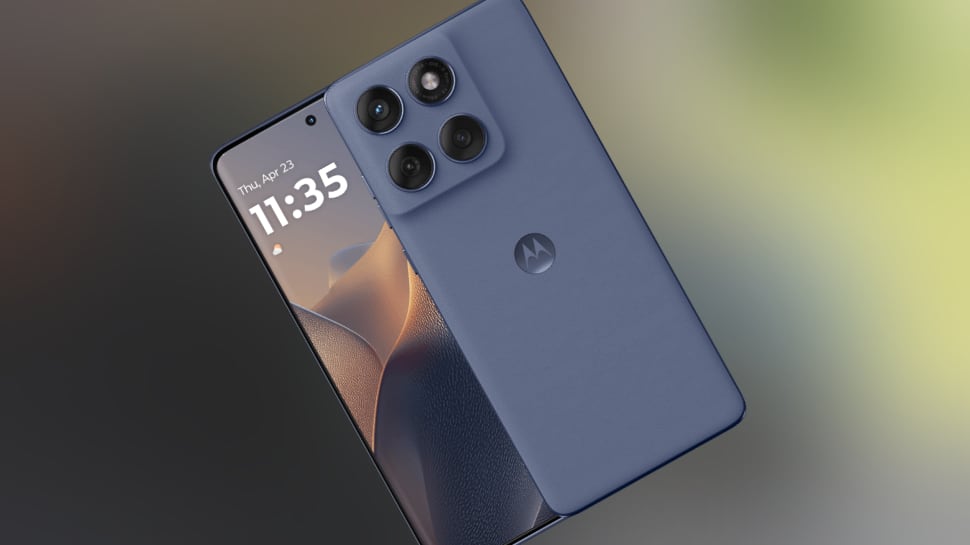
New Delhi: Motorola announced the rollout of Android 16 across its smartphone portfolio. Android 16 introduced a wide range of enhancements designed around simplicity, security, and connectivity, the company said. With Notification Auto Grouping, users can keep their devices clutter-free as apps are prevented from overwhelming them with multiple alerts. Improved support for hearing devices provides clearer calls and easier control across brands, including LE Audio devices for noisy environments. Instant Hotspot allows devices signed into the same Google account to connect automatically without the need for passwords, offering frictionless connectivity across tablets and Chromebooks. The update also brings in “Modes”, a new feature that lets users personalize their device behavior based on activity, whether sleeping, driving, or working. Each mode can control notifications, app behavior, and display or sound settings, while Advanced Protection delivers stronger security with a single tap. Users will also experience a refreshed interface, smarter system settings, new diagnostics tools, expanded battery insights, improved accessibility, and Moto Secure 5.5 with features like Secure Power-Off, ensuring that Motorola devices remain future-ready. The Android 16 rollout begins with the three models – Motorola Edge 60 Pro, Motorola Edge 60 Fusion, and Motorola Edge 50 Pro. “These devices have already set benchmarks in design, performance, and camera technology. Now with the integration of Android 16, they are further elevated to deliver a more seamless, secure, and personalized smartphone experience,” the company said in an official press release. Add Zee News as a Preferred Source Commenting on the rollout, T.M. Narasimhan, Managing Director, Motorola India, said, “The rollout of Android 16 on our smartphones demonstrates our commitment to providing faster, smarter, and more secure updates. We are ensuring our users experience the very best of hardware and software innovation combined. Android 16 brings the latest innovations from Google, enhanced with our own privacy and security features like Moto Secure, empowering users with personalization, connectivity, and security.” “The speed of this rollout reflects our unwavering focus on customer-centricity and elevating the overall user experience,” he further said. The rollout is being progressively extended to additional Motorola devices, the company confirmed.

India’s Smartphone Exports Touch $13.4 Billion In H1FY26 Up 59% | Technology News
New Delhi: India’s smartphone exports touched $13.4 billion in the first half of FY26 (April to September), marking a 59 per cent jump from $8.5 billion in the same period last year, according to industry estimates. This growth is primarily attributed to iPhone production under the PLI scheme — designed to offset India’s cost disadvantages. Apple’s iPhone exports totalled approximately $10 billion, accounting for over 75 per cent of shipments in the first half of the year. In September alone, a threefold increase in smartphone exports to the US pushed total exports to $1.7 billion—the highest monthly growth recorded so far compared to FY25. The exports in September grew 87 per cent compared to $923 million exported in September 2024. Further smartphone exports to the US rose from $258 million in September last year to a record $900 million last month, when the US accounted for 52.3 per cent of total smartphone exports. Add Zee News as a Preferred Source According to a recent statement by the India Cellular and Electronics Association, August and September are typically among the lowest export months due to upcoming product launches and scheduled machine retrofits. Consumers worldwide also hold back purchases during this period, waiting for new models and subsequent discounts on older versions. Exports usually pick up again by mid-October, the industry body said. The PLI scheme ends for Apple in March 2026 and has already ended for Samsung in FY25. Samsung’s smartphone exports fell in H1FY26 compared to the same period last year. Electronics, particularly smartphones, have been a rare bright spot for Indian exports this year, despite headwinds from the US administration’s 50 per cent tariffs, which exclude smartphones. Meanwhile, Apple’s vendors continue to expand their production footprint in India, with two new iPhone assembly plants recently becoming operational. This has coincided with strong domestic sales of the new iPhone 17. However, industry experts warn that maintaining the current export surge depends on policy continuity, the outcome of US–China trade negotiations and tariff changes.
Google AI Mode Rolls Out In 7 New Indian Languages Including Urdu | Technology News
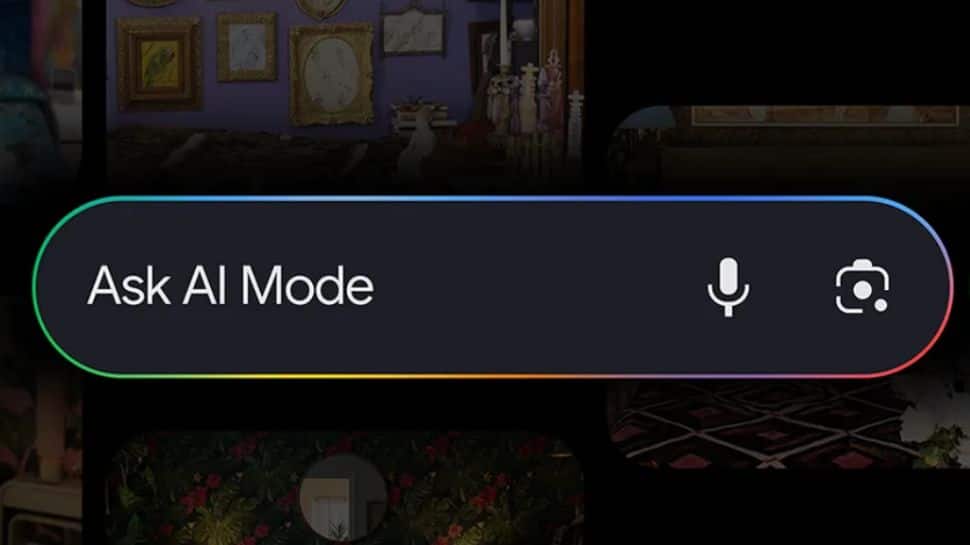
New Delhi: Google on Wednesday announced a major update for its AI-powered Search experience in India, expanding AI Mode to seven new Indian languages — Bengali, Kannada, Malayalam, Marathi, Tamil, Telugu, and Urdu. With this rollout, millions more users across the country will now be able to ask complex questions and get detailed answers in their preferred language. AI Mode, which was earlier available only in English and Hindi, helps people explore deeper topics and ask longer, more conversational questions. Google said the response to AI Mode since its launch in India has been “incredible,” with people using it for everything from education and writing to product comparisons and trip planning. The company said the new language expansion is powered by its custom Gemini model for Search, designed to understand the nuances of local languages rather than just translating words. The rollout in these new languages will begin over the next week. Alongside this expansion, Google also introduced ‘Search Live’, a new feature within AI Mode that allows users to interact with Search using voice and camera. With this, people can talk to Google and get real-time help based on what’s in front of them. India will be the first country outside the US to experience Search Live, available initially in English and Hindi. Add Zee News as a Preferred Source For example, users can point their camera at ingredients and ask, “What’s the best way to combine these to make an iced matcha?” and get instant guidance. Google said the feature is especially useful for DIY projects, troubleshooting, schoolwork, and travel planning. Search Live is rolling out from today and will reach more users in the coming weeks. To try it, users can open the Google app and tap the ‘Live’ icon under the search bar or go to Google Lens and select ‘Live’ at the bottom. Google said these updates reflect its deep commitment to making Search more intuitive, conversational, and accessible for everyone in India, allowing users to “truly ask anything.”
Apple iOS 26.1 Beta 2 Update: Check Features, Eligible iPhone Models And How To Install | Technology News
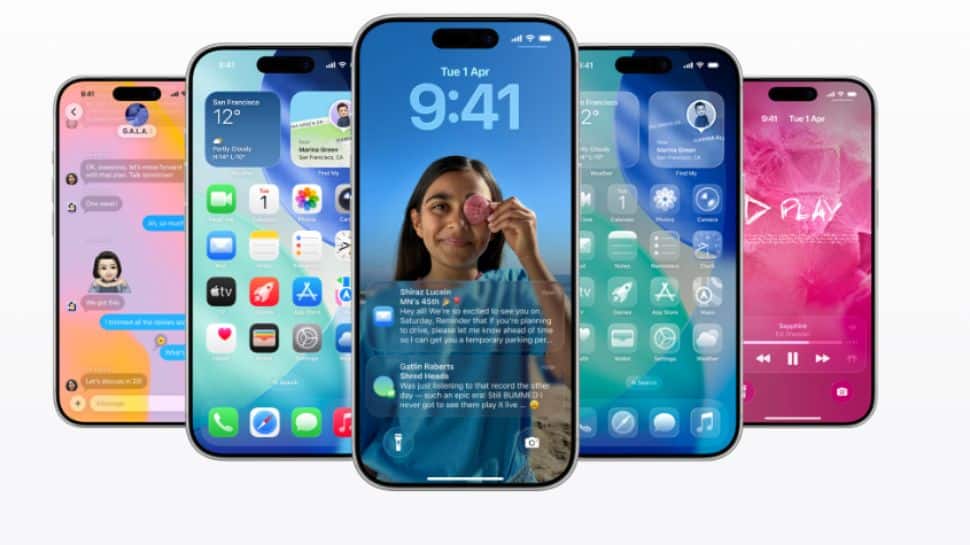
Apple iOS 26.1 Beta 2 Update: Apple has introduced the second public beta of iOS 26.1 update for iPhone to developers and beta testers, less than a month after the company released iOS 26, which introduced Liquid Glass, call screening and more to your device. According to media reports, there are several minor changes in tow. iOS 26.1 Public Beta 2: Features With this new update, there is a new slide gesture to dismiss alarms and timers, along with a cleaner, more consistent UI. The update enhances control over audio and microphone settings. It also introduces subtle layout adjustments throughout system menus, as Apple continues to fine-tune the overall iOS 26 experience. Add Zee News as a Preferred Source iOS 26.1 Public Beta 2: Eligible Models The iPhone lineup includes the iPhone 17 series, featuring the iPhone 17, iPhone 17 Pro, iPhone 17 Pro Max, and iPhone 17 Air; the iPhone 16 series, which comprises the iPhone 16, iPhone 16 Plus, iPhone 16 Pro, iPhone 16 Pro Max, and iPhone 16e; and the iPhone 15 series, including the iPhone 15, iPhone 15 Plus, iPhone 15 Pro, and iPhone 15 Pro Max. (Also Read: Smartphones Launching In October 2025: From OnePlus 15 To iQOO 15; Check Expected Camera, Display And Other Features) The iPhone 14 series consists of the iPhone 14, iPhone 14 Plus, iPhone 14 Pro, and iPhone 14 Pro Max, while the iPhone 13 series offers the iPhone 13, iPhone 13 mini, iPhone 13 Pro, and iPhone 13 Pro Max. The iPhone 12 series includes the iPhone 12, iPhone 12 mini, iPhone 12 Pro, and iPhone 12 Pro Max. The iPhone 11 series features the iPhone 11, iPhone 11 Pro, and iPhone 11 Pro Max, alongside the iPhone SE, covering the 2nd generation and later models. iOS 26.1 Public Beta 2: How To Install Step 1: Sign up for the public beta on Apple’s website: https://beta.apple.com/sp/betaprogram/ Step 2: On your iPhone, go to Settings → General → Software Update. Step 3: Tap Beta Updates and select iOS 26.1 Public Beta. Step 4: Return to the Software Update page and wait for the download to appear. Step 5: Agree to Apple’s terms and start the download; installation will begin automatically once the download completes.

Govt To Hold Workshop On AI-Based Malayalam Language Technologies For Digital Governance | Technology News
New Delhi: The Digital India BHASHINI Division of the Ministry of Electronics and Information Technology will conduct a workshop on October 8 in Thiruvananthapuram aimed at integrating Malayalam into AI-driven digital platforms of the government, an official statement said on Tuesday. The workshop, namely ‘BHASHINI Rajyam Workshop: Kerala Chapter’, will be jointly conducted with Kerala State IT Mission, and it aims to strengthen digital inclusivity by integrating Malayalam into India’s multilingual digital ecosystem, according to the statement. The aim of the workshop is to enable government and public services in the Malayalam language using voice and text, allowing greater access for individuals without requiring English proficiency. Add Zee News as a Preferred Source During the event, the Kerala government and the Digital India BHASHINI Division (DIBD) will sign a Memorandum of Understanding (MoU) to create strong AI models, speech recognition systems, and multilingual applications specifically for the Malayalam language, according to the Ministry of Electronics & IT. The collaboration will focus on enabling citizens to access governance, education, healthcare, and other essential services through Malayalam voice and text interfaces, the release said. Amitabh Nag, CEO, Digital India BHASHINI Division, and Director, IndiaAI, said that Malayalam holds a distinguished place in India’s linguistic and cultural heritage. The workshop will bring together senior policymakers, technical experts, and representatives from academia, industry, and civil society. BHASHINI will showcase demonstrations of its suite of tools for voice-first multilingual governance, including the MITRA (Mitra Programme), during the event. The event will also feature the launch of Bhashini Samudaye, an initiative aimed at establishing State Language Missions to lead digital language adoption, and a live demonstration of Bhashadaan, the citizen contribution platform that encourages individuals to donate Malayalam voice and text data to strengthen AI models. The BHASHINI Rajyam Workshop is expected to lay a strong foundation for integrating Malayalam into India’s digital governance ecosystem, ensuring that digital public services are inclusive, accessible, and linguistically relevant for all citizens, the statement said.