New Delhi: The Department for Promotion of Industry and Internal Trade (DPIIT) has released the first part of its working paper on how India should address copyright challenges arising from generative artificial intelligence, Ministry of Commerce & Industry said on Tuesday. The paper is based on recommendations from an eight-member committee set up on April 28, to study whether current copyright laws are adequate and to suggest changes if needed. The working paper reviews several global approaches, including blanket exemptions for AI training, text-and-data-mining exceptions with or without opt-out options, voluntary licensing systems, and extended collective licensing. After evaluating these models, the committee concluded that none of them fully meet India’s needs in terms of protecting creators while also supporting innovation in AI. The committee also rejected the idea of a “zero-price licence” that would allow AI developers to freely use all content without compensation. Add Zee News as a Preferred Source It warned that such a system would hurt incentives for human creativity and could eventually lead to a decline in the production of high-quality human-generated work. Instead, the working paper proposes a hybrid policy model. Under this model, AI developers would get a blanket licence to use any lawfully accessed content for training their systems, without needing individual permissions or negotiations. Royalties would be paid only when these AI tools are commercially launched. The royalty rates would be decided by a government-appointed committee and remain open to judicial review. A centralised system would be created to collect and distribute these royalties. The committee believes this would reduce legal and administrative complexities, ensure fairness for creators, and make it easier for both large and small AI developers to comply with the rules. The paper also acknowledges the contributions of Dr. Raghavendra Rao, whose support was key in preparing the document. Committee members were assisted by D. Sripriya, Mr. Kushal Wadhawan, and Ms. Priyanka Arora in compiling the draft. With the release of Part 1 of the working paper, DPIIT has now opened the proposals for public consultation. Stakeholders and members of the public can submit their feedback over the next 30 days, helping shape India’s approach to AI and copyright in the years to come.
iPhone 17 Series, iPhone 16, And MacBook Pro Models Get Huge Discount In Apple Holiday Season Sale- Details Here | Technology News
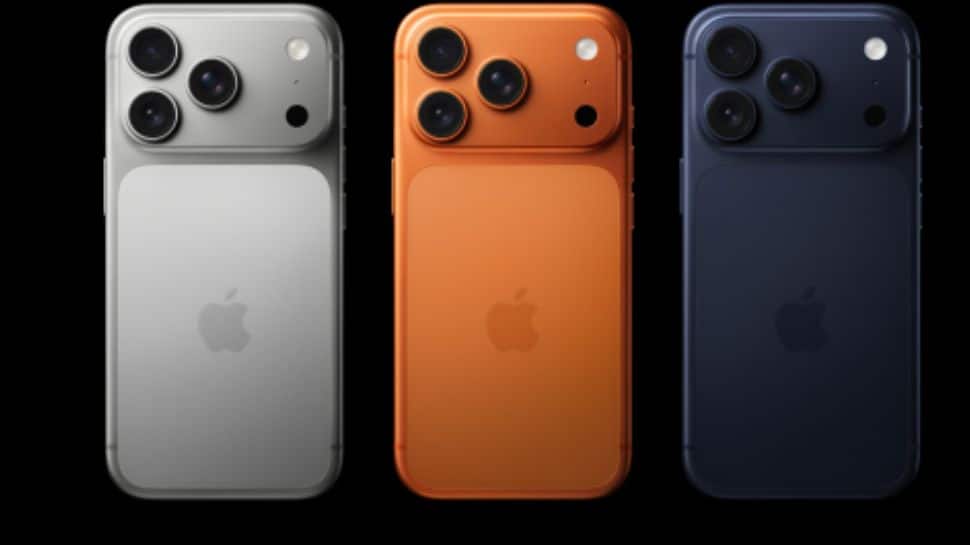
Apple Holiday Season Sale: As India enters the holiday season, Apple has rolled out its Holiday Season sale worldwide, including in India. The offers are now available on Apple’s official website. While direct price cuts on the newest devices are rare, customers can still save a lot through instant cashback and no-cost EMI options. Apple is offering discounts on all its products, including the latest iPhones, MacBooks, Watches, iPads, and AirPods. Adding further, banks like American Express, Axis Bank, and ICICI Bank are giving extra benefits. Shoppers can get cashback up to Rs 10,000 and enjoy no-cost EMIs for up to six months, depending on the product and the card used. To make it more lucrative for Apple users, Apple is offering 3 months of free Apple Music subscription to those who buy an Apple Watch. People can also claim Apple TV subscription of 3 months for free if you purchase an Apple device via Apple.in. Add Zee News as a Preferred Source Apple iPhone 17 Series And iPhone 16: Discount Offers The iPhone 17 series is now listed on Apple’s official website, Apple.in, with an instant cashback of Rs 5,000 on select bank cards. However, the standard iPhone 17 is out of stock on most stores, including Croma, Amazon, Flipkart, and Vijay Sales. Apple.in is still a reliable place to buy it, though it only gives Rs 1,000 as a card discount. Those who can wait may get better deals when stock increases. The iPhone 17 Pro, originally priced at Rs 1,34,900, comes with a Rs 5,000 instant discount on ICICI, American Express, and Axis Bank card users. Meanwhile, Apple also gives Rs 4,000 cashback on the iPhone 16 and iPhone 16 Plus. The other stores like Flipkart, Reliance Digital, and Vijay Sales are offering higher discounts of up to Rs 9,000. Apple MacBook Air M4, MacBook Pro M4: Discount Offers Apple’s official India website shows that the 13-inch MacBook Air M4 is available with an instant cashback of Rs 10,000. Originally priced at Rs 99,900, the effective price comes down to Rs 89,900. The same Rs 10,000 cashback is also offered on the 14-inch and 16-inch MacBook Pro models. On the other hand, the 14-inch MacBook Pro M4, launched at Rs 1,69,900, is now available for Rs 1,59,900. The 16-inch MacBook Pro M4 Pro, originally Rs 2,49,900, can now be bought for Rs 2,39,900. Apple Watch Series 11, iPad: Discount Offers The Apple Watch Series 11 is available with a Rs 4,000 bank discount, while the Apple Watch SE 3 comes with Rs 2,000 off. Both AirPods Pro 3 and AirPods 4 offer Rs 1,000 cashback. The latest iPad Air models, including the 11-inch and 13-inch versions, have a Rs 4,000 discount, while the standard iPad and iPad mini are available with Rs 3,000 off. These offers make it easier for buyers to save on Apple’s latest gadgets.

DPIIT Releases Draft Policy On AI And Copyright, Proposes New Hybrid Licensing Model | Technology News
New Delhi: The Department for Promotion of Industry and Internal Trade (DPIIT) has released the first part of its working paper on how India should address copyright challenges arising from generative artificial intelligence, the Ministry of Commerce & Industry said on Tuesday. The paper is based on recommendations from an eight-member committee set up on April 28, to study whether current copyright laws are adequate and to suggest changes if needed. The working paper reviews several global approaches, including blanket exemptions for AI training, text-and-data-mining exceptions with or without opt-out options, voluntary licensing systems, and extended collective licensing. After evaluating these models, the committee concluded that none of them fully meet India’s needs in terms of protecting creators while also supporting innovation in AI. The committee also rejected the idea of a “zero-price licence” that would allow AI developers to freely use all content without compensation. It warned that such a system would hurt incentives for human creativity and could eventually lead to a decline in the production of high-quality human-generated work. Add Zee News as a Preferred Source Instead, the working paper proposes a hybrid policy model. Under this model, AI developers would get a blanket licence to use any lawfully accessed content for training their systems, without needing individual permissions or negotiations. Royalties would be paid only when these AI tools are commercially launched. The royalty rates would be decided by a government-appointed committee and remain open to judicial review. A centralised system would be created to collect and distribute these royalties. The committee believes this would reduce legal and administrative complexities, ensure fairness for creators, and make it easier for both large and small AI developers to comply with the rules. With the release of Part 1 of the working paper, DPIIT has now opened the proposals for public consultation. Stakeholders and members of the public can submit their feedback over the next 30 days, helping shape India’s approach to AI and copyright in the years to come.

India Set To Be Global AI Leader By 2035, Led By Young Talent, Data-Rich Ecosystem | Technology News
New Delhi: India’s strength in manpower, data, and scientific curiosity positions the country to become a global hub of semiconductor manufacturing, officials said on Monday at the India International Science Festival (IISF) 2025. IISF 2025, which began on December 6, has emerged as one of the most impactful science events of the year, inspiring young minds and strengthening India’s pursuit of Viksit Bharat@2047, an official statement said. “India is preparing to become a global AI leader by 2035, powered by young talent and the country’s data-rich ecosystem,” IIT Ropar Director, Prof. Rajeev Ahuja, said. Ahuja underscored that the IndiaAI Mission aims to train one crore youth in AI, build a national compute infrastructure, develop indigenous AI models, and promote responsible and ethical AI. Add Zee News as a Preferred Source The event brought leading voices from academia, industry, and research to explore how the evolution from Artificial Intelligence to Artificial General Intelligence will shape the future of science, innovation, and humanity, the statement said. The speakers stressed that AI will become integral to every profession and emphasised the need for India-centric data, models, and linguistic technologies to ensure equitable prosperity and digital inclusion. Sarvam AI Co-Founder Pratyush Kumar showcased multilingual AI systems under the IndiaAI Mission, including India’s first sovereign foundational Large Language Model (LLM) for Indian languages. Intel’s Data Centre Customer Engineering Director, Gopal Krishna Bhatt, described how India is rapidly advancing in server design, chip development, and high-performance computing hardware. He noted that dozens of India-based server and data-centre hardware designs are currently underway, reflecting the momentum created by the government’s semiconductor and digital infrastructure push. Manish Modani from NVIDIA highlighted that India’s rapidly expanding High-Performance Computing (HPC) and Graphics Processing Units (GPU)-backed infrastructure is multiplying research output in fields ranging from climate modelling to language technologies. India’s data scale, linguistic diversity, and scientific talent uniquely position the nation to lead the global transformation from AI to AGI, he added.

Training a Tokenizer for Llama Model
The Llama family of models are large language models released by Meta (formerly Facebook). These decoder-only transformer models are used for generation tasks. Almost all decoder-only models nowadays use the Byte-Pair Encoding (BPE) algorithm for tokenization. In this article, you will learn about BPE. In particular, you will learn: What BPE is compared to other tokenization algorithms How to prepare a dataset and train a BPE tokenizer How to use the tokenizer Training a Tokenizer for Llama ModelPhoto by Joss Woodhead. Some rights reserved. Let’s get started. Overview This article is divided into four parts; they are: Understanding BPE Training a BPE tokenizer with Hugging Face tokenizers library Training a BPE tokenizer with SentencePiece library Training a BPE tokenizer with tiktoken library Understanding BPE Byte-Pair Encoding (BPE) is a tokenization algorithm used to tokenize text into sub-word units. Instead of splitting text into only words and punctuation, BPE can further split the prefixes and suffixes of words so that prefixes, stems, and suffixes can each be associated with meaning in the language model. Without sub-word tokenization, a language model would find it difficult to learn that “happy” and “unhappy” are antonyms of each other. BPE is not the only sub-word tokenization algorithm. WordPiece, which is the default for BERT, is another one. A well-implemented BPE does not need “unknown” in the vocabulary, and nothing is OOV (Out of Vocabulary) in BPE. This is because BPE can start with 256 byte values (hence known as byte-level BPE) and then merge the most frequent pairs of tokens into a new vocabulary until the desired vocabulary size is reached. Nowadays, BPE is the tokenization algorithm of choice for most decoder-only models. However, you do not want to implement your own BPE tokenizer from scratch. Instead, you can use tokenizer libraries such as Hugging Face’s tokenizers, OpenAI’s tiktoken, or Google’s sentencepiece. Training a BPE tokenizer with Hugging Face tokenizers Library To train a BPE tokenizer, you need to prepare a dataset so the tokenizer algorithm can determine the most frequent pair of tokens to merge. For decoder-only models, a subset of the model’s training data is usually appropriate. Training a tokenizer is time-consuming, especially for large datasets. However, unlike a language model, a tokenizer does not need to learn the language context of the text, only how often tokens appear in a typical text corpus. While you may need trillions of tokens to train a good language model, you only need a few million tokens to train a good tokenizer. As mentioned in a previous article, there are several well-known text datasets for language model training. For a toy project, you may want a smaller dataset for faster experimentation. The HuggingFaceFW/fineweb dataset is a good choice for this purpose. In its full size, it is a 15 trillion token dataset, but it also has 10B, 100B, and 350B sizes for smaller projects. The dataset is derived from Common Crawl and filtered by Hugging Face to improve data quality. Below is how you can print a few samples from the dataset: import datasets dataset = datasets.load_dataset(“HuggingFaceFW/fineweb”, name=”sample-10BT”, split=”train”, streaming=True) count = 0 for sample in dataset: print(sample) count += 1 if count >= 5: break import datasets dataset = datasets.load_dataset(“HuggingFaceFW/fineweb”, name=“sample-10BT”, split=“train”, streaming=True) count = 0 for sample in dataset: print(sample) count += 1 if count >= 5: break Running this code will print the following: {‘text’: ‘|Viewing Single Post From: Spoilers for the Week of February 11th|\n|Lil||F…’, ‘id’: ‘<urn:uuid:39147604-bfbe-4ed5-b19c-54105f8ae8a7>’, ‘dump’: ‘CC-MAIN-2013-20’, ‘url’: ‘http://daytimeroyaltyonline.com/single/?p=8906650&t=8780053’, ‘date’: ‘2013-05-18T05:48:59Z’, ‘file_path’: ‘s3://commoncrawl/crawl-data/CC-MAIN-2013-20/segments/1368696381249/war…’, ‘language’: ‘en’, ‘language_score’: 0.8232095837593079, ‘token_count’: 142} {‘text’: ‘*sigh* Fundamentalist community, let me pass on some advice to you I learne…’, ‘id’: ‘<urn:uuid:ba819eb7-e6e6-415a-87f4-0347b6a4f017>’, ‘dump’: ‘CC-MAIN-2013-20’, ‘url’: ‘http://endogenousretrovirus.blogspot.com/2007/11/if-you-have-set-yourself-on…’, ‘date’: ‘2013-05-18T06:43:03Z’, ‘file_path’: ‘s3://commoncrawl/crawl-data/CC-MAIN-2013-20/segments/1368696381249/war…’, ‘language’: ‘en’, ‘language_score’: 0.9737711548805237, ‘token_count’: 703} … {‘text’: ‘|Viewing Single Post From: Spoilers for the Week of February 11th|\n|Lil||F…’, ‘id’: ‘<urn:uuid:39147604-bfbe-4ed5-b19c-54105f8ae8a7>’, ‘dump’: ‘CC-MAIN-2013-20’, ‘url’: ‘http://daytimeroyaltyonline.com/single/?p=8906650&t=8780053’, ‘date’: ‘2013-05-18T05:48:59Z’, ‘file_path’: ‘s3://commoncrawl/crawl-data/CC-MAIN-2013-20/segments/1368696381249/war…’, ‘language’: ‘en’, ‘language_score’: 0.8232095837593079, ‘token_count’: 142} {‘text’: ‘*sigh* Fundamentalist community, let me pass on some advice to you I learne…’, ‘id’: ‘<urn:uuid:ba819eb7-e6e6-415a-87f4-0347b6a4f017>’, ‘dump’: ‘CC-MAIN-2013-20’, ‘url’: ‘http://endogenousretrovirus.blogspot.com/2007/11/if-you-have-set-yourself-on…’, ‘date’: ‘2013-05-18T06:43:03Z’, ‘file_path’: ‘s3://commoncrawl/crawl-data/CC-MAIN-2013-20/segments/1368696381249/war…’, ‘language’: ‘en’, ‘language_score’: 0.9737711548805237, ‘token_count’: 703} … For training a tokenizer (and even a language model), you only need the text field of each sample. To train a BPE tokenizer using the tokenizers library, you simply feed the text samples to the trainer. Below is the complete code: from typing import Iterator import datasets from tokenizers import Tokenizer, models, trainers, pre_tokenizers, decoders, normalizers # Load FineWeb 10B sample (using only a slice for demo to save memory) dataset = datasets.load_dataset(“HuggingFaceFW/fineweb”, name=”sample-10BT”, split=”train”, streaming=True) def get_texts(dataset: datasets.Dataset, limit: int = 100_000) -> Iterator[str]: “””Get texts from the dataset until the limit is reached or the dataset is exhausted””” count = 0 for sample in dataset: yield sample[“text”] count += 1 if limit and count >= limit: break # Initialize a BPE model: either byte_fallback=True or set unk_token=”[UNK]” tokenizer = Tokenizer(models.BPE(byte_fallback=True)) tokenizer.normalizer = normalizers.NFKC() tokenizer.pre_tokenizer = pre_tokenizers.ByteLevel(add_prefix_space=True, use_regex=False) tokenizer.decoder = decoders.ByteLevel() # Trainer trainer = trainers.BpeTrainer( vocab_size=25_000, min_frequency=2, special_tokens=[“[PAD]”, “[CLS]”, “[SEP]”, “[MASK]”], show_progress=True, ) # Train and save the tokenizer to disk texts = get_texts(dataset, limit=10_000) tokenizer.train_from_iterator(texts, trainer=trainer) tokenizer.save(“bpe_tokenizer.json”) # Reload the tokenizer from disk tokenizer = Tokenizer.from_file(“bpe_tokenizer.json”) # Test: encode/decode text = “Let’s have a pizza party! 🍕” enc = tokenizer.encode(text) print(“Token IDs:”, enc.ids) print(“Decoded:”, tokenizer.decode(enc.ids)) 1 2 3 4 5 6 7 8 9 10 11 12 13 14 15 16 17 18 19 20 21 22 23 24 25 26 27 28 29 30 31 32 33 34 35 36 37 38 39 40 41 42 43 44 from typing import Iterator import datasets from tokenizers import Tokenizer, models, trainers, pre_tokenizers, decoders, normalizers # Load FineWeb 10B sample (using only a slice for demo to save memory) dataset = datasets.load_dataset(“HuggingFaceFW/fineweb”, name=“sample-10BT”, split=“train”, streaming=True) def get_texts(dataset: datasets.Dataset, limit: int = 100_000) -> Iterator[str]: “”“Get texts from the dataset until the limit is reached or the dataset is exhausted”“” count = 0 for sample in dataset:

Starlink Price In India Revealed: How Much Will Elon Musk’s Broadband Cost For Residential Setup? Check Internet Speed | Technology News
Elon Musk’s Starlink Connection Price: After months of speculation, Elon Musk’s satellite internet company Starlink has officially entered the vast Indian market by announcing its prices for home services. This milestone comes after extensive regulatory groundwork and technical preparations. Earlier in July, Starlink, a legal division of SpaceX, received regulatory approval from the Indian National Space Promotion and Authorisation Centre (IN-SPACe), paving the way for its launch in the country. Starlink Connection In India: Price And Internet Speed Starlink’s India website shows that its home internet plan costs Rs 8,600 per month, with an extra Rs 34,000 for the hardware kit. Once you buy it, you can set it up yourself. Just plug it in, and it is ready to use. The company promises unlimited data, a 30 day trial, 99.9 percent uptime, and internet access even in bad weather. Add Zee News as a Preferred Source The website also says you can check plan prices and special offers based on your location. However, city based pricing is not yet revealed, as the service is not fully operational. Some unconfirmed reports suggest that Starlink may offer internet speeds between 25 Mbps and 220 Mbps.
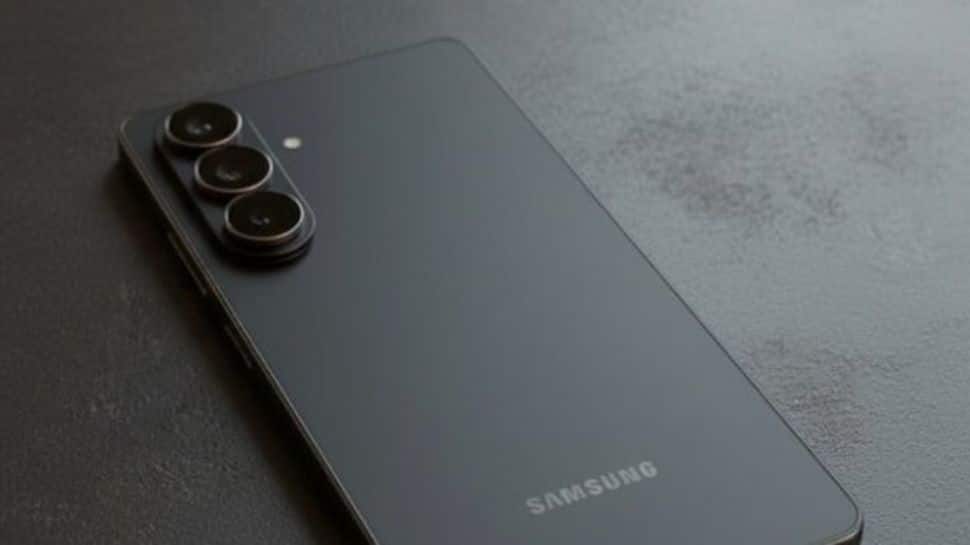
Samsung Galaxy S26 Series Launch Leaks: Could Debut With Exynos 2600 Chipset; Check Expected Camera, Battery, Price And Other Specs | Technology News
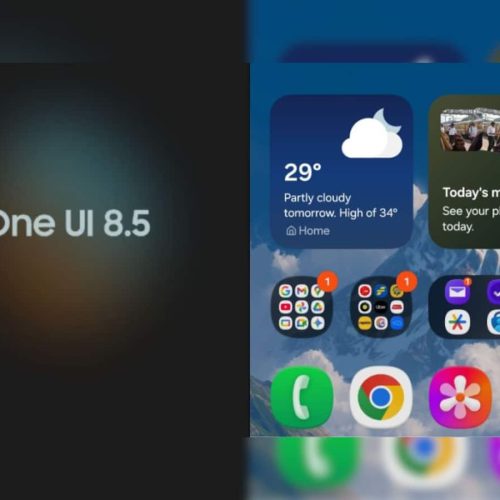
Samsung Galaxy S26 Series Launch: Samsung’s Galaxy S series is one of the most famous Android flagship phone lineups. Every year, the South Korean company brings its best features to this series. The same is expected in 2026 with the new Galaxy S26 phones. A big leak has now given us an early look at Samsung’s 2026 plans. The Galaxy S26, S26+, and S26 Ultra seem to keep a familiar design but with a more premium look. All three models, known inside the company as M1 (S26), M2 (S26+), and M3 (S26 Ultra), may come with a new pill-shaped camera module that stands out clearly on the back. As per rumours, the Samsung Galaxy S26 lineup could arrive in February 2026, breaking a tradition that has held steady for years. The firmware leaked also shows that the Galaxy S26 series will come with One UI 8.5, which is based on Android 16. Reports say that current Galaxy S25 users might get the One UI 8.5 beta update in the second week of December. Add Zee News as a Preferred Source Samsung Galaxy S26 Series Specifications (Leaked) The Samsung Galaxy S26 series is expected to come with the new Snapdragon 8 Elite Gen 5 chipset in some regions, while other markets may get Samsung’s own Exynos 2600. It is rumoured to use a powerful 2nm process, which could offer much better performance and improved display quality for the S26 lineup. Samsung may also use its latest M14 AMOLED panels, giving the phones brighter screens and more accurate colours. In terms of battery, the Galaxy S26 Ultra may get a larger 5,400mAh battery, while the Galaxy S26 and S26 Plus could come with 4,300mAh and 4,900mAh batteries, respectively. On the photography front, the S26 Ultra might feature an upgraded 200MP main sensor, along with the same 50MP ultrawide and 50MP 5x telephoto lenses. A new 12MP sensor is expected for the 3x telephoto camera. (Also Read: Did You Know Your Older Apple iPhones Including iPhone 16 Pro Beat iPhone 17 Pro Models In This Feature? How It Works And Check Price) Meanwhile, the Samsung Galaxy S26 and Samsung S26 Plus are said to include a 50MP ISOCELL S5KGNG main camera, a 12MP ISOCELL S5K3LD telephoto lens, and a 12MP ultrawide camera, which is likely to remain unchanged. Samsung Galaxy S26 Series Launch And Price (Leaked) The company is expected to launch the Galaxy S26 series on February 25, 2026 in San Francisco in the US. According to reports, the company chose this location to highlight its focus on artificial intelligence (AI). However, the pricing remains unclear for now. However, the company may keep the price tags unchanged from the Galaxy S25 series. To recall, the Samsung Galaxy S25 started at Rs 80,999. The Galaxy S25 Plus was launched at Rs 99,999, and the Galaxy S25 Ultra was priced at Rs 1,29,999.

TRAI Gives Stakeholders Extra Time To Submit Comments On Interconnection Rules Review- Details | Technology News
Interconnection Rules Review: The Telecom Regulatory Authority of India (TRAI) has extended the deadlines for stakeholders to share their comments and counter comments on its latest consultation paper on reviewing interconnection rules, the Ministry of Communications said on Monday. The consultation paper was released on November 10, and the original dates for submitting comments were December 8 for comments and December 22 for counter comments. TRAI said it received several requests from industry groups and stakeholders asking for more time to study the issues and prepare their responses. After considering these requests, the authority has extended the new deadline for comments to December 15 and for counter comments to December 29. “Keeping in view the requests received from industry association and stakeholders for an extension of time for submission of comments on the said consultation paper, it has been decided to extend the last date for submission of written comments and counter-comments up to December 15 and December 29, respectively,” the ministry said. Add Zee News as a Preferred Source Stakeholders can send their inputs in electronic form to Sameer Gupta, Advisor (Networks, Spectrum and Licensing-I). The consultation aims to gather industry views on updating interconnection regulations to keep pace with evolving telecom technologies and market requirements. TRAI Takes Action Against Spam In Telecom Sector Meanwhile, the telecom regulatory body said last month that it has taken major action against spam and fraud in the telecom sector, disconnecting more than 21 lakh mobile numbers and blacklisting around one lakh entities over the past year. According to the regulatory body, the actions were based on complaints filed by citizens, and the Authority has now urged people to continue reporting spam through the TRAI DND App to stop misuse of telecom services at the source. According to the telecom regulator, many users believe that blocking unwanted numbers on their phones is enough. (With IANS Inputs)
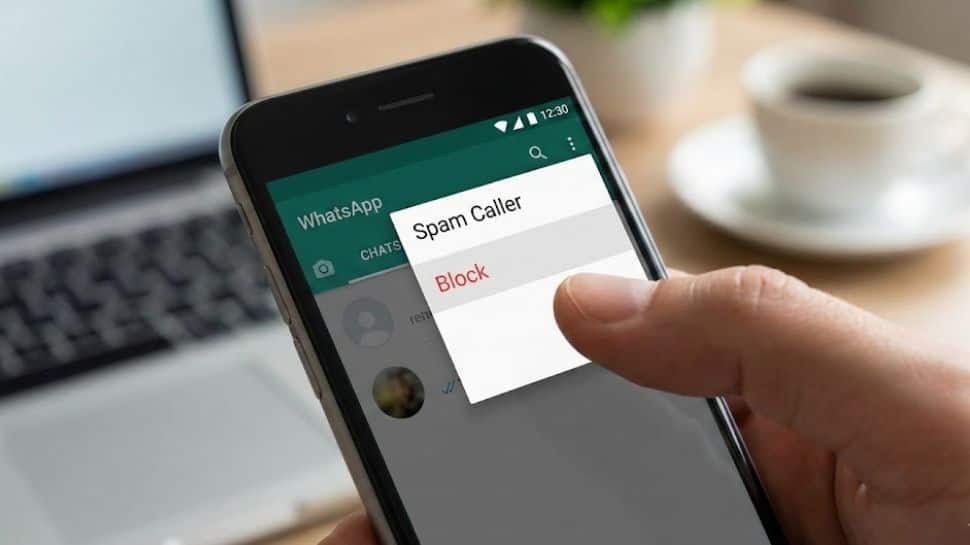
Want To Block Unwanted Numbers On WhatsApp? Follow THESE Simple Steps | Technology News
Block Unwanted Number On WhatsApp: In today’s highly connected world, WhatsApp has become one of the most popular apps for staying in touch with friends, family, and colleagues. But its huge popularity also brings a downside. Imagine, Your phone buzzes late at night when your phone lights up again, another unwanted ring breaking the silence. Maybe it is someone trying to sell you a loan you never asked for, or a scammer creating a fake emergency. Every time you have ignored them, muted them, and even hoped they would finally stop. But like uninvited guests who do not understand the meaning of no, they keep returning and disturbing your quiet moments. In the world of fast-paced technology, WhatsApp is meant to keep us close to the people who matter, these random callers feel like intruders walking into your personal space. But what if you could finally shut them out for good? In this article, we will tell you how to block those unwanted contacts in a few simple steps, so you can reclaim your peace, your privacy, and your phone once again. Add Zee News as a Preferred Source How To Block Unwanted Number On WhatsApp Step 1: Open WhatsApp on your phone. Step 2: Go to the chat with the unwanted number. Step 3: Tap the three dots in the top right corner of the chat. Step 4: Choose More, then tap Block. Step 5: Tap Block again to confirm. WhatsApp Silence Unknown Callers Feature Adding further, WhatsApp also gives users the option to silence calls from unknown numbers. The company says that the Silence Unknown Callers feature is made to improve privacy and help users manage their calls better. When this feature is turned on, calls from numbers you do not know will not ring or disturb you. However, these calls will still appear in your Call list, just in case the caller is someone important.

How To Create Your Own 3D Caricature Using Gemini Nano Banana Pro — Check Step-By-Step Guide To The Hottest AI Trend Of 2025 | Technology News
Google’s Nano Banana Pro model has sparked a viral trend: Users are generating stylised 3D caricatures of themselves using the model. Several creators have already shared eye-catching results across social platforms, and Google has published detailed prompt guidance so anyone can try it. Prompt: A highly stylised 3D caricature of the person in the uploaded image, with expressive facial features and playful exaggeration. Rendered in a smooth, polished style with clean materials and soft ambient lighting. Bold colour background to emphasise the character’s charm and presence. Step-by-Step: Create your 3D caricature with Nano Banana Pro Add Zee News as a Preferred Source Open the Gemini app or visit the Gemini website. Sign in with your Google account — a Google AI Pro subscription is recommended for the best results. Tap the Tools icon beneath the search bar and choose Create images. Upload a clear photo of yourself, then paste the prompt (above) into the input field. Review the generated output. If you’re not satisfied, ask Gemini to refine or correct the image and re-render. Pro tip: If you’re unsure how to perfect the prompt, ask ChatGPT or another AI assistant to help you tune it for a better result. If you want to remove the Gemini watermark before sharing, you can use Qwen’s image editor and request removal of the watermark in the bottom-right corner. Why Nano Banana Pro stands out Although Nano Banana Pro is relatively new, it has quickly gained recognition as a leading image-generation and editing model. Key strengths include: Tight integration with Google Search and improved text rendering compared to earlier iterations, allowing users to generate complex visuals and infographics from simple text prompts. The ability to create hyper-realistic imagery from polished professional headshots to detailed product renders — with convincing textures and lifelike skin tones or fabrics. Many users on social media have been surprised by how closely some Nano Banana Pro outputs resemble real photographs, demonstrating the model’s strong rendering fidelity. Because of these capabilities, Nano Banana Pro is being used for both playful trends like 3D caricatures and more practical image-editing or content-creation workflows. As AI-generated visuals continue to evolve, trends like 3D caricatures showcase just how creative and accessible these tools have become. With Gemini Nano Banana Pro, users can transform simple photos into stylised, high-quality artworks in moments—opening the door to endless experimentation. Whether you’re creating content for fun, enhancing your social media presence, or exploring the latest advancements in AI imaging, this model offers a powerful and entertaining way to bring your imagination to life.