
Global AI Rankings: India has become the world’s third most competitive country in artificial intelligence, according to Stanford University’s Global AI Vibrancy Tool released on Sunday. The ranking shows that India’s rapidly growing tech ecosystem and strong pool of skilled professionals are helping the country gain an important position in the global AI race. Data shared by Visual Capitalist, based on Stanford’s report, shows that the United States leads the world in AI competitiveness with a score of 78.6. China ranks second with a score of 36.95, while India stands third with a score of 21.59. With this ranking, India has moved ahead of several developed nations, including South Korea, the United Kingdom, Singapore, Japan, Canada, Germany, and France. Stanford’s AI Vibrancy Tool uses a single score to measure how strong a country’s AI ecosystem is. The ranking is based on key factors such as research and development, availability of talent, investment and economic impact, infrastructure, public opinion, and government policies. Add Zee News as a Preferred Source The tool aims to show where innovation and AI talent are growing and how seriously governments are backing artificial intelligence. The data also shows that income levels play an important role in AI competitiveness. High-income countries dominate the top of the ranking, while upper-middle-income countries such as China and Brazil are steadily closing the gap. India stands out among lower-middle-income countries, as it is the only one to feature so high on the global list, underlining its unique position in the AI landscape. In specific areas, different countries lead different metrics. The United States tops categories such as research and development, responsible AI, economy, policy and governance, and infrastructure. China performs strongly in talent, economy and infrastructure, while India features among the top three in talent — reflecting its large and skilled workforce in technology and engineering. The report also flags a broader concern. While the link between national income and AI competitiveness is expected, the growing gap between countries could deepen global inequality if access to AI growth remains uneven. For India, however, the ranking is a major boost. It reflects rising investments in AI, increasing research output, a strong startup ecosystem and a massive pool of engineers and developers. (With IANS Inputs)

Motorola Edge 70 Official India Launch Date Announced; Check Expected Display, Camera, Battery, Price And Other Features | Technology News
Motorola Edge 70 Price In India: Motorola has confirmed that its ultra-slim phone, the Motorola Edge 70, is set to launch in India tomorrow, on December 15. The upcoming smartphone will be the successor to the well-received Motorola Edge 60. The Motorola Edge 70 is expected to run Android 16 with Motorola’s Hello UI and may receive three years of major OS updates and four years of security updates. It is likely to be available in three colour options, including Pantone Bronze Green, Pantone Gadget Grey, and Pantone Lily Pad. Notably, the smartphone first went official in China as the Moto X70 Air and was later launched in Europe as the Edge 70. Motorola Edge 70: Ultra-Slim Phone This smartphone is called ultra-slim because it is very thin. It is only 5.99mm thick, which puts it among a small but growing group of ultra-slim phones. The trend started in April with the Samsung Galaxy S25 Edge, which is 5.8mm thick. Add Zee News as a Preferred Source In September, Apple launched the iPhone Air, which is currently the slimmest phone at just 5.6mm. The Tecno Pova Slim is the only budget-friendly slim phone available right now. It is 5.95mm thick and costs Rs 19,999. Hence, the Motorola has a good opportunity to stand out and may even create a new category of slim smartphones. Motorola Edge 70 Specifications (Expected) The smartphone is expected to feature a 6.7-inch AMOLED display with a sharp 1.5K resolution and an impressive peak brightness of up to 4,500 nits. It is likely to be powered by the Qualcomm Snapdragon 7 Gen 4 processor, paired with up to 12GB of RAM and 256GB of internal storage. The device may pack a large 5,000mAh battery, supported by 68W fast charging and 15W wireless charging. For added protection, it is expected to come with Gorilla Glass 7i. In terms of cameras, the phone is said to feature a triple 50MP camera setup on the rear, including a main, ultrawide, and a third sensor, along with a 50MP front camera for selfies. Additionally, the smartphone is expected to offer strong durability with a MIL-STD-810H certification, IP68 and IP69 ratings for water and dust resistance, and a sturdy aircraft-grade aluminium frame. (Also Read: ChatGPT-5.2 vs Grok 4.1: OpenAI Launches Its Latest AI Model, Benchmarks, Price, Availability, Privacy, And Features Explained) Motorola Edge 70 Price In India And Availability (Expected) The Motorola Edge 70 is expected to be priced under Rs 35,000, which sets higher expectations for the smartphone. For comparison, the Motorola Edge 60 was launched at Rs 25,999, while the more premium Edge 60 Pro is currently priced at Rs 29,999. The upcoming Edge 70 is likely to be available for purchase through Flipkart as well as other offline and online retail channels.

Agentic AI Transforms Banks Frontline Sales, Boosts Productivity And Revenue: Report | Technology News
New Delhi: Agentic artificial intelligence (AI) systems are rapidly reshaping how banks manage frontline sales, offering a potential breakthrough for relationship managers long burdened by inefficient systems, weak leads, and heavy administrative workloads, according to a McKinsey report. “In frontline sales, the potential is vast. Agentic AI makes it possible to automate the complex workflows characteristic of financial services—something bankers have long wanted to do but have never fully succeeded in,” the report noted. At leading global banks, agentic AI is already being deployed across prospecting, lead nurturing, and account management, delivering measurable gains in productivity and revenue within months. Unlike traditional generative AI, which responds to prompts, agentic AI can independently interpret objectives, break them into tasks, interact with systems and people, execute actions, and continuously adapt with minimal human input. Add Zee News as a Preferred Source The shift comes at a critical time for the banking sector, which is facing margin pressure, slowing growth, and rising cost-to-income ratios. Industry research indicates that when banks redesign an entire frontline domain end-to-end using agentic AI, revenues per relationship manager can rise by 3 to 15 per cent, while the cost to serve can fall by 20 to 40 per cent. “As banks face margin pressure, slowing growth, and rising cost-to-income ratios, agentic AI represents not just a productivity tool but a new operating model for relationship management,” the report said. Frontline bankers have long cited poor-quality leads, excessive compliance requirements, and fragmented technology systems as key obstacles to effective selling. Many relationship managers spend more time updating customer relationship management systems and preparing reports than engaging with clients. This imbalance has contributed to high burnout and attrition across sales teams. Agentic AI offers a way to rebalance this equation. Intelligent agents can continuously scan markets, analyse structured and unstructured data, prioritise high-potential prospects, and automate follow-ups. In sales outreach, agents can personalise communications at scale, nurture thousands of leads simultaneously, and escalate only qualified opportunities to human bankers. This allows relationship managers to focus on higher-value conversations and complex client needs. Banks piloting these systems have reported significant operational improvements. AI-driven market mapping has expanded sales pipelines by roughly 30 per cent in some institutions, while automated lead nurturing has doubled or tripled the number of qualified leads. In parallel, AI-powered account intelligence tools have reduced meeting preparation time and improved the quality of client interactions. With routine tasks handled by agents, bankers can act more as trusted advisors, concentrating on insight-led discussions, strategic problem-solving, and long-term relationship building. However, the report cautions that capturing the full value of agentic AI requires more than deploying isolated tools. Banks must reimagine frontline operating models end-to-end, invest in robust data foundations, establish clear governance, and upskill employees to work effectively alongside AI agents. With revenue uplift and productivity gains now visible, agentic AI is increasingly seen not as an experiment but as a new operating paradigm for frontline banking.
Meet Bengaluru Gen Z Techie Who Goes Viral With Epic Year In AI: Worked At Apple And Microsoft, Created AI Models, And Earned 10,000 Stars on GitHub; Know Who He Is… | Technology News
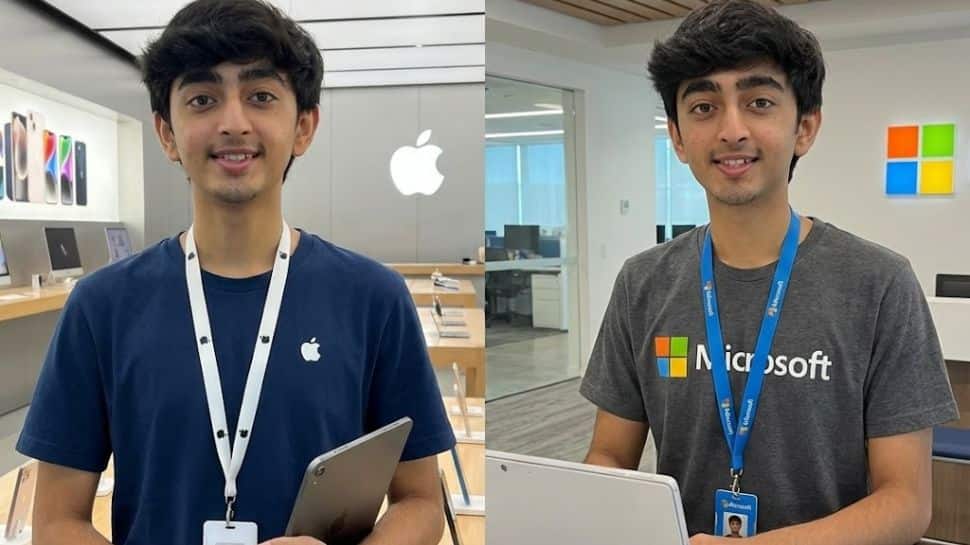
Bengaluru Gen Z Techie Post Goes Viral: From the busy streets of Bengaluru to the innovative hubs of Silicon Valley, 22-year-old Adithya S Kolavi has captured the attention of tech enthusiasts and social media users alike. His recent LinkedIn post went viral after he shared a remarkable roundup of his achievements over the past year. From internships at Apple and Microsoft to receiving a six-figure grant from Meta, Adithya’s journey highlights groundbreaking work in AI, including research papers in top conferences, popular open-source tools, and multiple hackathon wins. Adding further, he built a strong online presence, connecting with researchers and founders around the world. Many in the tech community are calling his story one of the most inspiring Gen Z journeys in AI today. Bengaluru Gen Z Techie Achievements Add Zee News as a Preferred Source Adithya started his year with a Machine Learning internship at Apple, where he worked with senior engineers and learned a lot about building smart technology. After that, he joined Microsoft Research and helped develop advanced projects on agentic memory, pushing the boundaries of AI. Later, he achieved something remarkable. He received a six-figure USD LLaMA Impact Grant from Meta, which allowed him to create powerful AI models at his startup, CognitiveLab. His work did not stop there. Adithya also shared his projects with the world, and one of his tools, GitVizz, became very popular. It earned over 10,000 stars on GitHub and was accepted into the Vercel Open Source Sponsorship Program. Building Networks And Advancing AI Across Twitter, LinkedIn, and GitHub, Adithya grew his followers to nearly 20,000. This helped him connect with researchers and startup founders from around the world. Over the year, he also published five research papers in top conferences and workshops, including AAAI, NAACL, CVPR, ICCV, and NeurIPS. His work focused on exciting topics like agentic systems, models that understand multiple languages and types of data, and creating large amounts of AI training data. Bengaluru Gen Z Techie Launches Motion Graphics Tool He launched Vibemotion, a motion-graphics tool that got over 200,000 views. During the year, he also won three big hackathons, including the ElevenLabs Global Hackathon and the 100xEngineers National AI Hackathon, showcasing his skills and creativity in AI. Bengaluru Gen Z Techie Education Recently graduating with a B.Tech from PES University, Adithya has also been featured in The Economic Times, MIT Technology Review and Analytics India Magazine. His post concludes with a simple message that has resonated widely: “Feels like things are just getting started.” The post received over 2,000 likes and numerous comments, with many people amazed by his achievements.

ChatGPT-5.2 vs Grok 4.1: OpenAI Launches Its Latest AI Model, Benchmarks, Price, Availability, Privacy, And Features Explained | Technology News
ChatGPT-5.2 Vs Grok 4.1 Features And Price: OpenAI has launched its latest AI model series to power GPT-5.2, the newest model in the GPT-5 lineup. The new AI model will begin rolling out immediately, with paid ChatGPT subscribers receiving access first. With this launch, the main competition appears to be between Google Gemini 3 and ChatGPT-5.2, as Google’s Gemini 3 has made significant waves since its release in mid-November. Google Gemini 3 and Open AI ChatGPT-5.2 appear to be neck and neck across most metrics, indicating that OpenAI still has the capability to compete with the industry’s top players. However, Elon Musk’s Grok 4.1 also remains a strong presence on the leaderboards. In this article, we will compare ChatGPT-5.2 and Elon Musk’s Grok 4.1, as GPT-5.2 is still fresh out of the box. This means that benchmark scores are likely to change over time as more users gain access and put the model through its paces. Add Zee News as a Preferred Source ChatGPT-5.2 Vs Grok 4.1: LMArena Rankings At the moment, GPT-5.2 is missing from most LMArena rankings, which makes a side-by-side comparison with Grok 4.1 challenging. OpenAI has stated that GPT-5.2 delivers slightly better performance than GPT-5.1 across nearly all benchmarks. Since GPT-5.1 is already listed on LMArena, its scores offer a useful reference point for estimating GPT-5.2’s potential. For now, GPT-5.2 appears on LMArena only in the Web Development category, where it holds the second position, ranking above Grok. Based on these early indicators, GPT-5.2 is expected to outperform Grok in most categories. That said, Grok could still maintain its second-place position on the Text leaderboard, where it currently trails Gemini 3. (Also Read: WhatsApp Rolls Out New Features Across Missed Call Messages, Chat Upgrades With Meta AI, And New Media Tab On Desktop- Details) ChatGPT-5.2 Vs Grok 4.1: Features Both the models have AI chatbot functionality and the ability to generate images directly from the AI chatbot. ChatGPT can make videos with the help of Sora 2, while Grok can generate videos and images from its Grok Imagine platform. Both Sora and Grok Imagine lag far behind rivals like Google’s Veo 3 and LumaAI’s Ray3. ChatGPT-5.2 Vs Grok 4.1: Privacy And Safety Controls ChatGPT-5.2 and Grok 4.1 take slightly different approaches to privacy and user controls, especially around safety, data use, and customization. ChatGPT-5.2 builds on OpenAI’s safety stack with stronger content filtering, age-aware protections, and more granular settings like parental controls, options to turn off memory, limit features such as image generation, and opt out of training, giving families and enterprises clearer levers over how data and capabilities are used. On the other hand, the Grok 4.1 emphasizes privacy in the client context with features such as encrypted chat in some integrations, configurable retention windows, and export tools, along with clearer controls to prevent conversations from being used to improve models, making it attractive for users who prioritize data minimization and local control alongside a more personality-driven assistant. ChatGPT-5.2 Vs Grok 4.1: Availability Both the new AI models are generally available to public via OpenAI’s ChatGPT and Grok’s chat platform, respectively. As we know that the most people interact with ChatGPT and Grok directly through their interfaces. However, ChatGPT is integrated into more products than Grok, giving it a leg up in terms of overall availability. ChatGPT-5.2 Vs Grok 4.1: Price To use GPT-5.2, you need a ChatGPT Pro subscription, which costs $20 per month or $200 per month, depending on the plan you choose. Grok’s free tier only provides access to Grok 4, not Grok 4.1. To use Grok 4.1, you’ll need a paid subscription. SuperGrok plans start at $30 per month and can go up to $300 per month for higher usage limits.

WhatsApp Rolls Out New Features Across Missed Call Messages, Chat Upgrades With Meta AI, And New Media Tab On Desktop- Details | Technology News
WhatsApp New Features: Meta-owned platform WhatsApp has rolled out plenty of in-app features just ahead of the holiday season. The update includes missed call messages, new interactive Status stickers, upgrades to the Meta AI image generation tool and a redesigned media tab on desktop. Notably, the new update is rolling out globally across iOS, Android, Mac, Windows, and Web platforms. WhatsApp Features: Smarter Calling Tools The latest update to missed call messages allows users to leave a quick voice or video note when a call goes unanswered. Based on the type of call, the feature automatically suggests the right format, making it easier to stay connected during the busy festive season. Add Zee News as a Preferred Source With just one tap, users can send a message without waiting for the other person to pick up, helping them reconnect faster. The platform is also improving voice chats with real time reactions. Participants can share quick responses, such as a cheerful “cheers,” without interrupting the conversation. Adding further, the group video calls now include a speaker spotlight feature that automatically highlights the active speaker, making conversations easier to follow. WhatsApp New Features: Chat Upgrades With Meta AI The platform is making a big upgrade to its AI features by adding new image generation models from Midjourney and Flux. This will help users create higher quality custom images, including holiday greetings, directly using Meta AI on WhatsApp. Another key update is AI powered photo animation. This feature can turn a static image into a short video, making it easier to share creative content in chats or on status updates. WhatsApp New Features: New Media Tab On Desktop On desktop, WhatsApp is adding a new Media tab that brings together all photos, videos, documents, and links from different chats in one place. This makes it easier for Mac, Windows, and web users to find and manage files. The app has also improved link previews, reducing clutter caused by long URLs and making chats look cleaner. WhatsApp New Features: Fresh Sticker Options WhatsApp is introducing new sticker options, music lyrics, and questions that friends can reply to directly. Some stickers also support tap interactions, giving users more fun and interactive ways to express themselves. Channel owners can now post questions to collect real time feedback, making it easier to understand their audience and boost engagement.

CERT-In Building Robust And Trusted Cyber Defence Architecture: Govt Officials | Technology News
New Delhi: With CERT-In’s research collaborations, public–private partnerships and participation in international forums, the national cyber security agency is building a robust and trusted cyber defence architecture aligned with the vision of ‘Digital India’, an official statement said on Saturday. Dr. Sanjay Bahl, Director General, CERT-In and Controller of Certifying Authorities (CCA) at MeitY, underscored that CERT-In issues timely alerts and tailored advisories to organisations and citizens against emerging threats, ensuring proactive protection without causing unnecessary panic. Speaking at a session for visiting journalists from Europe, America and Central Asian countries, Dr Bahl highlighted the role and responsibilities of the agency in cyber security, crisis management, vulnerability assessment, information sharing, and coordinated response to cyber incidents, empanelment of auditors, specialised training programmes in India. Add Zee News as a Preferred Source Dr Bahl also underscored India’s rapid emergence as a global cybersecurity hub, driven by more than 400 startups and a skilled workforce of over 6.5 lakh professionals, powering a $20 billion cybersecurity industry. At the session, he noted that these innovators are building advanced solutions for threat detection, cyber forensics, and AI-based monitoring systems, reinforcing India’s commitment to a secure and resilient digital ecosystem. Dr Bahl observed that Artificial Intelligence (AI) acts as a double-edged sword — enabling both defenders and adversaries. He elaborated on how CERT-In leverages AI-driven analytics and automation to detect, prevent, and respond to cyber incidents in real time, while also developing countermeasures against malicious AI-enabled attacks. The visiting journalists were briefed on CERT-In’s continuous drills, capacity-building initiatives, and international collaborations. Dr Bahl also stated that India reported 147 ransomware incidents in 2024, adding that CERT-In’s coordinated actions significantly mitigated their impact through real-time intelligence sharing and forensic interventions. Krishan Kumar Singh, Joint Secretary, MeitY, highlighted various initiative of the ministry, including the ‘India AI Impact Summit’, scheduled to be held in February 2026, policy support for startups developing indigenous cybersecurity solutions, cyber-security research and development, various national level initiatives and projects of the ministry.

Google Cloud Gen AI Exchange Hackathon Concludes In Bengaluru | Technology News
Bengaluru: The Google Cloud Gen AI Exchange Hackathon 2025 wrapped up its five-month run with a national finale in Bengaluru, highlighting both the scale of India’s developer community and the widening scope of generative AI applications. The event drew more than 270,000 participants, making it one of the most comprehensive AI-focused hackathons held in the country. The hackathon centred on problem statements sourced directly from industry and government stakeholders, like the Maharashtra state government, NASSCOM Centre of Excellence, JK Cement, EaseMyTrip and LVX, said the official statement. The brief to developers was to build workable AI solutions for issues ranging from industrial efficiency and legal accessibility to misinformation detection, mental health and public governance, it mentioned. At the finale, the top 100 teams presented prototypes before a jury of 30 industry experts. Ten teams were recognised across different categories. According to the release, among the winning ideas was YouthMind, a platform designed to support mental wellness in young people through daily check-ins and a behavioural risk index. Another team created ArtisanGully, a tool to help local artisans generate product listings and promotional content using AI. Legal complexity was tackled through Legal SahAI, a system that breaks down dense documents and assists with form-based processes. Add Zee News as a Preferred Source Other notable entries included an explainable AI model for detecting deepfakes, a career-skills advisory engine, an automated system for generating test cases, and an AI analyst designed to help investors evaluate startup pitches. Industrial and governance challenges were also addressed through projects focused on cement plant optimisation and dashboard-driven citizen service delivery. The event underscored the rapid growth of India’s AI developer landscape and the increasing involvement of public institutions and large enterprises in crowdsourcing innovation. While the hackathon has concluded, several of the showcased prototypes are expected to move into further development, signalling a shift toward AI tools built for direct application rather than experimentation alone, the official statement read.

Cloud Data Centre Capacity In India Estimated To Grow 4-5 Times By 2030: Govt | Technology News
New Delhi: Cloud data centre capacity in India has reached approximately 1,280 MW, largely serving critical sectors such as banking, power and other critical public infrastructure and according to industry estimates, it will grow by 4-5 times by 2030, the Parliament was informed on Friday. The expansion of data centres in the country is being propelled by the growing digitalisation and rapid adoption of AI across both government and private sectors, accompanied by the increasing adoption of cloud services, said Union Minister of State for Electronics and IT, Jitin Prasada, in Rajya Sabha. Global technology companies are already investing significantly in India’s AI and data centre ecosystem. Google has announced a $15 billion AI Hub in Visakhapatnam, its largest investment in India, while Amazon Web Services (AWS) is setting up a $8.3 billion data centre in Maharashtra. Add Zee News as a Preferred Source The minister also stated that India is building a secure, scalable and AI-ready cloud infrastructure to support digital governance, private sector collaboration and citizen empowerment. “The growing demand for cloud services across Government, private and social sectors is driven by the country’s digital transformation and increasing use of AI-enabled applications,” he mentioned. To meet the cloud requirements of the government, a national cloud infrastructure has been established under the Digital India initiative. The “GI Cloud”, known as MeghRaj, provides secure, scalable and elastic cloud facilities for delivery of e-Governance services. The salient features of the “GI Cloud-MeghRaj” include elasticity, scalability, pay per use metering, self service provisioning, rapid deployment of applications, on demand service provisioning, etc, said the minister. National Informatics Centre (NIC) offers the cloud services to various Ministries/Departments. As on date, 2,170 Ministries/Departments have hosted their cloud-based applications on ‘MeghRaj’. The minister further stated that the National Data Centres deliver cloud services to government departments and are designed to safeguard the cloud services from potential threats by implementing a layered security framework comprising established practices, and procedures.
AI Investment Surge To Accelerate In 2026, Offsetting Tariff Impact On US Economy: Report | Technology News
New Delhi: Artificial intelligence-related investments are set to accelerate sharply in 2026 as companies expand spending to keep pace with the fast-growing AI revolution, according to a report. It also said the surge in AI-driven private-sector spending is significantly cushioning the negative impact of tariff hikes on the US economy. Fitch Ratings, in a report, said, “Corporate plans suggest another AI-related investment increase in 2026. AI-driven private-sector spending is significantly cushioning the negative impact of tariffs.” It highlighted that while global growth is expected to slow, the resilience shown by the US is partly due to strong AI-linked investment momentum. Add Zee News as a Preferred Source The report noted that world GDP growth is projected to ease to 2.5 per cent in 2025, down from 2.9 per cent in 2024. The US economy growth is also expected to dip to 1.8 per cent in 2025 from 2.8per cent in 2024. Fitch had earlier anticipated a sharper deceleration in the US following the steep rise in tariff rates. However, the report stated that the “tariff shock” turned out milder than expected as it coincided with a major upturn in private-sector spending linked to the AI boom. The report added that the sharp rise in IT investment seen in national accounts is further supported by data from the largest US technology companies. Capital spending by AI hyperscalers, including the “Magnificent 7”, has doubled since 2023 to USD 400 billion as companies pour money into data centres. Corporate plans also indicate another wave of AI-related investment growth in 2026. It said the AI boom is already having a clear macroeconomic impact. In the first half of 2025, IT capital spending accounted for nearly 90 per cent of US GDP growth, reflecting the scale at which AI is reshaping investment patterns. The AI-fuelled equity market rally could also add 0.4 percentage points to consumption, providing additional support to the economy. The report noted that the strong momentum in IT capex has so far not been accompanied by a rise in corporate leverage at the aggregate level. Upward revisions in private capital expenditure forecasts are helping soften the drag caused by tariff increases. Overall, Fitch stated that the ongoing surge in AI-related investments is emerging as a crucial counterbalance to economic pressures arising from higher tariffs, while also laying the foundation for long-term structural transformation.