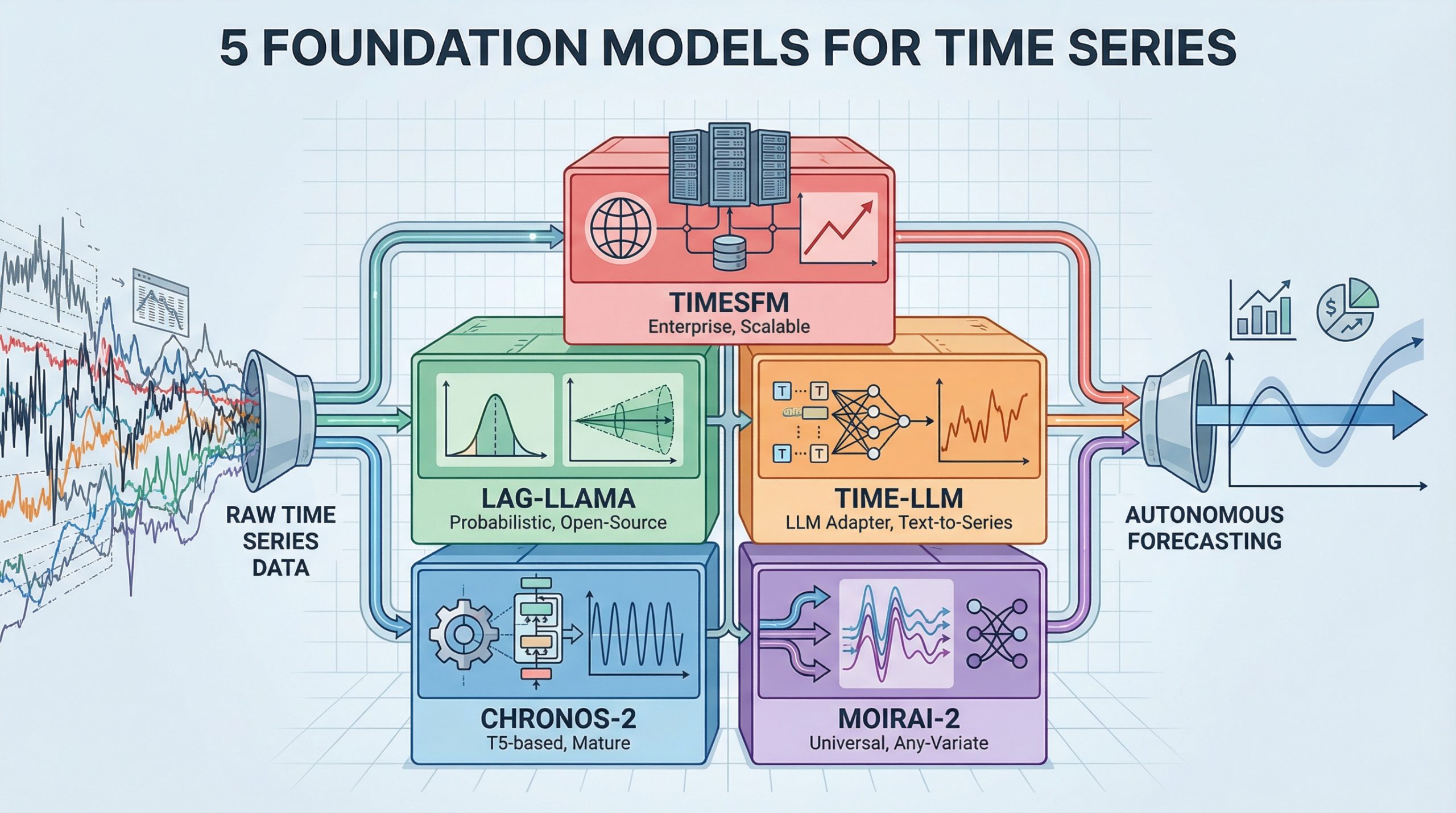
The 2026 Time Series Toolkit: 5 Foundation Models for Autonomous ForecastingImage by Author Introduction Most forecasting work involves building custom models for each dataset — fit an ARIMA here, tune an LSTM there, wrestle with Prophet‘s hyperparameters. Foundation models flip this around. They’re pretrained on massive amounts of time series data and can forecast new patterns without additional training, similar to how GPT can write about topics it’s never explicitly seen. This list covers the five essential foundation models you need to know for building production forecasting systems in 2026. The shift from task-specific models to foundation model orchestration changes how teams approach forecasting. Instead of spending weeks tuning parameters and wrangling domain expertise for each new dataset, pretrained models already understand universal temporal patterns. Teams get faster deployment, better generalization across domains, and lower computational costs without extensive machine learning infrastructure. 1. Amazon Chronos-2 (The Production-Ready Foundation) Amazon Chronos-2 is the most mature option for teams moving to foundation model forecasting. This family of pretrained transformer models, based on the T5 architecture, tokenizes time series values through scaling and quantization — treating forecasting as a language modeling task. The October 2025 release expanded capabilities to support univariate, multivariate, and covariate-informed forecasting. The model delivers state-of-the-art zero-shot forecasting that consistently beats tuned statistical models out of the box, processing 300+ forecasts per second on a single GPU. With millions of downloads on Hugging Face and native integration with AWS tools like SageMaker and AutoGluon, Chronos-2 has the strongest documentation and community support among foundation models. The architecture comes in five sizes, from 9 million to 710 million parameters, so teams can balance performance against computational constraints. Check out the implementation on GitHub, review the technical approach in the research paper, or grab pretrained models from Hugging Face. 2. Salesforce MOIRAI-2 (The Universal Forecaster) Salesforce MOIRAI-2 tackles the practical challenge of handling messy, real-world time series data through its universal forecasting architecture. This decoder-only transformer foundation model adapts to any data frequency, any number of variables, and any prediction length within a single framework. The model’s “Any-Variate Attention” mechanism dynamically adjusts to multivariate time series without requiring fixed input dimensions, setting it apart from models designed for specific data structures. MOIRAI-2 ranks highly on the GIFT-Eval leaderboard among non-data-leaking models, with strong performance on both in-distribution and zero-shot tasks. Training on the LOTSA dataset — 27 billion observations across nine domains — gives the model robust generalization to new forecasting scenarios. Teams benefit from fully open-source development with active maintenance, making it valuable for complex, real-world applications involving multiple variables and irregular frequencies. The project’s GitHub repository includes implementation details, while the technical paper and Salesforce blog post explain the universal forecasting approach. Pretrained models are on Hugging Face. 3. Lag-Llama (The Open-Source Backbone) Lag-Llama brings probabilistic forecasting capabilities to foundation models through a decoder-only transformer inspired by Meta’s LLaMA architecture. Unlike models that produce only point forecasts, Lag-Llama generates full probability distributions with uncertainty intervals for each prediction step — the quantified uncertainty that decision-making processes need. The model uses lagged features as covariates and shows strong few-shot learning when fine-tuned on small datasets. The fully open-source nature with permissive licensing makes Lag-Llama accessible to teams of any size, while its ability to run on CPU or GPU removes infrastructure barriers. Academic backing through publications at major machine learning conferences adds validation. For teams prioritizing transparency, reproducibility, and probabilistic outputs over raw performance metrics, Lag-Llama offers a reliable foundation model backbone. The GitHub repository contains implementation code, and the research paper details the probabilistic forecasting methodology. 4. Time-LLM (The LLM Adapter) Time-LLM takes a different approach by converting existing large language models into forecasting systems without modifying the original model weights. This reprogramming framework translates time series patches into text prototypes, letting frozen LLMs like GPT-2, LLaMA, or BERT understand temporal patterns. The “Prompt-as-Prefix” technique injects domain knowledge through natural language, so teams can use their existing language model infrastructure for forecasting tasks. This adapter approach works well for organizations already running LLMs in production, since it eliminates the need to deploy and maintain separate forecasting models. The framework supports multiple backbone models, making it easy to switch between different LLMs as newer versions become available. Time-LLM represents the “agentic AI” approach to forecasting, where general-purpose language understanding capabilities transfer to temporal pattern recognition. Access the implementation through the GitHub repository, or review the methodology in the research paper. 5. Google TimesFM (The Big Tech Standard) Google TimesFM provides enterprise-grade foundation model forecasting backed by one of the largest technology research organizations. This patch-based decoder-only model, pretrained on 100 billion real-world time points from Google’s internal datasets, delivers strong zero-shot performance across multiple domains with minimal configuration. The model design prioritizes production deployment at scale, reflecting its origins in Google’s internal forecasting workloads. TimesFM is battle-tested through extensive use in Google’s production environments, which builds confidence for teams deploying foundation models in business scenarios. The model balances performance and efficiency, avoiding the computational overhead of larger alternatives while maintaining competitive accuracy. Ongoing support from Google Research means continued development and maintenance, making TimesFM a reliable choice for teams seeking enterprise-grade foundation model capabilities. Access the model through the GitHub repository, review the architecture in the technical paper, or read the implementation details in the Google Research blog post. Conclusion Foundation models transform time series forecasting from a model training problem into a model selection challenge. Chronos-2 offers production maturity, MOIRAI-2 handles complex multivariate data, Lag-Llama provides probabilistic outputs, Time-LLM leverages existing LLM infrastructure, and TimesFM delivers enterprise reliability. Evaluate models based on your specific needs around uncertainty quantification, multivariate support, infrastructure constraints, and deployment scale. Start with zero-shot evaluation on representative datasets to identify which foundation model fits your forecasting needs before investing in fine-tuning or custom development. About Vinod Chugani Vinod Chugani is an AI and data science educator who has authored two comprehensive e-books for Machine Learning Mastery: The Beginner’s Guide to Data Science and

Ubisoft cancelled games: Six titles scrapped, including Prince of Persia: The sands of time remake; fans disappointed | Technology News
Ubisoft cancelled games: The French video game publisher Ubisoft has cancelled several game projects as part of a major company restructuring, disappointing gamers around the world. In an announcement on January 21, 2026, the company confirmed that six games have been cancelled, including the highly anticipated Prince of Persia: The Sands of Time Remake. The move comes as Ubisoft reorganises its internal structure into five specialised “Creative Houses,” each focused on different genres and franchises. According to the company, these changes are designed to help improve creative output and place greater focus on the quality of future releases. Six games cancelled Add Zee News as a Preferred Source Among the six games that have been scrapped, the most talked about is Prince of Persia: The Sands of Time Remake, which many fans had been eagerly waiting for. The remake had been in development for several years and was expected to launch eventually, but Ubisoft said it no longer fits the company’s quality and strategic goals. In addition to the remake, Ubisoft has cancelled four unannounced titles, including three new IPs, along with one mobile game that had not been publicly revealed. The cancellations have led to disappointment within the gaming community, especially among those who were hoping to see these projects come to life. Social media posts from fans have expressed sadness and frustration over the news. (Also Read: OnePlus To Be Dismantled? What It Means For Existing Users As India CEO Breaks Silence And Says…) More games delayed Ubisoft has also confirmed that seven other games currently in development will be delayed to allow developers more time to improve quality. One of the delayed titles is believed to be a remake of Assassin’s Creed IV: Black Flag, which has been rumoured for some time. These delays mean players will have to wait longer for these games to be released, likely in 2027. Company restructuring According to reports, the game cancellations are part of a broader reset aimed at strengthening Ubisoft’s creative strategy. The company plans to focus more on its major franchises and new technologies, including AI-driven game development and improved player experiences. Ubisoft has also revised its financial outlook due to the cancellations and delays, expecting lower bookings and continued cost-cutting measures.
AI Impact Summit 2026: India Highlights Three Key Objectives At Davos; IT Minister Meets Google Cloud CEO-Details | Technology News
AI Impact Summit 2026 In India: As India prepares to host the AI Impact Summit in New Delhi next month, the spotlight is firmly on the country’s growing role on the global technology stage. Union Minister Ashwini Vaishnaw, speaking at Davos, emphasised that the summit is built around three clear goals, reflecting India’s steady rise as a trusted global partner, driven by its push for sovereign AI models, robust safety frameworks, and a rapidly strengthening semiconductor ecosystem. Key Objectives Of Upcoming AI Impact Summit The AI Impact Summit has been designed around three clear goals. The first is impact, focusing on how AI models, applications, and the wider AI ecosystem can boost efficiency, raise productivity, and create broader benefits for the economy. The second goal is accessibility, with a special focus on making AI more affordable and usable for India and the Global South. Add Zee News as a Preferred Source Referring to India’s success with UPI and the Digital Public Infrastructure stack, Union Minister Ashwini Vaishnaw said the world is now watching to see if India can build a similar, scalable, and cost-effective framework for AI. The third goal is safety. He stressed the importance of addressing concerns around AI by creating strong guardrails, clear guidelines, and built-in safety features. Vaishnaw added that India should also develop its own regulatory and safety framework for AI. The AI Impact Summit, scheduled for next month, will bring together global policymakers and technology leaders, and is expected to feature major investment announcements along with the launch of India’s AI models. India Crosses 2 Lakh Startups India is now home to nearly 2 lakh startups and ranks among the top three startup ecosystems in the world. Union Minister Ashwini Vaishnaw said that 24 Indian startups are currently working on chip design, one of the toughest areas for new companies. Of these, 18 have already secured venture capital funding, reflecting strong investor confidence in India’s deep-tech potential. The minister also shared details of India’s semiconductor strategy. He pointed out that around 75 per cent of global chip demand falls in the 28nm to 90nm range, which is used in sectors such as electric vehicles, automobiles, railways, defence, telecom equipment, and a large portion of consumer electronics. Ashwini Vaishnaw said India is aiming to build strong manufacturing capabilities in this segment first before moving to more advanced technologies. In collaboration with industry partners like IBM, India has a clear roadmap to progress from 28nm to 7nm chips by 2030, and further to 3nm by 2032. IT Minister Ashwini Vaishnaw Meets Google Cloud CEO Ashwini Vaishnaw also met Google Cloud CEO Thomas Kurian in Davos, where Google reaffirmed its growing commitment to India’s AI ecosystem. This includes plans for a $15 billion AI data centre in Vizag, Andhra Pradesh, along with expanded partnerships with Indian startups. During his visit, Vaishnaw also met Meta’s Chief Global Affairs Officer, Joel Kaplan, and discussed measures to ensure the safety of social media users, particularly in addressing the risks posed by deepfakes and AI-generated content. (With IANS Inputs)

Apple iOS 27 Update: AI To Play Crucial Role In Siri, Health, And Search Apps; Check Expected Features, Compatible iPhone Models And Release Date | Technology News
Apple iOS 27 Update: Apple is already setting the stage for its next big iPhone update. The Cupertino-based tech giant is working on iOS 27, which is expected to make its official debut at WWDC 2026 before rolling out to users later in the year. Rather than flashy changes, the update is likely to focus on smoother performance, better stability, and meaningful refinements that improve everyday use. According to early expectations, iOS 27 aims to quietly transform how users interact with their iPhones by making the experience faster, more reliable, and more intuitive. Apple is expected to unveil the first beta of the update on June 8 at WWDC 2026, giving developers and early adopters a first look at what’s coming next. The update is expected in September 2026, aligning with the launch of the next-generation iPhone models. Adding further, Apple is expected to introduce several new features with the upcoming update, many of which are likely to be part of its Apple Intelligence initiative, focusing on smarter, more intuitive tools that enhance everyday iPhone use. Add Zee News as a Preferred Source Apple iOS 27 Update: Features (Expected) Apple is expected to prioritise smoother performance with the upcoming update, focusing on fixing bugs, reducing glitches, and making iPhones more reliable for daily use. Users may notice smoother animations, quicker app launches, and possible improvements in battery life. Artificial intelligence is also set to play a major role, especially in apps like Health and system search. (Also Read: Will GTA 6 Release On PC After Explosion At Rockstar North HQ? Check Expected System Requirements And Price) The Health app could gain AI-powered tools that analyse user data to offer personalised insights and recommendations, while Apple may also introduce a subscription service called Health Plus for expert-led guidance. Adding further, an AI-driven Calendar app is rumoured to automatically suggest schedules and reminders. Beyond AI, Apple is likely to enhance core apps such as Photos with better organisation tools, while AirPods users may benefit from faster and more stable pairing. Siri is expected to get smarter and more personalised, with an improved ability to understand user habits and learn from past interactions to offer more relevant and helpful responses. Notably, it is rumoured that the future iPhone models could even support satellite-based 5G connectivity, helping users stay connected in remote areas during travel or emergencies. (Also Read: OPPO A6 5G Smartphone Launched In India With 7,000mAh Battery; Check Display, Camera, Price, Bank Offer And Other Features) iOS 27 Update Compatible iPhone Models (Expected) Apple is expected to support a wide range of iPhones with the upcoming update. This includes the 2026 flagship lineup, such as the iPhone Fold and the iPhone 18 series, including the iPhone 18, 18 Pro, and 18 Pro Max, all of which are likely to offer full Apple Intelligence features. The update is also expected to reach the iPhone 17 series from 2025, covering the iPhone 17, 17 Air, 17 Pro, and 17 Pro Max, along with the iPhone 16 lineup, including the iPhone 16, 16 Plus, 16e, 16 Pro, and 16 Pro Max. Older models, such as the iPhone 15 series, iPhone 14 series, iPhone 13 series, iPhone 12 series, and the iPhone SE (3rd generation), are also expected to be compatible.

OnePlus To Be Dismantled? What It Means For Existing Users As India CEO Breaks Silence And Says… | Technology News
OnePlus Dismantled In India: Chinese smartphone brand OnePlus appears to be entering an uncertain phase. Once known for disrupting the market with bold launches and strong fan-driven buzz, the brand has recently found itself at the centre of reports claiming it is being “dismantled” by parent company Oppo. However, the company has strongly refuted these claims. Responding to a report by Android Headlines, OnePlus India CEO Robin Liu said the reports are false and misleading. He clarified that the company is not shutting down and that its operations in India continue as usual. Liu also stressed that there are no plans by the parent group to wind down the OnePlus brand. The claims originated from Android Headlines, which stated that OnePlus is being “wound down and put on life support”. The publication said its conclusions are based on an investigation spanning three continents, along with market data from four independent analyst firms. Add Zee News as a Preferred Source Official statement from OnePlus pic.twitter.com/I0Ii0SOUUo — OnePlus Club (@OnePlusClub) January 21, 2026 According to the report, OnePlus may not disappear overnight. Instead, it could gradually lose its distinct identity, following a path similar to brands such as BlackBerry, Micromax, Nokia, HTC and LG, which slowly faded from relevance. OnePlus’s Strategic Shift Since 2021 This is not the first major shift for OnePlus. In 2021, the company merged parts of its design and research teams with Oppo as part of a broader restructuring. Since then, OnePlus has steadily moved away from its original positioning as a disruptive “flagship killer” that once challenged Samsung Galaxy and Apple iPhone devices. At the time, the company said the move would help it share resources, accelerate product development and continue operating as an independent brand. OnePlus Shipments Fall Sharply in 2024 Recent market data suggests growing pressure. In 2024, OnePlus shipments fell by more than 20 percent, dropping from around 17 million units to 13–14 million. In India, its market share declined from 6.1 percent to 3.9 percent, while in China it slipped from 2 percent to 1.6 percent. (Also Read: iQOO 15R Confirmed To Launch In India, Could Feature 7,600mAh Battery; Check Expected Display, Chipset, Camera, And Other Specs) During the same period, Oppo recorded a 2.8 percent increase. According to Omdia analysts, this growth was driven entirely by Oppo, with key areas such as product strategy, research and development, and market decisions becoming increasingly centralised under the parent brand. Importantly, the report does not suggest that OnePlus is shutting down or exiting key markets such as India. India accounts for more than half of OnePlus’s annual sales, and the brand continues to remain active despite a shrinking market share. Is OnePlus Undergoing Internal Restructuring? In fact, OnePlus recently hosted a high-profile launch event in India for the OnePlus 15R and Pad Go 2, backed by significant marketing spend. The company has also signed several celebrity partnerships, including cricketers Jasprit Bumrah and Smriti Mandhana, racing driver Kush Maini and singer Armaan Malik. Taken together, the developments point to internal restructuring and closer alignment with Oppo as part of a broader global reset. For now, these changes do not appear to be slowing OnePlus’s push in markets like India. (Also Read: Vivo X200T India Launch Date Officially Confirmed For Jan 27; Check Expected Camera, Display, Battery, Chipset, Price And Other Specs) What It Means For Existing OnePlus Users For existing users, there is little cause for concern. OnePlus continues to roll out new products, with more devices reportedly in the pipeline. This indicates that inventory, spare parts and after-sales support will remain available. Warranties are expected to stay valid, and users can continue to expect regular Android updates and security patches in the near future.

OPPO A6 5G Smartphone Launched In India With 7,000mAh Battery; Check Display, Camera, Price, Bank Offer And Other Features | Technology News
OPPO A6 5G Price In India: Oppo has expanded its smartphone portfolio in India with the launch of the Oppo A6 5G smartphone in India. The newly-launched mid-range smartphone focuses on battery life, durability and 5G connectivity. The OPPO A6 5G runs Android 15 with ColorOS 15 and comes in Sapphire Blue, Ice White and Sakura Pink colour options. The smartphone measures 166.6 x 78.5 x 8.6mm and weighs around 216g. OPPO A6 5G Specifications The Oppo A6 5G sports a 6.75-inch HD+ LCD display with a 720×1,570-pixel resolution, featuring a smooth 120Hz refresh rate and up to 240Hz touch sampling rate for fluid scrolling and responsive interactions. Add Zee News as a Preferred Source The device is powered by the MediaTek Dimensity 6300 chipset, paired with an ARM Mali-G57 MC2 GPU. On the camera front, the smartphone offers a dual rear setup comprising a 50-megapixel primary sensor with autofocus and a 2-megapixel monochrome sensor, while the front houses an 8-megapixel camera for selfies and video calls. The handset supports video recording at up to 1080p resolution at 60fps. A major highlight is its massive 7,000mAh battery with support for 45W wired fast charging. The Oppo A6 5G also boasts strong durability with IP66, IP68 and IP69 ratings for dust and water resistance. (Also Read: OnePlus To Be Dismantled? What It Means For Existing Users As India CEO Breaks Silence And Says…) On the connectivity front, the smartphone supports 5G, 4G LTE, Wi-Fi 5, Bluetooth 5.4 and a USB Type-C port. On the security front, the smartphone comes with a side-mounted fingerprint sensor and face unlock, while onboard sensors include an accelerometer, proximity sensor, ambient light sensor and an e-compass. OPPO A6 5G Price In India And Bank Offer The smartphone starts at Rs 17,999 for the 4GB RAM + 128GB storage variant. The 6GB RAM + 128GB model is priced at Rs 19,999, while the top-end 6GB RAM + 256GB storage version costs Rs 21,999. As part of the launch offers, Oppo is giving an instant cashback of Rs. 1,000 and a three-month no-cost EMI option on select credit and debit cards. The smartphone is currently available for purchase through the Oppo India online store. (Also Read: Will GTA 6 Release On PC After Explosion At Rockstar North HQ? Check Expected System Requirements And Price)
Will GTA 6 Release On PC After Explosion At Rockstar North HQ? Check Expected System Requirements And Price | Technology News
GTA 6 Release In India On PC: Every few months, the internet seems to panic over one thing: Grand Theft Auto VI. Even months before its official launch, GTA 6 has already earned the title of the biggest game of 2026. After facing a few delays, the game is now expected to release on time. Now, the biggest question among gamers right now is whether GTA 6 will also launch on PC? Explosion At Rockstar North Building In Scotland Before diving into that, a surprising incident occurred. Emergency services were dispatched to Rockstar North’s headquarters in Edinburgh, Scotland’s capital, early Monday morning on January 19, following reports of an explosion. Seven vehicles from the Scottish Fire and Rescue Service (SFRS) responded to the scene. Add Zee News as a Preferred Source The incident was later linked to a heating boiler malfunction, which caused structural damage to the building housing the Grand Theft Auto developer. As the central hub of Rockstar Games, the Edinburgh office has led the development of every major title in the Grand Theft Auto and Red Dead Redemption franchises. After the incident, fans have been asking: Will this affect the release of GTA 6? Rockstar now has another reason to delay GTA 6 after a major explosion was heard at the Edinburgh HQ, and the offices reportedly sustained structural damage. The building was sealed off after fire crews and police arrived at the scene, and thankfully nobody seems to have been… pic.twitter.com/4FzRlJEtKK — GTA 6 Countdown ⏳ (@GTAVI_Countdown) January 19, 2026 GTA 6 Release On PC Version GTA 6 is set to come to PC, but the exact release date is still unconfirmed. The game is expected to launch for the latest generation consoles, including Xbox Series X, Xbox Series S, PS5, and PS5 Pro, on November 19, 2026. For the PC version, earlier rumors suggested it might not release before the end of 2027, or more likely, in the first quarter of 2028. (Also Read: OnePlus To Be Dismantled? What It Means For Existing Users As India CEO Breaks Silence And Says…) However, some leaks indicate that the PC version could arrive sooner, possibly within the next eight months, due to delays experienced by fans. Speculations suggest a global and Indian PC launch on June 15, 2027, but Rockstar Games has not confirmed anything yet. GTA 6 PC System Requirements The PC system requirements for GTA 6 include Windows 10 or Windows 11 64-bit as the operating system. The game will require a processor such as Intel Core i7-8700K or AMD Ryzen 7 3700X, along with a graphics card like the NVIDIA GeForce GTX 1080 Ti or AMD Radeon RX 5700 XT. Players will need 8 GB of RAM and at least 150 GB of available storage, with an SSD recommended for optimal performance. The game also requires DirectX version 12 to run smoothly. GTA 6 PC Version Price (Expected) It is expected to come at a lower price than the console version, making it more accessible to a wider audience. Rumors suggest the Standard Edition could be priced around Rs 5,999, the Special Edition at Rs 7,999, and the Collector’s Edition may go up to Rs 13,999.
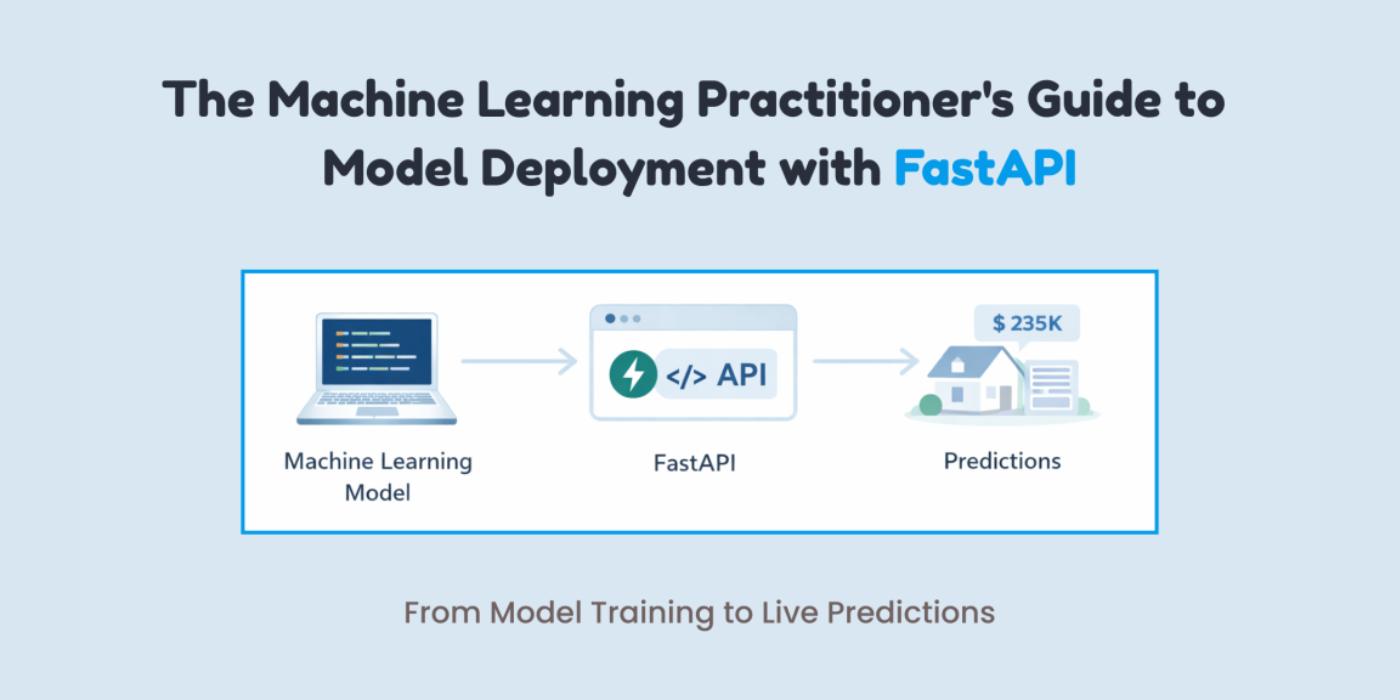
The Machine Learning Practitioner’s Guide to Model Deployment with FastAPI
In this article, you will learn how to package a trained machine learning model behind a clean, well-validated HTTP API using FastAPI, from training to local testing and basic production hardening. Topics we will cover include: Training, saving, and loading a scikit-learn pipeline for inference Building a FastAPI app with strict input validation via Pydantic Exposing, testing, and hardening a prediction endpoint with health checks Let’s explore these techniques. The Machine Learning Practitioner’s Guide to Model Deployment with FastAPIImage by Author If you’ve trained a machine learning model, a common question comes up: “How do we actually use it?” This is where many machine learning practitioners get stuck. Not because deployment is hard, but because it is often explained poorly. Deployment is not about uploading a .pkl file and hoping it works. It simply means allowing another system to send data to your model and get predictions back. The easiest way to do this is by putting your model behind an API. FastAPI makes this process simple. It connects machine learning and backend development in a clean way. It is fast, provides automatic API documentation with Swagger UI, validates input data for you, and keeps the code easy to read and maintain. If you already use Python, FastAPI feels natural to work with. In this article, you will learn how to deploy a machine learning model using FastAPI step by step. In particular, you will learn: How to train, save, and load a machine learning model How to build a FastAPI app and define valid inputs How to create and test a prediction endpoint locally How to add basic production features like health checks and dependencies Let’s get started! Step 1: Training & Saving the Model The first step is to train your machine learning model. I am training a model to learn how different house features influence the final price. You can use any model. Create a file called train_model.py: import pandas as pd from sklearn.linear_model import LinearRegression from sklearn.pipeline import Pipeline from sklearn.preprocessing import StandardScaler import joblib # Sample training data data = pd.DataFrame({ “rooms”: [2, 3, 4, 5, 3, 4], “age”: [20, 15, 10, 5, 12, 7], “distance”: [10, 8, 5, 3, 6, 4], “price”: [100, 150, 200, 280, 180, 250] }) X = data[[“rooms”, “age”, “distance”]] y = data[“price”] # Pipeline = preprocessing + model pipeline = Pipeline([ (“scaler”, StandardScaler()), (“model”, LinearRegression()) ]) pipeline.fit(X, y) 1 2 3 4 5 6 7 8 9 10 11 12 13 14 15 16 17 18 19 20 21 22 23 24 import pandas as pd from sklearn.linear_model import LinearRegression from sklearn.pipeline import Pipeline from sklearn.preprocessing import StandardScaler import joblib # Sample training data data = pd.DataFrame({ “rooms”: [2, 3, 4, 5, 3, 4], “age”: [20, 15, 10, 5, 12, 7], “distance”: [10, 8, 5, 3, 6, 4], “price”: [100, 150, 200, 280, 180, 250] }) X = data[[“rooms”, “age”, “distance”]] y = data[“price”] # Pipeline = preprocessing + model pipeline = Pipeline([ (“scaler”, StandardScaler()), (“model”, LinearRegression()) ]) pipeline.fit(X, y) After training, you have to save the model. # Save the entire pipeline joblib.dump(pipeline, “house_price_model.joblib”) # Save the entire pipeline joblib.dump(pipeline, “house_price_model.joblib”) Now, run the following line in the terminal: You now have a trained model plus preprocessing pipeline, safely stored. Step 2: Creating a FastAPI App This is easier than you think. Create a file called main.py: from fastapi import FastAPI from pydantic import BaseModel import joblib app = FastAPI(title=”House Price Prediction API”) # Load model once at startup model = joblib.load(“house_price_model.joblib”) from fastapi import FastAPI from pydantic import BaseModel import joblib app = FastAPI(title=“House Price Prediction API”) # Load model once at startup model = joblib.load(“house_price_model.joblib”) Your model is now: Loaded once Kept in memory Ready to serve predictions This is already better than most beginner deployments. Step 3: Defining What Input Your Model Expects This is where many deployments break. Your model does not accept “JSON.” It accepts numbers in a specific structure. FastAPI uses Pydantic to enforce this cleanly. You might be wondering what Pydantic is: Pydantic is a data validation library that FastAPI uses to make sure the input your API receives matches exactly what your model expects. It automatically checks data types, required fields, and formats before the request ever reaches your model. class HouseInput(BaseModel): rooms: int age: float distance: float class HouseInput(BaseModel): rooms: int age: float distance: float This does two things for you: Validates incoming data Documents your API automatically This ensures no more “why is my model crashing?” surprises. Step 4: Creating the Prediction Endpoint Now you have to make your model usable by creating a prediction endpoint. @app.post(“/predict”) def predict_price(data: HouseInput): features = [[ data.rooms, data.age, data.distance ]] prediction = model.predict(features) return { “predicted_price”: round(prediction[0], 2) } @app.post(“/predict”) def predict_price(data: HouseInput): features = [[ data.rooms, data.age, data.distance ]] prediction = model.predict(features) return { “predicted_price”: round(prediction[0], 2) } That’s your deployed model. You can now send a POST request and get predictions back. Step 5: Running Your API Locally Run this command in your terminal: uvicorn main:app –reload uvicorn main:app —reload Open your browser and go to: http://127.0.0.1:8000/docs http://127.0.0.1:8000/docs You’ll see: If you are confused about what it means, you are basically seeing: Interactive API docs A form to test your model Real-time validation Step 6: Testing with Real Input To test it out, click on the following arrow: After this, click on Try it out. Now test it with some data. I am using the following values: { “rooms”: 4, “age”: 8, “distance”: 5 } { “rooms”: 4, “age”: 8, “distance”: 5 } Now, click on Execute to get the response. The response is: { “predicted_price”: 246.67 } { “predicted_price”: 246.67 } Your model is now accepting real data, returning predictions, and ready to integrate with apps, websites, or other services. Step 7: Adding a Health Check You don’t need Kubernetes on day one, but do consider: Error handling (bad input

Elon Musk Asks X Users If He Should Buy ‘Ryanair’ After Fiery Clash With CEO | Technology News
New Delhi: Elon Musk has once again grabbed global attention by taking a business dispute to social media, this time involving Europe’s largest low-cost airline, Ryanair. The billionaire CEO of Tesla and SpaceX posted a public poll on X asking users whether he should buy Ryanair, following a heated exchange with the airline’s outspoken chief executive, Michael O’Leary. The poll came after a disagreement over the possible use of Starlink as in-flight Wi-Fi on Ryanair aircraft. Ryanair has chosen not to install Starlink on its planes, saying the costs and operational impact do not make sense for its business model. What started as a business-level disagreement quickly turned personal, with both Musk and O’Leary exchanging sharp comments in interviews and on social media. Add Zee News as a Preferred Source Musk’s poll asked a simple question about whether he should acquire Ryanair, presented in his usual casual and humorous style. The response was massive. Within hours, the poll crossed more than 750,000 votes and continued to trend widely. At the time of writing, around 76.8 per cent of users had voted in favour of the idea, although Musk has not clarified whether the poll reflects any serious takeover plan. Adding to the buzz, Musk used wordplay and humour, saying Ryanair should be run by someone named Ryan. In one post, he wrote that he wanted to “restore Ryan as their rightful ruler,” ending the message with “it is your destiny.” These comments were widely shared and helped keep the online debate alive. The dispute traces back to Ryanair’s public explanation for rejecting Starlink. Tensions rose further when O’Leary made personal remarks about Musk during an interview with Newstalk, calling him “an idiot” and advising people to ignore him. Musk responded on X by calling O’Leary “an utter idiot” and even posted “Fire him.” Ryanair’s official social media account later joined the exchange during a service outage, jokingly asking Musk if he needed Wi-Fi.

WhatsApp Update 2026: Web Users Soon To Make Group Voice And Video Calls Without App Installation – Details | Technology News
WhatsApp Update 2026: In the coming months, WhatsApp may allow users to make group voice and video calls directly on WhatsApp Web, according to recent reports. The feature is currently under development and could be rolled out in a future update, bringing one of the most requested additions to the web version of the messaging platform. At present, WhatsApp Web supports messaging and basic functions, but users have to switch to the mobile app or desktop software to start group calls. With the upcoming change, people will be able to join group voice and video calls directly from their browser without needing to install any additional apps. New Calling Experience Add Zee News as a Preferred Source The new group call support aims to bring WhatsApp Web closer to the calling experience available on Android, iOS, and the WhatsApp desktop app. Once released, it is expected to offer users more flexibility when using the platform on the web, especially for work and personal communication. Expected Features According to reports, the group calling feature on WhatsApp Web will be similar to the mobile version and may support multiple participants in a single call. WhatsApp is also said to be working on other calling features, such as call links and scheduled calls, which would allow users to plan calls in advance or share direct links to join calls. (Also Read: iQOO 15R Confirmed To Launch In India, Could Feature 7,600mAh Battery; Check Expected Display, Chipset, Camera, And Other Specs) As per reports, the feature is currently being tested internally and is not yet available in public beta builds. WhatsApp has not shared an official rollout date, and the company may introduce the capability gradually to ensure stability and performance across devices. What Users Can Expect? If the new calling update arrives as expected, WhatsApp Web users will enjoy full voice and video group calling functionality similar to what the mobile and desktop apps offer. This would make WhatsApp Web more convenient for both personal conversations and group discussions.