Urban Company claimed that its net loss declined over 40% in FY23 from INR 514 Cr in FY22 Revenue from operations jumped 45% to INR 637 Cr in FY23 from INR 438 Cr in FY22 The startup also said that its India business broke even in Q1 FY24 at an adjusted EBITDA level with negative working capital Gurugram-based hyperlocal services platform Urban Company said its net loss declined over 40% to INR 308 Cr in the financial year 2022-23 (FY23) from INR 514 Cr in the previous fiscal year on the back of a strong growth in its business. In a statement, the startup also claimed that its India business broke even in Q1 FY24 at an adjusted EBITDA level with negative working capital. “Our India business contributes approximately 90% of our revenues… Our strong unit economics with focused cost control will help us drive EBITDA improvement as the business scales,” said the startup. Besides India, the startup has operations in the UAE, Australia, Singapore, and Saudi Arabia. In FY23, Urban Company’s adjusted EBITDA loss reduced to INR 297 Cr from INR 377 Cr in the previous fiscal. Meanwhile, the startup’s revenue from operations jumped 45% to INR 637 Cr during the year under review from INR 438 Cr in FY22. Urban Company said that the growth in FY23 came on the back of investments in service quality, partner training and enablement, new innovations, brand building, and technology development. It is pertinent to note here that the startup has seen several protests by gig workers working with it, whom it calls its partners, in India this year for alleged unfair employment practices However, the company vouched for its ESG practices in its annual business summary FY23, published on Friday (August 18). Talking about its Partner Earnings Index for H1 2023, Urban Company said that the top 20% of its partners earned an average of about INR 40,000 per month, net of all commissions and other related costs (travel, product expenses, etc.). The average net earnings of partners delivering more than 30 services per month were about INR 32,000, it said. Besides, the startup said that all its active partners are provided with multiple social security benefits, including free life insurance cover of INR 6 Lakh, free disability insurance cover of INR 6 Lakh, free health insurance cover of up to INR 1 Lakh, up to 12 free medical consultations per year, and more. Urban Company’s consolidated employee expenses, excluding employee stock ownership plans (ESOPs), stood at INR 311 Cr in FY23 as against INR 262 Cr in FY22. The company spent INR 73 Cr on employee expenses in Q1 FY24, of which INR 60 Cr was spent on the India business. The ESOP/ Partner Stock Option Plan (PSOP) cost for the consolidated business declined to INR 95 Cr in FY23 from INR 203 Cr in FY22. In Q1 FY24, it stood at INR 28 Cr. “In FY23, we granted stocks to 500 service partners, of whom 30% were women,” said the company. Founded in 2014 by Abhiraj Bahl, Raghav Chandra, and Varun Khaitan, Urban Company offers a range of services such as salon and massage, home cleaning, appliance repair services, and painting. It is backed by marquee investors including Tiger Global, Steadview Capital, and Vy Capital. The company has raised a total funding of $445 Mn till date. In July last year, it raised $225 Mn in its Series F funding round, at a valuation of $2.1 Bn, led by Prosus Ventures, Wellington Management, and Dragoneer. Emphasising on its focus on customer excellence, Urban Company said in its statement today that its repeat customers (acquired in years prior to FY23) contributed about 77% of the net transaction value of the platform during FY23. The startup said this number would surpass the 90% mark in the coming years.
Photography: Amazon World Photography Day sale: Here’s what you can get
Amazon India is celebrating World Photography Day with a new sale. Photography enthusiasts can avail of attractive discounts on products from several top brands during this sale. The e-commerce giant is offering discounts on cameras and accessories from top brands including Canon, Sony, Fujifilm, Panasonic, GoPro, Digitech and more. At this sale, customers can avail of an instant discount of up to Rs 4,000 on HDFC bank credit/debit card EMI transactions and up to 12 months of no-cost EMI.Amazon World Photography Day sale: Products and dealsHere are some products to choose from the Amazon World Photography Day sale that are available with multiple deals and offers from sellers:Amazon Basics Smartphone Gimbal:Say goodbye to shakes and jerks while shooting photographs, selfies, vlogs and live streams.Get smooth, steady footage and upgrade your vlogging skills with the Gimbal stabiliser available on Amazon for Rs 5,499.Canon EOS R10 Mirrorless camera: Find your story with EOS R10. This camera is an ideal travel companion and serves as the ultimate hybrid content creation tool. Get this on Amazon for Rs 96,490Canon M50 MKII Mirrorless camera: The lightweight and stylish EOS M50 Mark II has user-friendly features like Wi-Fi connectivity. Get this Canon’s flagship mirrorless camera on Amazon with an additional Rs 4,000 bank discount for Rs 58,990DJI OM6 Smartphone Gimbal: DJI’s premier OM6 gimbal can improve shooting skills as it features integrated advanced stabilisation technology that counteracts unwanted movements and captures moments with cinematic smoothness. Get this on Amazon for Rs 14,490Digitek DSG 007 Smartphone Gimbal: Capture precious moments with Digitek gimbal that comes with 3 creative operation modes that include all follow mode, half follow mode and all lock mode for precise shooting. Get this on Amazon at an additional Rs 200 off for Rs 5,799Digitek 14-inch Ring Light with Tripod: Upgrade your vlogging skills with the light effects from Digitek ring lights. It comes with intensity control, colour temperature control and a power button making it easier to operate. Additionally, it has a step-less adjustment of colour temperature to maintain product tone or create subject details. Get this on Amazon at 60% off for Rs 1,399.FitSpark Eagle i9 Plus Action Camera: FitSpark Eagle i9 is the first-in-class action camera to offer dual screens. It comes with a Pro Wi-Fi-enabled smartphone-controlled remote to capture the scenes from a long distance. Get this on Amazon for Rs 9,499.Fujifilm Instax Mini 12 Instant Camera (Purple): Capture photos regardless of the time and place with Instax Mini 12 and present them as instant memories. It can also be a gift for your loved ones. Get this on Amazon for Rs 5,999GoPro Hero 9 Action Camera Bundle: The Hero 9 Black features a 23.6MP sensor enabling 5K videos and 20MP photos. A new front display offers a live preview for framing alongside a rear touch screen with touch zoom providing swift and intuitive control. Get this on Amazon for Rs 27,490 along with a free original GoPro battery.Hohem iSteady Smartphone Gimbal: The iSteady M6 gimbal integrates the iSteady 7.0 stabilisation algorithms enabling users to capture creations while on the move, free from shakes. Whether walking or running, it ensures filming with stabilisation resulting in smooth footage creation. Get this on Amazon for Rs 16,990IZI Dual Screen Action Camera: Unleash your creativity with this action camera that boasts a 48MP camera resolution and offers 5K at 30fps and 4K at 60fps. It captures breathtaking moments in stunning detail and fluid motion pushing the boundaries of adventure. Get this on Amazon for Rs 9,499. Kodak Instant Camera: The Kodak Mini Shot 3 Retro is a Polaroid camera with a built-in photo printer, allowing users to print their images or discard them after capture. With this instant camera, one can also print photos directly from their mobile gallery via Bluetooth. It is compatible with Apple iPhone, iPad and Android devices. Get this on Amazon for Rs 12,999.Osaka 55-inch Professional Tripod: This tripod is equipped with 3 adjustable quick-turn leg locks and 4-stage upright legs featuring quick-release lever locks. These allow one to adjust the working height from 16 inches to 55 inches within seconds, making it 5 inches longer than other common tripods. It can be swiftly set up and disassembled rendering it suitable for diverse shooting environments and various photography needs. Get this on Amazon for Rs 899.Panasonic Lumix G7 Mirrorless Camera: This is the most budget-friendly mirrorless camera from Panasonic. Equipped with a 16MP Micro Four Thirds sensor, it boasts no low-pass filter ensuring the capture of sharp images with improved dynamic range and artifact-free performance. Get this on Amazon extra 23% off for Rs 42,490Sony 7M3K Mirrorless Camera: The Alpha 7 III gives the power, precision and flexibility to capture moments in a compact body. Get this premium mirrorless camera from Sony on Amazon now at an extra 20% off for Rs 1,43,990Sony ZV1 Vlog Camera: ZV 1 is tailored for content creators and bloggers. Accompanied by a Sony Bluetooth wireless shooting grip, it is crafted for handheld shots and vlogging. The camera ensures the assurance of blur- and shake-free shots. Get this affordable vlogging camera on Amazon at 20% off for Rs 62,990Sigma 150-600 mm for Canon cameras: Now take long-range shots with ease and zoom into the subject with Sigma’s hyper-telephoto lens. Get this on Amazon at 20% off for Rs 79,990.
Intel: Apple, Intel sign ‘protest letter’ against India’s PC import ban
Almost two weeks back, the government of India announced new rules on importing laptops, tablets, and all kinds of computers. The idea is to promote made in India products and reduced the cost of these electronic items. The move clearly hasn’t gone down well with the likes of Apple, Intel and other US-based companies. According to a report by Bloomberg, Apple and others have urged the Indian government to reconsider its decision and written a protest letter. The report states that about eight US-based trade groups have urged officials to urge India to reconsider the decision. The government of India has set November 1 as the deadline to impose the new rules.According to the report, the trade groups — which Apple, Intel are part of — have said that the new licensing rules “could significantly disrupt trade, hamper efforts to more closely integrate India into global supply chains, and harm businesses and consumers in both countries.”Why are the US trade groups complaining?The trade groups have said that the rules will complicate operations for all the countries involved. “This potential will only be achieved if businesses have assurance about a predictable regulatory climate,” said the trade groups in the letter, as per Bloomberg. In India, most of the laptops and personal computers sold are assembled in China. Only HP and Dell are among the few brands that offer made-in-India products. This is because China has a lower cost of labour than India, which makes it more cost-effective for companies to assemble their products there. However, with the imposition of new licensing rules, the government is betting on more companies manufacturing electronics items within the country.Earlier, the government had said the ban would come into effect immediately. However, the date was then pushed to October 31. There has been no comment from the government of India as of now on the letter of protest signed by the eight major trade groups.
How an Iowa School District Used ChatGPT to Ban Books
For bookworms, reading a headline like “School District Uses ChatGPT to Help Remove Library Books” can be blood boiling. As Vulture put it earlier this week, it creates the sense that the artificial intelligence tool is once again “[taking] out its No. 1 enemy: original work.” And it is. Using ChatGPT’s guidance, the Mason City Community School District removed 19 titles—including Margaret Atwood’s The Handmaid’s Tale and Toni Morrison’s Beloved—from its library shelves. But there is another truth: Educators who must comply with vague laws about “age-appropriate” books with “descriptions or visual depictions of a sex act” have only so many options. Signed into law by Governor Kim Reynolds in May, Iowa’s SF 496 is one of those “parental rights” bills that have become popular with Republican lawmakers of late and seek to limit discussion of sexuality and gender identity in schools. (Some have likened Iowa’s bill to Florida’s “Don’t Say Gay” legislation.) Its stipulations are a sweeping attempt at eradicating any discussion of sex or sexuality, and as Mason City School District’s assistant superintendent Bridgette Exman explained in a statement to the Mason City Globe Gazette, “it is simply not feasible to read every book and filter for these new requirements.” Under the surface of this is a unique conundrum. Broad bans on sexual content that use vague language like “age-appropriate” already leave too much room for interpretation. It doesn’t matter if what’s in the book is the equivalent of softcore slashfic or a harrowing account of childhood molestation. Now, in Iowa, there’s a case of AI—which doesn’t always fully comprehend nuance in written language—being asked to interpret a law that already lacks nuance. The result, then, is districts like Mason City asking ChatGPT, “Does [insert book here] contain a description or depiction of a sex act?” If the answer was yes, the book was removed from the district’s libraries and stored. But what about when the answer was neither yes nor no? The Bible, for example, “does contain passages that address sexual topics and relationships, but it generally avoids explicit descriptions of sexual acts,” according to ChatGPT. The Bible isn’t on the list of 19 books that got banned, but you can see how quickly this can get confusing. (David going to bed with Bathsheba isn’t a description of a sex act? Uh, OK.) When I relate this story to Exman, she says she got similar answers, where ChatGPT would say a particular book had sexual depictions but then give context. The example she gives is Patricia McCormick’s Sold, about a young girl who gets sold into prostitution. “ChatGPT did give me what I would characterize as a ‘Yes, but’ answer,” Exman says, but “the law doesn’t have a ‘yes, but.’” Ergo, McCormick’s book is one of the 19 on her district’s list. The Monitor is a weekly column devoted to everything happening in the WIRED world of culture, from movies to memes, TV to Twitter.
Microsoft brings Windows Copilot in preview, here are all the features offered right now
Microsoft has just retired the dedicated app for Cortana on Windows in favour of its new AI-based Copilot that the company is set to introduce in the coming weeks on Windows. Announced back in May during the Build conference, the Windows Copilot is finally here — in preview. For those unaware, Microsoft Windows Copilot will be a digital assistant on the platform that will help users get things done faster and more efficiently. Windows Copilot is now in preview modeMicrosoft has confirmed that the Windows Copilot is now available for users to try in preview mode. It has been made available to Windows Insiders in the Beta channel through a controlled feature rollout. Moving ahead, the company also confirmed that more features will be added to the Copilot in coming updates. Insiders who are in the Beta channel and have installed the latest beta version can now click on the new Copilot button or press Win + C to launch Windows Copilot. How does it look and feel on WindowsWindows Copilot appears as a sidebar docked on the right side. The company says, the placement keeps it from overlapping over other desktop content and will run unobstructed alongside your open app windows, allowing you to interact with Windows Copilot anytime you need.What all users can do right now using Windows CopilotIn this first preview, you can ask Windows Copilot a range of questions or to take actions such as:“Change to dark mode.”“Turn on, do not disturb.”“Take a screenshot”“Summarise this website” (Active tab in Microsoft Edge)“Write a story about a dog who lives on the moon.”“Make me a picture of a serene koi fishpond with lily pads.”Just click the “…” icon at the top right of the sidebar in Windows Copilot to submit feedback on any issues you run into.With Windows Copilot, the future of Windows 11 is brighter than ever. Embrace the power of AI assistance and get ready to be amazed!
Hackers taking over LinkedIn accounts in widespread hijacking campaign: Report
Hackers are reportedly targeting several LinkedInaccounts. This is causing multiple accounts to be locked out for security reasons or getting hijacked by attackers. According to a report by Cyberint, several LinkedIn users have complained about account takeovers or lockouts. The report also notes that these users were unable to resolve the problems through LinkedIn support.“Some have even been pressured into paying a ransom to regain control or faced with the permanent deletion of their accounts. While LinkedIn has not yet issued an official announcement, it appears that their support response time has lengthened, with reports of a high volume of support requests.” Cyberint’s researcher Coral Tayar said. Several LinkedIn users have shared their complaints on multiple platforms including Reddit, Twitter and Microsoft forums. These users noted that LinkedIn support has not helped with recovering the breached accounts. The users also expressed their frustration caused due to lack of response from LinkedIn support. How LinkedIn users were affected“My account was hacked 6 days ago. Email was changed in the middle of the night and I had no ability to confirm the change or prevent it. No response from them anywhere. It’s pathetic. I tried reporting my hacked account, going through identity verification, and even DMing them on @linkedinhelp on Twitter. No responses anywhere. What a joke of a company..” an affected user wrote on Reddit.The report also mentioned that search terms about LinkedIn account hacks or recovery records on Google Trends have increased by 5,000% over the past few months. How hackers are attacking LinkedIn accountsAs per the report, the attackers are using leaked credentials or brute-forcing their way to take control of a huge number of LinkedIn accounts. Hackers were unable to take over some accounts as they were properly protected by strong passwords and/or two-factor authentication. For such accounts, the multiple takeover attempts resulted in a temporary account lock which was imposed by the platform as a safety measure. LinkedIn asked the owners of these accounts to verify ownership by providing additional information. The job searching platform also asked affected users to update their passwords before they’re allowed to sign in again.Meanwhile, for the LinkedIn accounts that were poorly protected, hackers were able to successfully take over them. After getting control over these accounts, the hackers quickly swapped the associated email address with one from the “rambler.ru” service. After this, the attackers changed the account password and prevented the original owners from accessing their accounts. Some users also reported that the hackers turned on 2FA after hijacking the account. This made the account recovery process for these users even more difficult.In some cases, the attackers also demanded a small ransom to give the accounts back to the original owners. Meanwhile, the hackers deleted some of the accounts without asking the original owners.
Spotify Algorithm: Spotify’s algorithm is costing it $38 million a year
Podcasts are usually two or more people talking things over, and Spotify has spent over a billion dollars in the last year and two, bringing in all the big names it could, introducing new shows, and even video podcasts. However, it is also spending a lot of money on podcasts that do not actually involve any talking, rather known as white noise podcasts. These white noise podcasts, where no one talks, are costing Spotify $38 million a year, reports Bloomberg. Spotify could make that money back if it gets users away from these no-talk podcasts, but who is to blame? Well, it is Spotify itself. Spotify’s algorithm has been centring these types of podcasts to listeners as it pushes ‘talk’ content versus music. White noise podcasts, which are basically the sounds of waves, fans, and vacuums, have become increasingly popular and lucrative on Spotify. These have been accounting for around 3 million listening hours each day, with creators making almost $18,000 per month. Spotify is undoubtedly not happy about it. While listeners seem to like them, and creators are making quite a handful of money, it is eating a considerable chunk out of Spotify’s revenue. The company considered removing white noise podcasts from its talk feeds and nudging users towards other content, which could have given a significant boost but decided not to go through with the move. “The proposal in question did not come to fruition — we continue to have white noise podcasts on our platform,” a Spotify spokesperson told Bloomberg. While the white noise podcasts continue to be available on Spotify, there seems to be something going on behind the scenes. Some podcasters told Bloomberg that they have had episodes disappear from the platform. Listeners have also
Galaxy Store: Samsung Galaxy Store, Themes to go offline on August 22: What it means for users
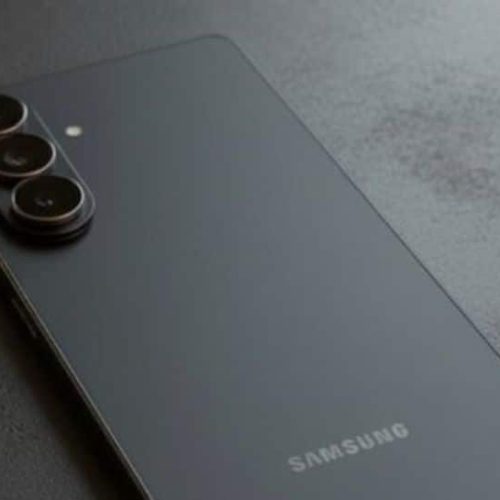
Next week, Samsung‘s Galaxy Store and Galaxy Themes may remain unavailable for a few hours. The company has informed Galaxy device users (spotted by Sammobile) that it will temporarily suspend its app store and Themes service for system maintenance work. As per the notice, the Galaxy Store and Themes servers will be down on August 22 between 2:30 pm – 5:30 pm IST. However, the notice didn’t confirm if the servers will remain down globally or only for Indian users. Samsung Galaxy Store, Themes to go offline: What it means for usersAs the servers of the Galaxy Store and Themes services go down, Galaxy device users won’t be able to access these services on their phones, tablets and the web. Here’s a list of things that users won’t be able to access while the maintenance work is ongoing: Download and update of all apps or content through Galaxy Store/Galaxy Themes will be temporarily suspended. Emergency updates/security updates provided by Samsung Galaxy devices are temporarily suspended. Access is not possible if you move directly from the other apps to GalaxyStore/Galaxy Themes. Galaxy Store that can be accessed from manufacturers other than Samsung is not available either, and download and update of Galaxy Store/Galaxy Themes apps or content are stopped Access to Galaxy Store/Galaxy Themes or use of Galaxy Store/Galaxy Themes servers is temporarily suspended. Samsung Galaxy Store, Themes maintenance workAs mentioned above, during this time security patch releases will also be temporarily halted. Users won’t be able to download and apply new firmware during this maintenance period. However, Samsung will allow users to download official firmware files from its website if they need to.Not even app developers will have access to the Store and won’t be able to update their apps. Samsung is expected to bring the Store and Themes services online after a few hours. However, the company hasn’t denied the possibility that the end time may change depending on the progress of the maintenance work.It is important to note that the maintenance period will affect only the Galaxy App Store and not the company’s Galaxy device e-shop. This means customers will be able to order Samsung products on August 22. But the company won’t allow users to set up their new devices with the latest app updates until the maintenance work is completed.
Telecom: COAI lauds the government’s Right of Way rules amendments
The COAI, India’s telecom industry representative body, praised the Department of Telecommunications (DoT) for the introduction of “The Indian Telegraph Right of Way (Amendment) Rules, 2023.” The forward-looking move aims to improve the 5G ecosystem and digital connectivity for all citizens.These amendments build upon earlier changes made in 2017, 2021, and 2022 to facilitate the rollout of robust telecom infrastructure in the country. They are part of the many steps the government has taken to improve the ease of doing business in the industry and will help support the industry in enhancing and maintaining networks more quickly. “We welcome the move by DoT to introduce the new amended RoW rules which is a positive step forward for the industry and will contribute to the faster deployment of 5G services in the country,” said Lt. Gen. Dr. SP Kochhar, Director General, COAI. What are The Indian Telegraph Right of Way (Amendment) Rules amendmentsThe latest amendment allows licensees to temporarily set up telegraph infrastructure above ground when their existing underground infrastructure is damaged. This helps restore telegraph services quickly and prevents significant disruptions in service to users. The government has also directed that the appropriate authority charge no fees for this temporary setup.The amendment provides clarity in regulations by defining Street Furniture as posts or poles used for electricity, streetlights, traffic lights, traffic signs, bus stops, tram stops, taxi stands, public lavatories, memorials, public sculptures, utility poles, or any similar structure or contrivance established by an appropriate authority on their property to aid in faster rollouts and efficient network deployments.Under the new amendment, licensees can submit a single application for multiple small cell sites. Central authorities can now deploy small cells on their buildings without administrative fees, except for power and fixture charges.These forthcoming changes will provide significant advantages to the telecom industry and the digital connectivity provision for the nation. It will enable rapid network reinstatement in the event of underground telecom infrastructure damage, expedite 5G rollout by utilising the state’s existing infrastructure, simplify application procedures for multiple small cell sites, and allocate Central government areas for small cell deployment at no cost. We believe these measures will collectively enhance ease of doing business within the sector, while aiding in expansive network deployments for ubiquitous connectivity across the country,” Lt. Gen. Dr. Kochhar further added.
Govt Tightens KYC Process For Mobile SIM Cards To Check Cybercrimes
Under the updated KYC norms, a subscriber would have to undertake a complete KYC for replacement of SIM card With an eye on curbing fraudulent practices, the government has made it mandatory for telecom operators to register all franchisees, agents and distributors Giving details about the Sanchar Saathi portal, the government said over 66 Lakh suspected mobile connections have been detected since its launch and action taken on them In a bid to tackle the rising cybercrimes and financial frauds, the government has further tightened the know-your-customer (KYC) process related to mobile SIM cards, including for business connections. Besides, the Ministry of Communications has also introduced a series of regulations to prevent misuse of SIM cards through distributors and agents. “Strengthening of the existing KYC process is one of the tools in protecting the subscribers of telecom services from any probable frauds and thereby enhancing the confidence of the general public in the digital ecosystem,” the ministry said in a statement. Under the updated KYC norms, demographic details will mandatorily be captured by scanning QR code of printed Aadhaar in order to prevent misuse of Aadhaar. A subscriber would also have to undertake a complete KYC for replacement of SIM card and there would be a bar of 24 hours on outgoing and incoming SMS facilities. If a mobile number is disconnected, the number would not be allocated to a new customer for a period of 90 days. Besides, the government has also introduced various checks for mobile connections for businesses. While entities are free to take any number of mobile connections, it would be subject to complete KYC of all the end users and physical verification of the address of the entity. Telecom operators or licensees will also have to register all franchisees, agents and distributors. The step is taken with an eye on curbing fraudulent practices by these point of sale (PoS) entities who issue SIM cards to anti-social/anti-national elements, the government said. “The PoS registration process includes indisputable verification of PoS by licensee. The process mandates written agreement between the PoS and the Licensees. If a PoS indulges in any illegal activities, it will be terminated and blacklisted for a period of 3 years,” the statement said. All existing PoS will also have to be registered within a period of 12 months. The development comes at a time when there has been a rise in cybercrimes through WhatsApp, Telegram, among others. Earlier this year, the government also launched the Sanchar Saathi portal to curb these frauds. Providing details about the portal’s progress, the ministry said that over 66 Lakh suspected mobile connections have been detected through the portal since its launch. Of these, nearly 52 lakh connections have been disconnected for failing reverification. Besides, the government also banned over 66,000 WhatsApp accounts in the past three months as part of its crackdown on spam job calls.