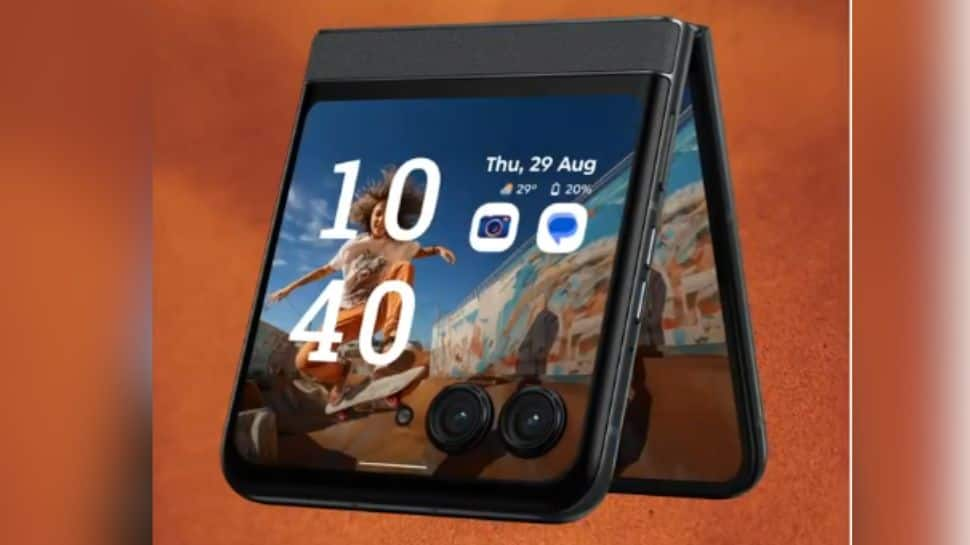
Motorola Razr 50 India Launch: Motorola has announced the launch date for its latest foldable Motorola Razr 50 smartphone in India. This is the second foldable smartphone from Motorola to launch here after the Razr 50 Ultra. The Lenovo-owned brand is launching the Motorola Razr 50 foldable device in India on September 9 this year. The foldable smartphone is expected to come with direct access to Google’s Gemini AI assistant from the external display. Consumers can purchase the foldable Motorola Razr 50 smartphone via Amazon India, the Motorola India website and leading retail stores. However, there is no official confirmation from the company yet whether Motorola will host an event for the Razr 50 India launch or not. Notably, the upcoming smartphone was already unveiled in China with the same moniker in June, but it is available in US markets as Motorola Razr 2024. Make your #MotorolaRazr50 more you! Choose animated characters, photos, & templates for Home & Lock screens. Keep commenting—you’re so close to win #FlipItOrMissIt contest! T&C: https://t.co/30LCgXhEP9 Launching 9 Sep on Amazon Specials, https://t.co/YA8qpSWDkw & leading stores — Motorola India (@motorolaindia) August 31, 2024 Motorola Razr 50 Specifications (Expected) The foldable smartphone is rumoured to feature a 6.9-inch full-HD+ (1,080×2,640 pixels) pOLED inner display and a 3.6-inch full-HD+ (1,056×1,066 pixels) pOLED cover display. It is expected to run on a MediaTek Dimensity 7300X chipset alongside up to 12GB of RAM and up to 512GB of storage. The foldable smartphone is expected to be powered by a 4200mAh battery with support for 30W wired fast charging and 15W wireless charging. On the optics front, the foldable phone could sport a dual outer camera unit comprising a 50-megapixel primary sensor and a 13-megapixel ultra wide-angle camera. For selfies and video chats, there is a 32-megapixel shooter on the inner display along with a side-mounted fingerprint sensor.

ChatGPT-maker OpenAI Appoints Political Veteran Chris Lehane As Head of Global Policy: Reports | Technology News
New Delhi: ChatGPT-maker OpenAI has appointed political veteran Chris Lehane, who is a member of the executive team at OpenAI, as its vice president of global policy, according to New York Times reports. Chris Lehane, a former policy chief at Airbnb and a member of the Clinton White House, could not be reached for comment by OpenAI when contacted by Reuters. This appointment comes after the Cupertino-based tech giant Apple and chip giant Nvidia are reportedly in talks to invest in OpenAI as part of a new fundraising round that could value the Microsoft-backed startup above $100 billion. Earlier in the day, the Financial Times reported that OpenAI is considering restructuring its corporate framework to be more appealing to investors. OpenAI names political veteran Lehane as head of global policy, NYT reports https://t.co/BfChnf7ybw pic.twitter.com/XWGX45QbHG — Reuters (@Reuters) August 31, 2024 Lehane has also served in the Clinton White House as a lawyer and spokesman, specializing in opposition research. He earned a reputation as “the master of disaster” during his time working for President Bill Clinton. A spokeswoman for OpenAI, Liz Bourgeois, said, “Just as the company is making changes in other areas of the business to scale the impact of various teams as we enter this next chapter, we recently made changes to our global affairs organization.”
iPhone 15 Available At Lowest Price Ever On THIS Platform Ahead Of iPhone 16 Series Launch On September 9 | Technology News
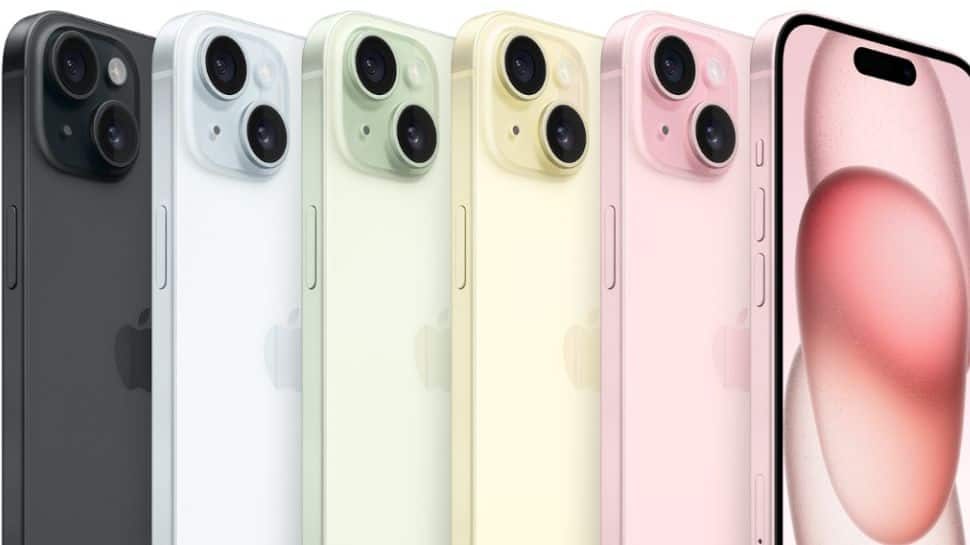
iPhone 15 Discount: Ahead of the iPhone 16 Launch at the Apple Event 2024 on September 9, there is a massive discount offer available for the iPhone 15 models on various e-commerce platforms. Notably, the 128GB variant of the iPhone 15 is currently offered at its lowest price ever. Many smartphone users must be planning to upgrade their iPhones. However, if you are eyeing the iPhone 15 Pro, then you must wait for the iPhone 16 Pro to experience notable upgrades. iPhone 15 (128 GB Variant) Discount On Flipkart: Currently, the phone is listed on Flipkart at Rs 79,600. Now, users can purchase it for Rs 65,999 after a 17 per cent discount on the iPhone 15. Moreover, users can enjoy 5 per cent unlimited cashback when they use the Flipkart Axis Bank Credit Card, with applicable terms and conditions. Adding further, you can get Rs 1,000 off on payments made through Flipkart UPI, and save Rs 1,000 on transactions using UPI. If you have an old smartphone, then you can exchange for up to Rs 40,850. Combining all the bank offers and exchange offers, users can purchase the iPhone 15 at the lowest price. iPhone 15 Specifications: The premium smartphone comes in five colour options: Pink, Yellow, Green, Blue, and Black. It features a stunning 6.1-inch Super Retina XDR OLED display with an impressive peak brightness of up to 2000 nits, enhanced with Ceramic Shield glass for durability. The premium handset is powered by a 3349 mAh battery and the formidable A16 Bionic chip. In the camera department, it houses a powerful 48MP primary sensor and a 12MP telephoto lens, along with a 12MP front camera for quality selfies and video chats.
Apple Launches Beats Solo Buds, Solo 4 Headphones, Pill Bluetooth Speaker In India; Check Specs, Price | Technology News
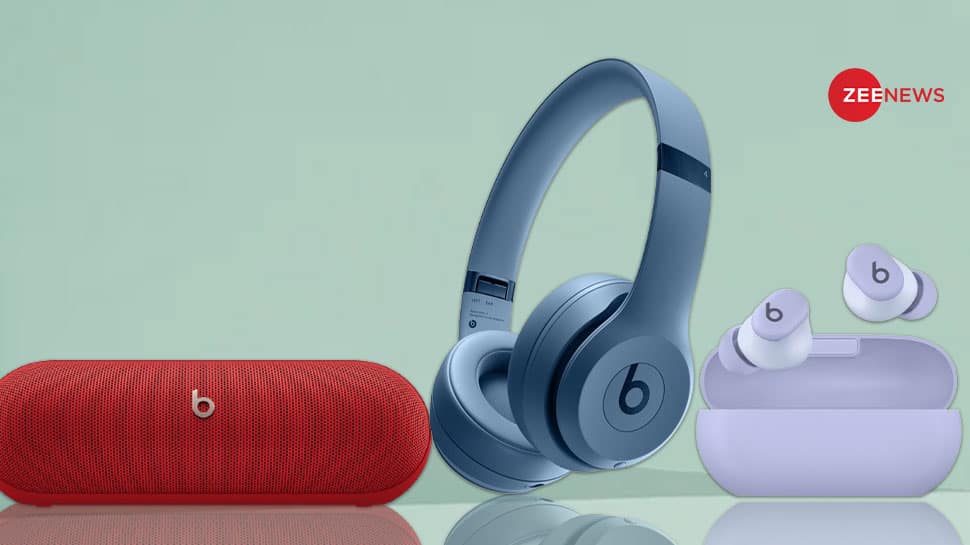
New Delhi: Apple-owned audio brand Beats has launched the latest premium products to the Indian market. The new line-up includes the Beats Solo Buds true wireless earphones, Beats Solo 4 on-ear headphones, and Beats Pill portable Bluetooth speaker. Consumers can book premium products on apple.com/in. Notably, these products will hit store shelves on September 4. Beats Solo Buds Earphones Price And Colour Options The device is priced at Rs 6,900 in the country. It will be available in Matte Black, Storm Gray, Arctic Purple, and Transparent Red colour options. Beats Solo 4 On-Ear Headphones Price And Colour Options The Beats Solo 4 Headphones is priced at Rs 22,900. It comes in three colour options: Matte Black, Slate Blue, and Cloud Pink. Beats Pill Portable Bluetooth Speaker Price And Colour Options The speaker is priced at Rs 16,900. It comes in Champagne Gold, Statement Red and Matte Black colour options. Beats Solo Buds Specifications: The device offers are equipped with a custom-designed microphone powered by an advanced noise-learning algorithm. It offers Class 1 Bluetooth for extended range with fewer dropouts. (Also Read: Realme Buds T01 TWS Earbuds Launched In India With AI ENC For Calls Under Rs 2,000; Check Specs, Price) The device features a one-touch parking and Find My Device. It also offers customisable on-ear functions to control music, take calls, activate the voice assistant, and more. The TWS earbuds are claimed to offer up to 18 hours of playback and the carry case can be charged via a USB Type-C port. Beats Solo 4 On-Ear Headphones Specifications: The headphones feature custom-built 40mm drivers and support personalized spatial audio with dynamic head tracking, promising superior call performance and seamless voice assistant interaction. Compatible with both iOS and Android, the device offers one-touch pairing, automatic account setup across your devices, and a convenient Find My Device feature. The company claims that the battery lasts up to 50 hours on a single charge, with Fast Fuel providing up to 5 hours of playback from just a 10-minute quick charge. Beats Pill Portable Bluetooth Speaker The portable speaker features a 20-degree upward tilt for improved on-axis sound projection and is reportedly 10 percent lighter than its predecessor. It boasts an IP67 rating, ensuring resistance to both dust and water. Compatible with both iOS and Android, the speaker supports instant one-touch pairing, Find My/Find My Device, and automatic pairing across your other devices. The Beats Pill is said to deliver up to 24 hours of continuous music playback, with Fast Fuel providing 2 hours of playback from just a 10-minute charge.
Jio Phonecall AI: Users Can Record And Save Calls In Jio Cloud, Automatically Turn Them Into Text | Technology News
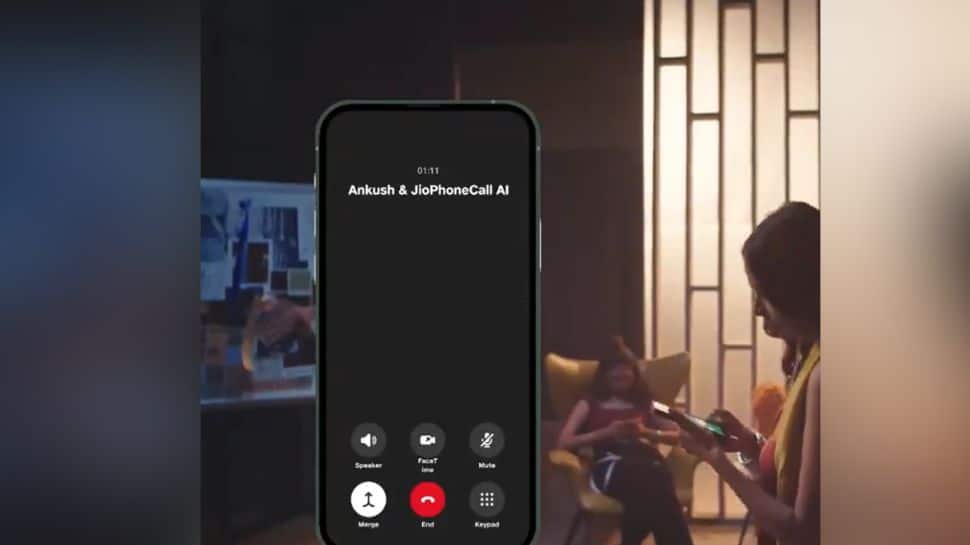
Jio has introduced Jio Phonecall AI, a new service that brings AI capabilities right to your phone calls. With this tool, users can record and save calls in Jio Cloud, automatically turn them into text and even get summaries and translations in different languages. Akash Ambani explains that Jio Phonecall AI is designed to make managing and understanding phone conversations easier and more efficient. How to Use Jio Phonecall AI Using Jio Phonecall AI is simple. Here’s a simple step-by-step guide: – Dial the AI Number: Call 1-800-1732673 to connect with Jio Phonecall AI. – Start Recording: After the welcome message, press 1 to begin recording. – Speak Freely: The AI will automatically record, transcribe, and translate your conversation in the background. – Recording Alerts: The AI will periodically announce, “The call is being recorded,” to ensure transparency. – Pause Transcription: Press 2 if you need to pause transcription. You’ll hear “Transcription is paused.” – Resume or End: Press 1 to resume transcription or press 3 to end the session. This feature supports various communication formats, including one-on-one calls, group conferences, and personal notes. Jio Phonecall AI is especially helpful for hearing-impaired individuals, promoting inclusivity and ensuring that everyone’s voice can be heard. All the call recordings and transcripts will be stored in Jio Cloud so user can easily retrieve them whenever they need. Jio Phonecall AI makes recording and transcribing calls as straightforward as dialing a number, making it an essential tool for smooth and effective communication in our connected world. In addition, Jio has also introduced Jio TvOS, a fully home-grown operating system for the Jio Set Top Box. Designed for a superior big-screen experience, Jio TvOS delivers faster, smoother performance with features like Ultra HD 4K video, Dolby Vision, and Dolby Atmos. According to Kiran Thomas, President of Reliance Jio, it provides a custom-made entertainment system for home use.

Teen Innovator Soars to New Heights: Mehar Singh Breaks Guinness World Record with Lightning-Fast Drone Ascent
At just 17 years old, Mehar Singh has soared into the spotlight by shattering the Guinness World Record for the fastest 100-meter ascent by a quadcopter. Mehar’s custom-engineered drone reached this remarkable milestone in an astonishing 0.91 seconds, a feat that not only demonstrates his technical prowess but also sets a new benchmark in the rapidly evolving world of drone technology.Mehar’s journey to this achievement has been anything but straightforward.His fascination with drones began in 8th grade, and this passion has only deepened over the years. With a keen interest in pushing technological boundaries, Mehar embarked on a months-long project to build a drone capable of unparalleled vertical acceleration.“I’ve always been fascinated by the idea of pushing the limits of what drones can do,” Mehar explained. “But breaking a world record wasn’t just about the end result; it was about the process. I wanted to prove that current technology could achieve something extraordinary, but the path to get there was filled with challenges.”The project required Mehar to design, test, and refine multiple drone prototypes. “There were moments when I felt like I was chasing an impossible dream,” Mehar recalled. “I went through countless designs, and many of them failed during testing. Some drones crashed so badly that I had no choice but to go back to the drawing board and start from scratch. Each crash was a setback, but it also sparked new ideas and innovations.”Undeterred by the setbacks, Mehar poured his energy into creating a drone that was not only fast but also aerodynamically optimized. “I spent countless hours on CAD software, meticulously designing and tweaking each component. The goal was to make the drone as streamlined as possible, which led me to shape it like a rocket. This design wasn’t just about aesthetics; it was about reducing drag and maximizing speed.”Mehar’s dedication to his craft paid off in spectacular fashion. “Every failure taught me something valuable,” he said. “It forced me to think creatively and to consider every detail, from the materials used to the weight distribution of the drone. The process was grueling, but it was also incredibly rewarding to see my ideas take flight—literally.” This record-breaking achievement is more than just a personal triumph for Mehar; it has significant implications for the future of drone technology. “The possibilities are endless,” Mehar mused. “High-speed vertical acceleration could revolutionize everything from emergency response to space exploration. This isn’t just about setting a record; it’s about opening doors to new innovations and applications.”Mehar’s groundbreaking work has already begun to inspire others in the drone community and beyond. “I hope this accomplishment encourages other young innovators to push their own boundaries,” he said. “Technology is advancing rapidly, and there’s so much potential waiting to be unlocked. I’m excited to see where we can go from here.” As Mehar looks ahead, the sky is truly the limit. With his record-breaking drone, he has not only made history but also set the stage for future breakthroughs in drone technology. And for this young innovator, this is just the beginning of an exciting journey into the future of flight. Disclaimer: Content produced by Mediawire on Behalf of Shweta Singh

YouTube Premium Price Increase in India: Individual, Student, And Family Plans Vs Spotify And Apple Music | Technology News
YouTube Premium Price Increase in India: YouTube has increased the subscription prices for its premium users in India across all tiers. The Google-owned platform has increased the subscription prices in the country with up to a 58 per cent price hike on certain plans. The platform currently has a global user base of over 100 million subscribers. Notably, the prices of student, individual, and family plans have gone up, and the new prices are already in force. However, the company hasn’t cleared the cloud yet whether the streaming service will offer a grace period for existing subscribers before they must pay the new monthly subscription. It is important to note that YouTube premium subscribers get benefits such as ad-free streaming of videos, the ability to watch videos or listen to music in the background, picture-in-picture (PiP) mode, and enhanced high-definition video streaming. YouTube Premium Subscription Cost In India For Student, Family The plans have recently seen an increase across various plans. The Student Monthly plan has gone up from Rs 79 to Rs 89, while the Individual Monthly plan has hiked from Rs 129 to Rs 149. The Family Monthly plan has experienced the most significant hike, jumping from Rs 189 to Rs 299. Plan Type Previous Price New Price Increase Student Monthly Plan Rs 79 Rs 89 Rs 10 Individual Monthly Plan Rs 129 Rs 149 Rs 20 Family Monthly Plan Rs 189 Rs 299 Rs 110 Individual Prepaid Monthly Rs 139 Rs 159 Rs 20 Individual Prepaid Quarterly Rs 399 Rs 459 Rs 60 Individual Prepaid Annual Rs 1,290 Rs 1,490 Rs 200 For those opting for the prepaid options, the Individual Prepaid Monthly plan has increased from Rs 139 to Rs 159, the Individual Prepaid Quarterly plan from Rs 399 to Rs 459, and the Individual Prepaid Annual plan has gone up from Rs 1,290 to Rs 1,490. Spotify Premium Subscription Cost In India For Individual, Family The plan starts at Rs 119 per month for individuals, Rs 179 per month for a family plan (covering up to six Premium accounts), and Rs 59 per month for students. With the Premium subscription, you get benefits like ad-free, high-quality music, offline downloads, the ability to play music in any order, organize your listening queue, and more. Plan Monthly Cost (INR) Description Individual 119 Ad-free, high-quality music, offline downloads, ability to play music in any order, organize your listening queue, and more. Family 179 Covers up to six Premium accounts with all the benefits of the individual plan, allowing each family member to have their own personalized listening experience. Student 59 All the benefits of the individual plan at a discounted rate for students. Apple Music Subscription For Individual Cost In India For Individual The individual plan is available for Rs 149 per month. For those using multiple Apple services, the Apple One plan is a better option at Rs 195 per month, bundling Apple Music, Apple TV, Apple Arcade, and iCloud+ with 50GB of storage. For families, Apple One offers a plan at Rs 365 per month for up to five members, including the same services with 200GB of iCloud+ storage. Plan Cost (INR) Services Included Storage Number of Users Apple Music (Individual) 149 Apple Music N/A 1 Apple One (Individual) 195 Apple Music, Apple TV, Apple Arcade, iCloud+ 50GB 1 Apple One (Family) 365 Apple Music, Apple TV, Apple Arcade, iCloud+ 200GB Up to 5
Delhi Water Crisis: How Technology Is Addressing Issue; Challenges, And Future Plans In Era of Climate Change | Technology News
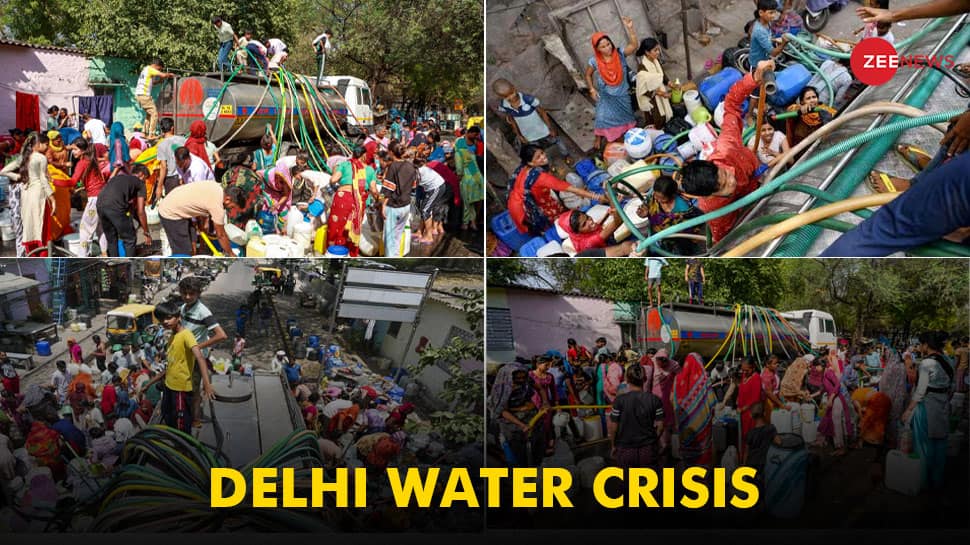
Delhi Water Crisis: Did you know that five of the world’s 20 largest cities facing severe water stress are in India, with Delhi ranked second on the list? That’s according to the Composite Water Management Index released by NITI Aayog in 2019. As we all know Delhi experienced one of its most extreme heatwaves recently in May 2024, with temperatures soaring above 50 degrees Celsius in some areas. Extreme weather claims more than 30 human lives in a single month. Unfortunately, Delhi could not meet this increased demand and even the most basic water needs of the city’s population are not being met. In our effort to combat water scarcity in the national capital using technology, we spoke with Mr. Advait Kumar, the founder of BOON. Delhi’s Modern Water Initiatives In 2024 Delhi is at the forefront of investing in modern technologies in water purification and desalination aimed at conserving and boosting water availability. Among these innovations, smart water purifiers are leading the charge with multi-stage water filters that can effectively remove all harmful impurities and at the same time use minimal water. IoT ( Internet of Things) helps in maintaining a continuous check on the quality of water and health of the system in homes, hotels, or corporate establishments can be done in real-time, and thus guarantees standard performance. Governments are actively tying up with startups to set up Water ATMs across locations. These Water ATMs are empowered with IoT to monitor water quality and the filter’s condition to maintain functionality and water supply. Furthermore, the issue of producing brine (sodium chloride) as a byproduct of desalination is managed creatively to reduce any negative impacts on the environment. Harmless ways of discharging brine are being considered to avoid negative impacts to marine life, enhancing the sustainability of desalination as a source of water supply to urban areas. Delhi’s Water Revolution: From ATMs To Smart Infrastructure The government of Delhi is collaborating with tech companies to scale up innovative water management solutions aimed at improving access to clean water and reducing wastage. One notable initiative is the deployment of Water ATMs across public spaces in Delhi. These are being developed in partnership with technology startups, replacing traditional open water taps, which often lead to significant water wastage and health risks. By offering clean drinking water at a nominal cost per litre, Water ATMs democratise access to safe water while minimising wastage. Adding further, the government is working with tech companies to upgrade the city’s water infrastructure by installing smart water meters and IoT-enabled devices across the water distribution network. Through these partnerships, the government aims to leverage technology to create a more sustainable and resilient water management system in Delhi, ensuring that the city’s growing water needs are met in an efficient and environment-friendly manner. How Data Analytics And IoT Are Revolutionizing Water Management In Delhi? Data analytics is a crucial tool in managing Delhi’s water resources and predicting future water needs, playing a key role in addressing the city’s water challenges. Through the integration of data analytics with IoT-enabled devices and smart water meters the Delhi Jal Board (DJB) can collect and analyse vast amounts of data on water consumption, flow rates, and system health. This data is used to identify consumption patterns, detect inefficiencies, and forecast future demand based on factors such as population growth, seasonal variations, and historical trends. Real-time monitoring systems, including SCADA and GIS further enhance water management by providing continuous data on the city’s water distribution network. This allows for the early detection of leaks, pressure drops, and contamination events, enabling swift responses and reducing non-revenue water (NRW) losses. Moreover, data analytics supports strategic planning and policy development by providing actionable insights into resource allocation and sustainability initiatives. Predictive models help in anticipating water shortages and planning accordingly, ensuring that water resources are managed effectively to meet the city’s growing demand. Challenges In Adopting New Water Technologies One of the primary challenges is the dependency on conventional water management systems, such as large water tanks and 20L water jars, which are inefficient and contribute to microplastic contamination. Transitioning to more sustainable alternatives, like smart water purifiers and IoT-enabled systems, requires significant investment and public awareness campaigns. Another challenge is the widespread use of inefficient water purifiers that waste up to 85% of the water during the filtration process. To address this, the government should introduce guidelines to restrict the sale of such designs and promote the adoption of water-efficient technologies. Maintenance of water purification and management systems is another hurdle. Regular maintenance is crucial to ensure the optimal functioning of these systems, yet it is often neglected. IoT-enabled devices can play a key role here by providing timely alerts for necessary maintenance, thus preventing system failures and reducing downtime. To achieve a sustainable water future, Delhi must focus on upgrading its water infrastructure, encouraging the adoption of smart technologies, and ensuring strict regulatory measures to promote water conservation and efficiency. Future Solutions For Water Crisis In The Era Of Climate Change In the next five years, significant advancements in water management are anticipated, driven by climate change and the increasing demand for sustainable water solutions. These advancements will be facilitated by technology playing a central role in overcoming the challenges posed by climate change and ensuring a secure water future. Smart water purifiers are expected to dominate the market, equipped with advanced features that monitor water quality and system health in real time, ensuring the highest standards of water purification with minimal wastage. These devices will become standard in homes, businesses, and public institutions, contributing to widespread water conservation efforts. The integration of IoT across the water grid will provide comprehensive control over water distribution and quality management. Coupled with AI-driven data analytics, this will enable precise predictions of water demand throughout the year, allowing for more effective resource allocation and planning. Moreover, advancements in geographic-specific water
BSNL Offers Cheapest 336-Day Validity Recharge Plan With Unlimited Calling Vs Jio|Benefits Compared | Technology News
BSNL Prepaid Plan Vs Jio: In a move to compete with private telecom giants or to attract more customers, BSNL has rolled out a new 336-day long validity recharge plan that promises substantial 4G data benefits. As we all know BSNL is gearing up to expand its 4G services across India, the company’s long-term mobile prepaid plan is offering an attractive alternative to existing Jio users. long-term With affordable pricing and extended validity, the BSNL’s latest offering could be a game-changer for those looking for reliable connectivity and significant data allowances without the need for frequent recharges. Let’s have a quick look at which telecom giant provides more benefits in its long-validity plan BSNL’s 336-Days Long Validity Prepaid Recharge Plan At Rs 1,499 The company’s long-validity recharge plans offer unlimited voice calling for 336 days at Rs 1,499. Adding further, consumers can enjoy free roaming on MTNL networks in Delhi and Mumbai. Moreover, this mobile prepaid plan also includes 24GB of data and 100 free SMS daily. However, there are no extra bonuses included, and users will need to spend approximately Rs 4.5 daily for this plan. Comparison of BSNL and Jio 336-Day Validity Prepaid Recharge Plans Feature BSNL Jio Plan Price Rs 1,499 Rs 1,899 Validity 336 days 336 days Voice Calling Unlimited (including free roaming on MTNL networks in Delhi and Mumbai) Unlimited (nationwide) Data 24GB 24GB SMS 100 free SMS daily 3,600 free SMS total Additional Benefits None Jio TV, Jio Cinema, Jio Cloud subscriptions Daily Cost Approximately Rs 4.5 Approximately Rs 5.65 Jio’s 336-Days Validity Prepaid Recharge Plan: The company provides a 336-day validity plan priced at Rs 1,899. This plan includes unlimited free calls to any telecom network across the country, 24GB of data, and 3,600 free SMS. Subscribers also receive complimentary access to Jio TV, Jio Cinema, and Jio Cloud. The daily cost for this plan comes to approximately Rs 5.65.
Instagram’s New Feature: How To Add Song To Your Insta Profile; Follow THESE 6 Simple Steps | Technology News
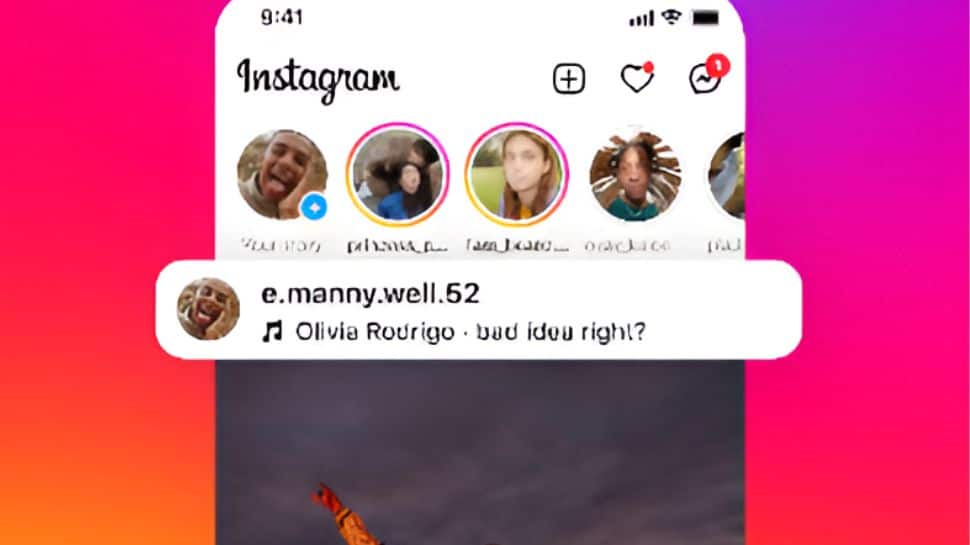
Instagram New Feature: Meta-owned platform Instagram has rolled out a new feature that allows users to add a song to their profile. However, the new functionality is pretty similar to the now barren social media platform Myspace in the early 2000s. The new feature has been launched with the new addition in collaboration with American popstar Sabrina Carpenter, whose Instagram profile will now include a teaser to her upcoming single “Taste” from the album “Short n’ Sweet”. Currently, Instagram also introduced a feature that allows users to add up to 20 tracks to a single reel and visually align audio with elements like text, stickers, and clips during editing in the app. Here’s How You Can Add A Song To Your Instagram Profile Step 1: Open the Instagram app and go to your profile by tapping the profile icon. Step 2: Tap the “Edit Profile” button just below your bio. Step 3: Scroll down and select the “Add Music to Your Profile” option. Step 4: Browse through the available songs or search for your favourite track. Step 5: Choose a 30-second portion of the song that you want to feature on your profile. Step 6: Once you’re satisfied with your selection, save it. The song will now appear in your bio section, ready to be played by anyone who visits your profile.