By clicking “Accept All Cookies”, you agree to the storing of cookies on your device and the processing of information obtained via those cookies (including about your preferences, device and online activity) by us and our commercial partners to enhance site navigation, personalise ads, analyze site usage, and assist in our marketing efforts. More information can be found in our Cookies and Privacy Policy. You can amend your cookie settings to reject non-essential cookies by clicking Cookie Settings below. Accept All Cookies Manage Consent Preferences
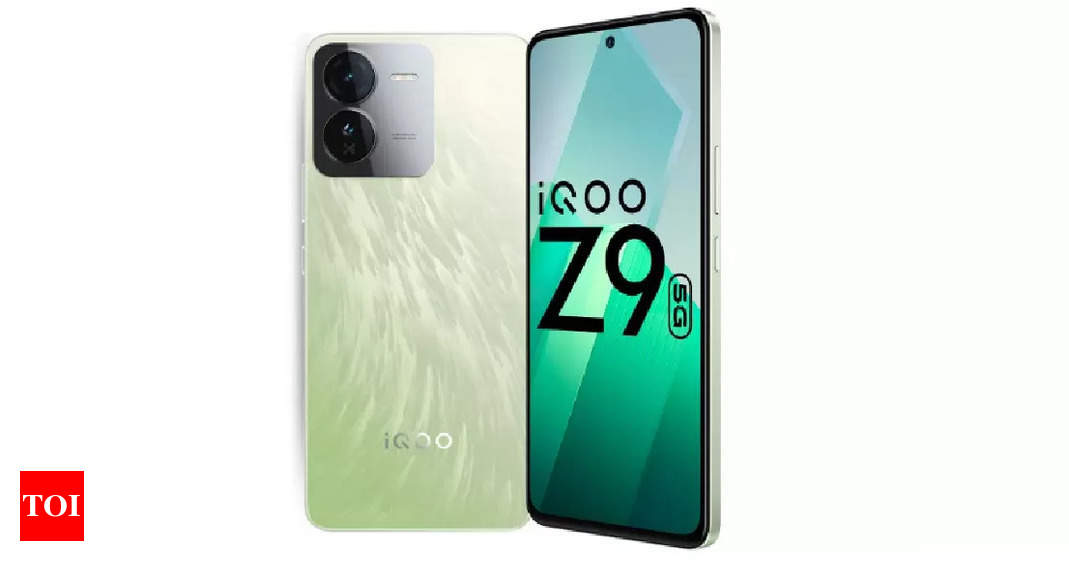
iQoo Z9 Turbo new leak reveals key specifications: All the details
Soon after launching its mid-range smartphone — Z9, iQoo is reportedly planning to launch a new Turbo version of it. Leaks and rumours have already started surfacing online regarding the unannounced smartphone. The latest leak about the smartphone has revealed the display, chipset and a couple of key details.iQoo Z9 Turbo: Leaked specificationsDigital Chat Station has dropped a new post on Weibo revealing the key details about the iQoo Z9 Turbo.According to the post, the iQoo Z9 Turbo is speculated to feature a 1.5K display and it will be equipped with Qualcomm Snapdragon 8s Gen 3 chipset and 6000mAh battery.Recent leaks have suggested that the handset will support a 144Hz refresh rate and 50MP dual camera setup along with 80W fast charging support. Having said that, iQoo hasn’t confirmed the official release date or an event for the launch of the event. But, we expect it to happen in the coming days or weeks. In other news, iQoo launched the Z9 5G last week at a starting price of Rs 19,999 for the base 8GB RAM and 128GB storage variant in two colour options — Graphene Blue and Brushed Green. The smartphone features a 6.67-inch FHD+ AMOLED 120Hz display, 1800-nits peak brightness and DT-Star2 Plus Glass protection. The handset runs MediaTek Dimensity 7200 chipset with Mali G610 GPU. Apart from this, the smartphone come equipped with 8GB RAM and two storage options — 128GB and 256GB. Along with this it also comes with microSD card slot for storage expansion. The handset runs Android 14 operating system with FunTouch OS14 custom skin.

iQOO Z9x 5G Smartphone Launch Date Confirmed In India, Amazon Availability Revealed | Technology News
New Delhi: Chinese smartphone manufacturer iQOO is set to introduce a new Z-series smartphone, the iQOO Z9x 5G, in India after the launch of the iQOO Z9x 5G smartphone in China. The company’s India CEO, Nipun Marya, has made the official announcement on X and revealed the launch date of the iQOO Z9x 5G in the Indian market to be May 16th. However, the teaser confirms that the upcoming iQOO Z9x 5G will be sold exclusively via e-commerce giant Amazon. Moreover, the upcoming smartphone’s spare parts pricing details recently surfaced online in India via iQOO’s official India website. Ready, set, #iQOOZ9x. Fully loaded for a full day of action! #FullDayFullyLoaded pic.twitter.com/xlCry5wCzp — Nipun Marya (@nipunmarya) May 6, 2024 Hence, the details provide a clear hint about the launching of the smartphone in the country. Notably, the Indian variant is likely to share similar specifications to its Chinese counterpart as well. iQOO Z9x 5G Specifications of Chinese Version: The smartphone sports a 6.72-inch Full HD+ display with up to a 120Hz refresh rate and 1,000 nits peak brightness. The phone is loaded with a 6,000mAh battery with 44W fast charging. It comes in three RAM variants: 4GB+128GB, 6GB+128GB, and 8GB+128GB. The handset is loaded with a Snapdragon 6 Gen 1 SoC with up to 12GB RAM and up to 256GB onboard storage. In the camera department, the iQOO Z9x 5G Chinese version packs a 50MP main sensor and a 2MP depth lens. For selfies and video chats, there is an 8MP selfie camera. (Also Read: Vivo Y18 4G Smartphone Launched In India With MediaTek Helio G85 SoC And 5,000mAh Battery; Check Price, Specs) For connectivity, the IP64-rated smartphone supports Bluetooth 5.1, a 3.5mm audio jack, and stereo speakers. Moreover, it comes with a side-mounted fingerprint sensor. iQOO Z9x 5G Price: For the 4GB+128GB base model, the phone is priced at 1,149 CNY (approx Rs 13,240) and the 6GB+128GB model carries a price tag of 1,249 CNY (around Rs 14,400). Meanwhile, the 12GB+256GB storage variant costs 1,449 CNY (around Rs 16,700).

Samsung Galaxy A55 vs Vivo V30 Pro: How the two affordable premium Android phones compare
Samsung recently expanded its mid-range A-series with two new smartphones — Galaxy A55 and A35. The more expensive Samsung Galaxy A55 starts at Rs 39,999 and is the first mid-range Smartphone from Samsung to come with 12GB RAM. However, the 12GB RAM variant is priced at Rs 45,999. The smartphone features a Full HD+ display, an Exynos chipset, a 50MP camera and supports 25W charging.Samsung Galaxy A55 is set to be available in India soon. On the other hand, Chinese smartphone maker Vivo launched its latest V30 series which also includes two smartphones — the Vivo V30 and the V30 Pro. The higher-priced V30 Pro starts at Rs 41,999 and also comes in a 12GB option that is priced at Rs 45,999. This smartphone is already available for sale and sports a curved AMOLED display, much better camera capabilities and 80W fast charging. Here’s how the two mid-range smartphones compare: Feature Samsung Galaxy A55 5G Vivo V30 Pro Display 6.6-inch FHD+ (1080×2340), 120Hz, Corning Gorilla Glass Victus+ 6.78-inch AMOLED (1260×2800), 120Hz, Up to 2800 nits Processor Exynos 1480 MediaTek Dimensity 8200 RAM Up to 12GB Up to 12GB Storage 128GB or 256GB (Expandable up to 1TB) 256GB or 512GB Operating System Android 14 with One UI 6.1 Android 14 with FuntouchOS 14 Rear Camera 50MP main, 12MP ultrawide, 5MP macro 50MP main, 50MP ultrawide, 50MP telephoto Front Camera 32MP 50MP Battery 5000mAh with 25W fast charging 5000mAh with 80W fast charging Water Resistance IP67 Dust and splash resistant coating Starting Price (India) Rs 39,999 Rs 41,999 Vivo V30 Pro has a larger AMOLED display with higher peak brightness and has a more powerful processor. The Vivo phone also offers a higher base storage option (256GB) and comes with a telephoto lens. Vivo V30 Pro also offers faster 80W charging than the Samsung Galaxy A55’s 25W charging.

CERT-In Finds Multiple Bugs In Google Chrome, GitLab | Technology News
New Delhi: The Indian Computer Emergency Response Team (CERT-In), which comes under the Ministry of Electronics & Information Technology, has warned users of multiple vulnerabilities in Google Chrome and GitLab (an open-core company) which could allow an attacker to obtain sensitive information, bypass security restriction and cause denial-of-service (DoS) conditions on the targeted system. The affected software includes Chrome versions before 124.0.6367.118/.119 for Mac and Windows and Chrome versions prior to 124.0.6367.118 for Linux. For GitLab, the affected software includes -GitLab Community Edition (CE) and Enterprise Edition (EE) versions before 16.11.1, 16.10.4 and 16.9.6. “Multiple vulnerabilities have been reported in Google Chrome which could be exploited by a remote attacker to trigger remote code execution and DoS conditions on the targeted system,” said the CERT-In advisory. (Also Read: Now Limit Replies Only To Verified Users On X To Avoid Spam: Tesla and SpaceX CEO Elon Musk) According to the cyber agency, these vulnerabilities exist in Google Chrome due to the use-after-free flaw in Dawn and Picture in Picture components. On the other hand, multiple vulnerabilities such as authentication bypass vulnerability, security restriction bypass, and denial of service exist in GitLab due to improper authentication mechanisms, flaws in handling domain-based restrictions when processing crafted email addresses, path traversal vulnerability and an inefficient regular expression, respectively. As mentioned by the cyber agency, an attacker could use “these vulnerabilities by persuading a victim to visit a specially crafted website.” The agency suggested users apply appropriate security updates as mentioned by the companies.
Upi: UPI Lite X for offline payments: What it means for users
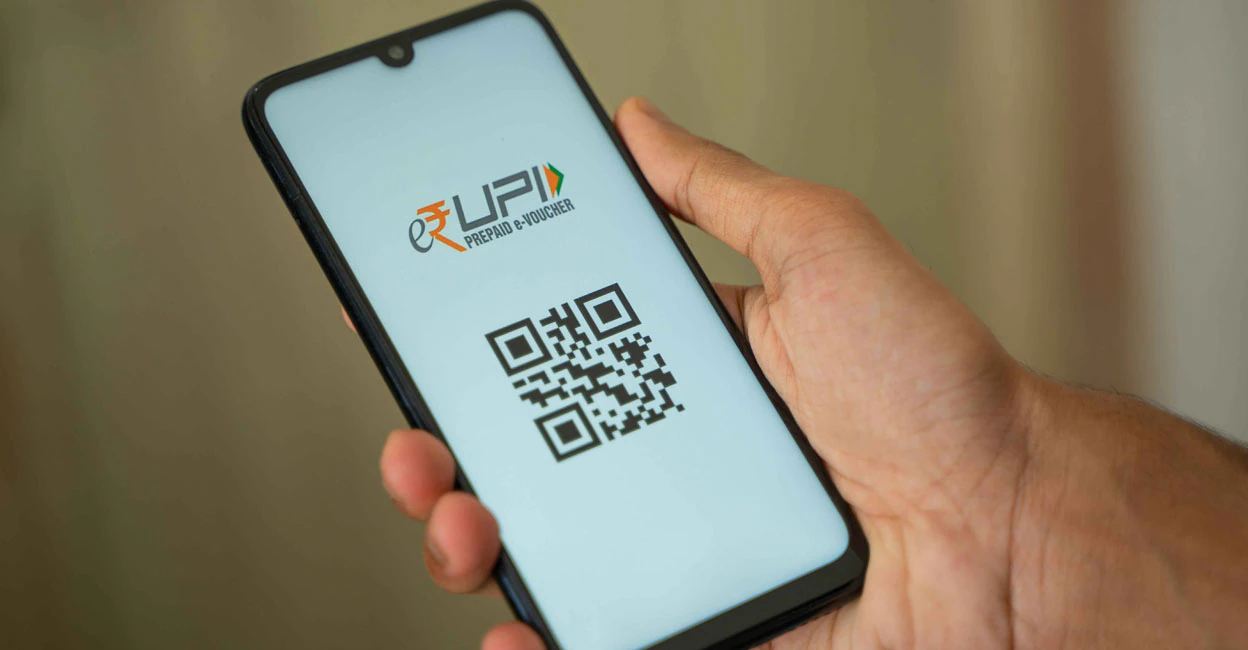
Unified Payment Interface (UPI) has become one of the most popular ways for transactions in India. To improve convenience in payments, the governor of the Reserve Bank of India (RBI) recently launched a new feature called UPI Lite X. This feature will allow users to send and receive money while being completely offline. RBI governor Shaktikanta Das introduced the latest UPI feature at the Global Fintech Fest 2023.What is UPI Lite XUPI Lite X will allow users to initiate and complete transactions while they are in locations with no connectivity. This includes underground stations, remote areas and more. The feature will let customers send and receive money while being fully offline.What NPCI said about the featureIn a statement, the National Payments Corporation of India (NPCI) said: “Building on the success of the UPI LITE feature, the RBI Governor launched UPI LITE X for Offline payments. Through this feature, users can now both send and receive money whilst being completely offline, therefore, allowing users to initiate and execute transactions even in areas with poor connectivity, such as underground stations, remote areas, etc. UPI LITE X will be accessible to anyone with a compatible device that supports Near Field Communication (NFC). UPI LITE payments are faster than other payment methods, as they require less time to process the transaction.”How is it different from UPI and UPI LiteUPI Lite is a payment solution that uses the NPCI Common Library (CL) app to process low-value transactions. Currently, the transaction amount has been set at below Rs 500. This feature is like an ‘on-device wallet’ that allows users to make real-time small-value payments without using a UPI PIN.On the other hand, UPI is a 24×7 instant payment system that allows users to transfer money in real time between two bank accounts. According to the NPCI website, UPI is built over the Immediate Payment Service or IMPS infrastructure. Both these features are very different from the latest UPI Lite X. While making a transaction using UPI or UPI Lite, the recipient does not have to be physically present and will be able to accept the funds from anywhere in the country. These transactions can be completed either by scanning the QR code or by using the recipient’s UPI ID or linked phone number. However, UPI Lite X transactions will need both the sender’s and the receiver’s devices to be nearby. During UPI transactions, money is sent instantly from one bank account to another. Meanwhile, in the case of UPI Lite money is transferred from the sender’s on-device wallet or UPI Lite account to the recipient’s bank account.UPI Lite X transactions use NFC to transfer money between the sender’s on-device wallet and the receiver’s on-device wallet. This eliminates the need for internet access as the transaction takes place between on-device e-wallets rather than bank accounts.For UPI, the maximum amount that can be transferred in a day from a bank account is Rs 2 Lakhs. Meanwhile, UPI Lite’s maximum limit for a single transaction is Rs 500, while the maximum limit in a day is Rs 4,000. There’s no such limit announced for UPI Lite X.
Senators Want ChatGPT-Level AI to Require a Government License
The US government should create a new body to regulate artificial intelligence—and restrict work on language models like OpenAI’s GPT-4 to companies granted licenses to do so. That’s the recommendation of a bipartisan duo of senators, Democrat Richard Blumenthal and Republican Josh Hawley, who launched a legislative framework yesterday to serve as a blueprint for future laws and influence other bills before Congress. Under the proposal, developing face recognition and other “high risk” applications of AI would also require a government license. To obtain one, companies would have to test AI models for potential harm before deployment, disclose instances when things go wrong after launch, and allow audits of AI models by an independent third party. The framework also proposes that companies should publicly disclose details of the training data used to create an AI model, and that people harmed by AI get a right to bring the company that created it to court. The senators’ suggestions could be influential in the days and weeks ahead as debates intensify in Washington, DC, over how to regulate AI. Early next week, Blumenthal and Hawley will oversee a Senate subcommittee hearing about how to meaningfully hold businesses and governments accountable when they deploy AI systems that cause people harm or violate their rights. Microsoft president Brad Smith and the chief scientist of chipmaker Nvidia, William Dally, are due to testify. A day later, senator Chuck Schumer will host the first in a series of meetings to discuss how to regulate AI, a challenge Schumer has referred to as “one of the most difficult things we’ve ever undertaken.” Tech executives with an interest in AI, including Mark Zuckerberg, Elon Musk, and the CEOs of Google, Microsoft, and Nvidia make up about half the almost two dozen strong guest list. Other attendees represent those likely to be subjected to AI algorithms, and include trade union presidents from the Writers Guild and union federation AFL-CIO, and researchers who work on preventing AI from trampling human rights, including UC Berkeley’s Deb Raji and Humane Intelligence CEO and Twitter’s former ethical AI lead Rumman Chowdhury. Anna Lenhart, who previously led an AI ethics initiative at IBM and is now a PhD candidate at the University of Maryland, says the senators’ legislative framework is a welcome sight after years of AI experts appearing in Congress to explain how and why AI should be regulated. “It’s really refreshing to see them take this on and not wait for a series of insight forums or a commission that’s going to spend two years and talk to a bunch of experts to essentially create this same list,” Lenhart says. But she’s unsure how any new AI oversight body could host the broad range of technical and legal knowledge required to oversee technology used in many areas from self-driving cars to health care to housing. “That’s where I get a bit stuck on the licensing regime idea,” Lenhart says.
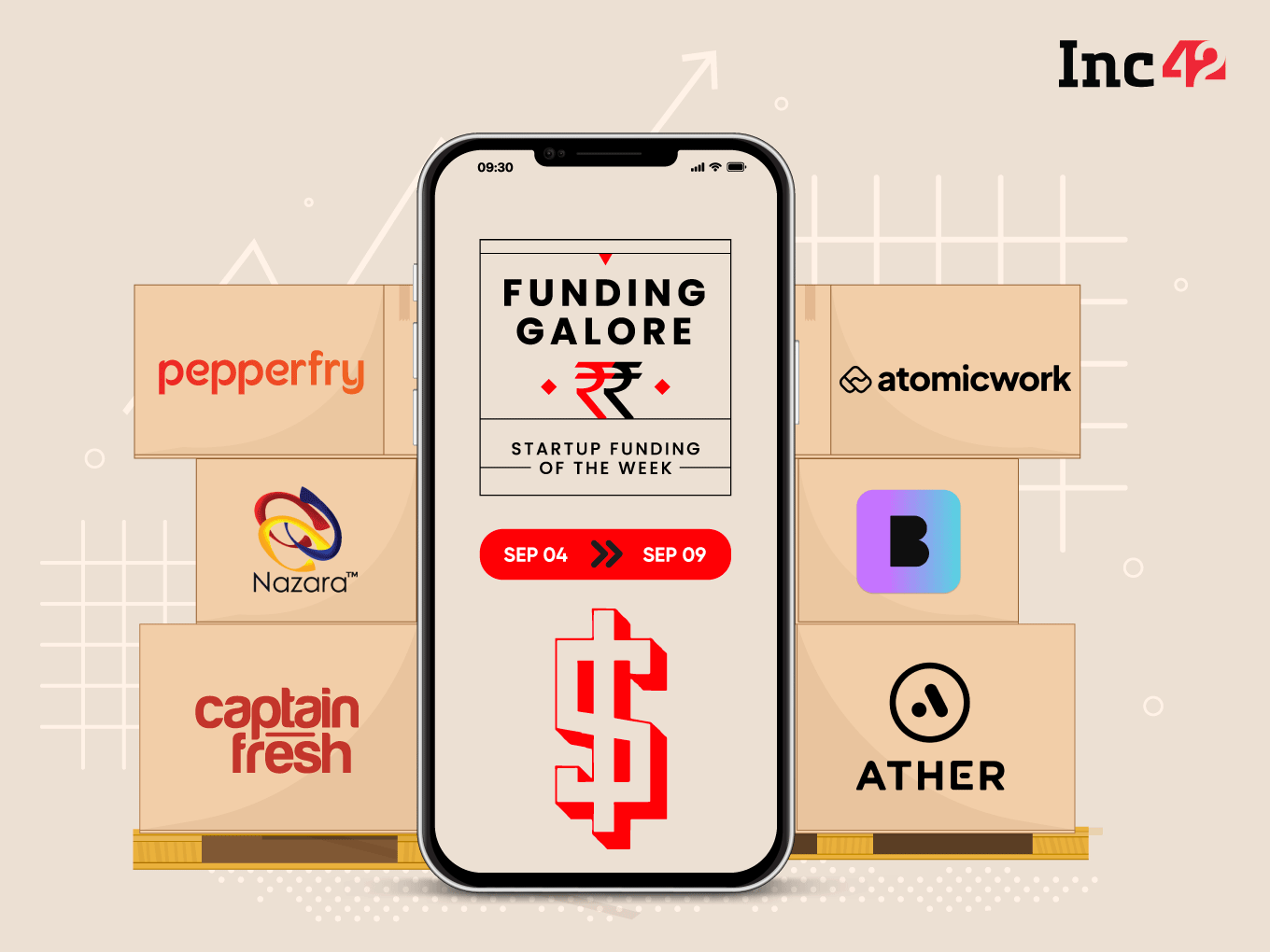
From Ather To Nazara — Indian Startups Raised $257 Mn This Week
The month of September began with a positive upswing in funding for Indian startups. Between September 4 and September 9, 2023, Indian startups collectively secured $257 Mn across 18 deals. This week’s funding further marks a significant increase of 394% compared to $52 Mn raised by Indian startups in the previous week. The week witnessed one mega deal, with Ather Energy bagging $108 Mn from Hero MotoCorp and GIC. Funding Galore: Indian Startup Funding Of The Week [Sept 4 – Sept 9] Date Name Sector Subsector Business Model Funding Round Size Funding Round Type Investors Lead Investor 6 Sept 2023 Ather Energy Cleantech Electric Vehicle B2C $108 Mn – Hero MotoCorp, GIC 7 Sept 2023 Nazara Games Media & Entertainment Gaming B2B B2C $61.4 Mn – Nithin Kamath, Nikhil Kamath, SBI Mutual Fund 5 Sept 2023 Pepperfry Ecommerce B2C Ecommerce B2C $23 Mn – – – 5 Sept 2023 Captain Fresh Agritech Market Linkage B2B B2C $20 Mn Series C Extension SBI Investments, Evolvence Capital, Tiger Global, Accel Partners, Matrix Partners India, Prosus Ventures 8 Sept 2023 Brine Fi Fintech Investment Tech B2C $16.5 Mn Series A Pantera Capital, Elevation Capital, Starkware, Spartan Group, Goodwater Capital, Upsparks Ventures, Protofund Ventures Pantera Capital 5 Sept 2023 Atomicwork Enterpristech Horizontal SaaS B2B $11 Mn Seed Blume Ventures, Matrix Partners, Storm Ventures, Neon Fund Blume Ventures, Matrix Partners 5 Sept 2023 Flipspaces Consumer Services Hyperlocal Services B2B $4 Mn Pre-Series B Prashasta Seth Prashasta Seth 7 Sept 2023 altM Cleantech Biotech B2B $3.5 Mn Seed Omnivore, Theia Ventures, Thai Wah Ventures, Sanjiv Rangrass, Neha Mudaliar, Maninder Gulati, Mirik Gogri, Paula Mariwala Omnivore 5 Sept 2023 Cirkla Ecommerce B2B Ecommerce B2B $3 Mn Seed Matrix Partners India, Stellaris Venture Partners Matrix Partners India, Stellaris Venture Partners 5 Sept 2023 Manastu Deeptech Spacetech B2B $3 Mn Pre-Series A Capital 2B, BIG Capital, E2MC, Sanchi Connect, Wealthy via Ventures, Roots Ventures, Riceberg Ventures, Spectrum Impact Capital 2B, BIG Capital, E2MC 4 Sept 2023 LISSUN Healthtech Fitness & Wellness B2C $1.3 Mn Seed IPV, Rainmatter Capital, Ivy Cap Ventures, WFC, GrowX Ventures IPV, Rainmatter Capital 4 Sept 2023 MappIs KOGO Enterprisetech Horizontal SaaS B2B $1 Mn – MapMyIndia 4 Sept 2023 Sploot Ecommerce D2C B2C $800K Seed Redstart Labs Redstart Labs 5 Sept 2023 Ellipsol Cleantech Solar Tech B2B B2C $301K Seed Capital A, Grand Anicut Fund Capital A 4 Sept 2023 PrintBrix Ecommerce B2B Ecommerce B2B – Seed EvolveX 6 Sept 2023 Madmix Ecommerce D2C B2C – Seed Prime Securities, Authum Investments, Team India Managers Prime Securities 4 Sept 2023 GoodGudi Ecommerce B2C Ecommerce B2C – Seed AC Ventures, April Ventures, Capinity Partners, Kunal Shah, Aprameya Radhakrishna AC Ventures 8 Sept 2023 Aaritya Technologies Fintech Investment Tech B2C – Seed Accel, Elevation Capital Source: Inc42 *Part of a larger round Note: Only disclosed funding rounds have been included Key Startup Funding Highlights Of The Week Bengaluru-based EV scooter manufacturing startup Ather Energy raised $108 Mn from Hero MotorCorp and GIC, making it the biggest fundraise of the week. Fueled by Ather’s fundraise, the electric vehicle (cleantech) sector emerged as the most funded this week, securing $111 Mn across three deals. Ecommerce reported the highest deal count, securing $26.8 Mn. Notably, one-third of all funding deals were in the ecommerce sector, accounting for six out of the total 18 deals reported this week. After a lackluster performance in the past few weeks, the first week of September saw a marked resurgence in investor interest for seed funding. Over $20 Mn was raised across ten seed-stage funding deals. Elevation and Matrix Partners were the busiest investors this week as they participated in two deals each. Startup Fund Launches This Week B2B SaaS-focused venture capital firm Pentathlon Ventures announced the launch of a second fund, Fund II, with a target corpus of INR 450 Cr. The fund plans to invest in 25 startups. Unicorn India Ventures announced the first close of its INR 1,000 Cr Fund III at INR 225 Cr. The VC firm is looking to close the fund by March 2024. The VC firm intends to invest in 25 startups from this fund. Soonicorn Ventures has received SEBI’s nod to launch an angel fund with a total corpus set at INR 250 Cr. It also has an additional INR 250 Cr green-shoe option. National Real Estate Development Council (NAREDCO) Maharashtra has announced the launch of INR 50 Cr RealTech Fund to back proptech startups. Anicut Capital has secured an investment of INR 50 Cr from the Small Industries Development Bank of India (SIDBI) for the Anicut Equity Fund. Startup Acquisitions Of This Week Delhi NCR-based omnichannel meat brand Good To Go acquired Chennai-based meat delivery startup TenderCuts in a distress sale. Reliance Retail Ventures Limited (RRVL) is acquiring a majority stake (51%) in Alia Bhatt’s children’s wear D2C brand Ed-a-Mamma. Oneglint Media Solutions, a photography solutions company, acquired Memzo – an AI-powered photo-sharing product. PowerSchool, a cloud-based software for K-12 education, acquired Chennai-based enterprise resource planning software startup Neverskip for an undisclosed amount. After raising $2.5 Mn, Hybrid Shifting Solution is acquiring Pikkol, an AI-based technology-enabled logistics brand. GOAT Brand Labs has completed the acquisition of the remaining stake in Frangipani, in line with the terms initially set during their majority acquisition in 2021. Other Major Developments From This Week Delhi NCR-based fintech unicorn BharatPe is in talks with existing investors to raise $100 Mn in a new round of funding. Bhavish Aggarwal’s Ola Electric has reportedly raised $140 Mn in a funding round led by Singapore’s sovereign wealth fund Temasek with participation from other existing investors. The Odisha government has approved a grant worth INR 1.28 Cr for 10 startups with an aim to boost innovation and entrepreneurship in the state. The post From Ather To Nazara — Indian Startups Raised $257 Mn This Week appeared first on Inc42 Media.
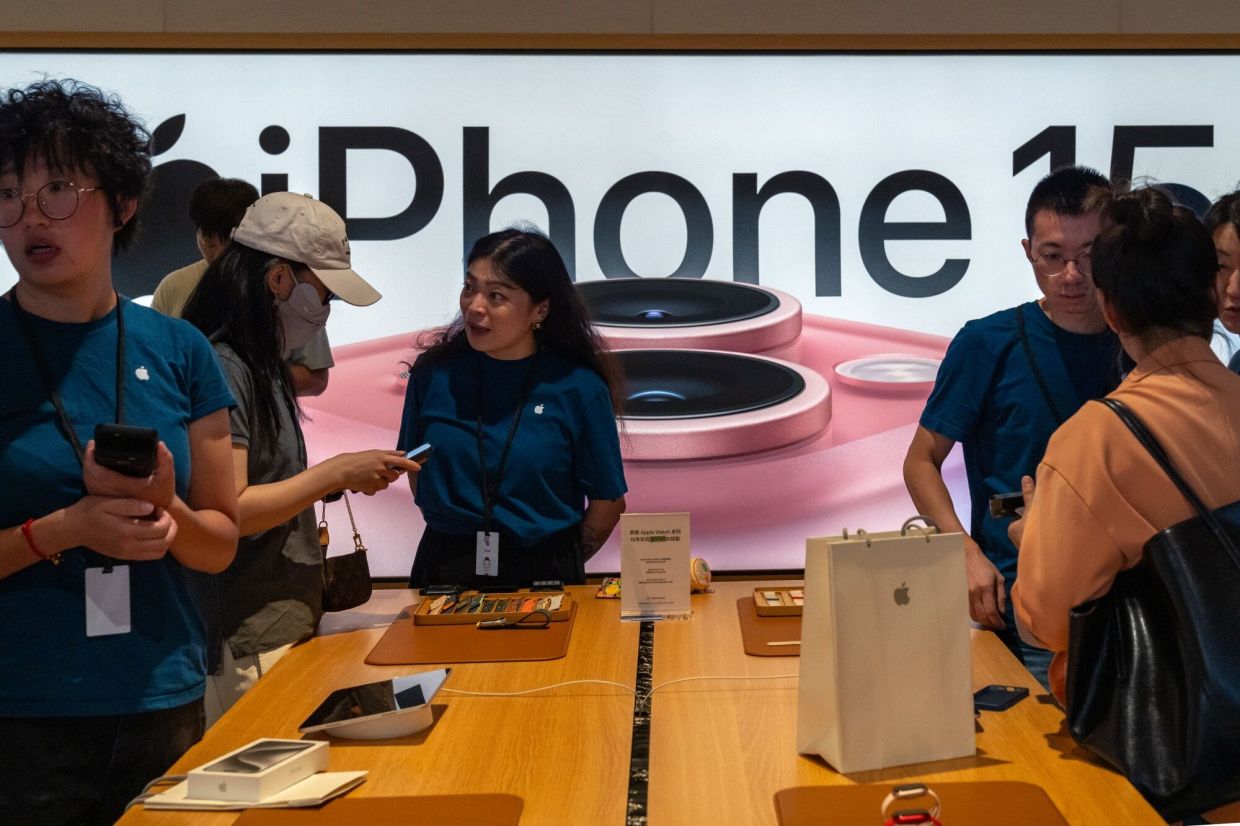
China’s ban on iPhone for government officials ‘hurts’ Apple
Amidst tensions between Beijing and Washington, China has decided to expand its ban on using iPhones in sensitive departments to government-backed agencies and state companies. Sources familiar with the matter told Bloomberg that several agencies have already instructed their staff not to bring iPhones to work, confirming an earlier report by the Wall Street Journal. The Chinese government plans to further extend this restriction to a number of state-owned enterprises and other government-controlled organisations, revealed the sources. As of now, there is no formal or written injunction in place, so it is uncertain how many companies or agencies will eventually adopt restrictions. Some firms could choose to prohibit Apple devices in the workplace, while others may instruct their staff to avoid their use altogether. The Chinese government has been working for years to eliminate the use of foreign technology in sensitive areas. This effort coincides with the country’s attempt to reduce its dependence on foreign software and circuitry, especially in America. The move could pose a significant challenge for Apple as the company heavily relies on China for revenue growth and manufacturing. China has been one of Apple’s largest markets, amounting to one-fifth of the company’s total revenue in the previous year, and the iPhone sales in China exceeded those in the United States in the last quarter. The shares of Apple dropped by 2.9 per cent on Thursday due to reports that China intends to expand the ban on iPhones for use in government-backed agencies and companies. Apple experienced its largest daily decline in over a month. The company lost approximately $200 billion in just two days, and its stock is currently performing worse than ever before in recent times. Huawei could be the reason behind iPhone ban in China Bank of America analysts noted in a report that the possibility of a ban on iPhones in the US coincides with the launch of a new high-end smartphone by Chinese manufacturer Huawei, the Mate 60 Pro. The US government has opened an investigation into Huawei’s latest smartphone, which was recently launched. This comes after the smartphone was found to be equipped with an advanced 7nm chip produced by Chinese chipmaker SMIC. Despite the US’ restrictions on exporting advanced chip-making machinery to China, the chip offers connectivity speeds that are comparable to those of other 5G-enabled chipsets, while the curb should have pushed China’s chip industry back a decade down the line. National Security Adviser Jake Sullivan has stated that the US requires further information about the new chip’s nature and composition to determine if the parties involved have evaded restrictions on the export of semiconductors. The timing of the ban is seen as “interesting” by the analysts.
US chip giant Nvidia partners with Tata Group: What the deal means for TCS, Tata Motors and Tata Communications
US chip giant Nvidia announced a collaboration with Tata Group to deliver computing infrastructure and platforms for developing artificial intelligence-based solutions. Nvidia and Tata Group will also work together to build an AI supercomputer powered by the next-generation Nvidia GH200 Grace Hopper super chip. This partnership will also catalyze the AI-led transformation across Tata Group companies ranging from manufacturing to consumer businesses, Nvidia said in a statement. What the deal means for TCS, Tata Motors and Tata Communications The US-based chipmaker is tying up with Tata Group companies — Tata Motors, Tata Consultancy Services and Tata Communications. As per the deal, NVidia will reportedly work with Tata Motors to deploy AI across design, styling, engineering, simulation testing and autonomous vehicle capabilities. The company will help Tata Communications build AI infrastructure. TCS will utilize Nvidia’s AI infrastructure and capabilities to build and process generative AI applications as well as upskill its 600,000-plus workforce. Nvidia CEO and Tata Group chairman on the deal “The global generative AI race is in full steam,” said Jensen Huang, founder and CEO of Nvidia. “Data centers worldwide are shifting to GPU computing to build energy-efficient infrastructure to support the exponential demand for generative AI. We are delighted to partner with Tata as they expand their cloud infrastructure service with NVIDIA AI supercomputing to support the exponential demand of generative AI startups and processing of large language models.” Huang added. Commenting on the collaboration N Chandrasekaran, chairman of Tata Sons, said, “The advancements in AI have made focus on AI a central priority in governments, industries and society at large. The impact of AI and machine learning is going to be profound across industries and every aspect of our lives. Our partnership with NVIDIA will democratize access to AI infrastructure, accelerate build-out of AI solutions and enable upgradation of AI talent at scale. Tata Group’s presence across sectors coupled with NVIDIA’s deep capabilities offers numerous opportunities for collaboration to advance India’s AI ambition.” Earlier in the day, Reliance and Nvidia announced partnership to create AI language models and generative apps for millions of Reliance Jio users.