
Happy International Women’s Day 2025: March 8 is a day to celebrate the incredible women who inspire, uplift, and drive change. This Day is more than just a celebration—it’s a moment to recognize and appreciate the achievements of women across all fields. This year’s theme, “For ALL Women and Girls: Rights. Equality. Empowerment.”, highlights the importance of fairness and inclusion for everyone. Take a moment today to honour the women in your life. Share your appreciation with heartfelt messages, fun WhatsApp stickers, or expressive GIFs. Not sure how? We’ve got you covered! Here’s a simple guide to help you download and send them effortlessly on Meta-owned platforms like WhatsApp and Instagram. How To Download And Send Women’s Day Stickers On WhatsApp Step 1: Open WhatsApp and select a chat. Step 2: Tap the emoji icon and go to the sticker section. Step 3: Click on “Get More Stickers” to explore new options. Step 4: Search for “Women’s Day Stickers” in the app store and download your favorite pack. Step 5: Start sharing! Select a sticker and send it to your loved ones to celebrate Women’s Day. How To Send Women’s Day GIFs On WhatsApp Step 1: Open WhatsApp and go to a chat. Step 2: Tap the emoji icon and select the GIF option. Step 3: Type “Women’s Day” or “Happy Women’s Day” in the search bar. Step 4: Browse and select a GIF from the available options. Step 5: Tap to send and share the Women’s Day joy instantly! How To Send Women’s Day Wishes On WhatsApp Step 1: Look for Women’s Day quotes and images on Google. Step 2: Download your favourite images directly from search results. Step 3: Find Women’s Day-themed images on third-party apps from the Play Store or App Store. Step 4: Open a chat and send the downloaded image with a heartfelt message. How To Create And Share Women’s Day Stories On Instagram And Facebook Step 1: Open Instagram and tap “Your Story.” Step 2: Capture or select a Women’s Day-themed image or video. Step 3: Enhance it with GIFs, stickers, and effects. Use the search bar to find Women’s Day elements. Step 4: Add a caption or greeting and customize the font and colour. Step 5: Tap “Share to Story.” If linked, it will also appear on Facebook. Otherwise, upload it manually to Facebook Stories.

WhatsApp To Roll Out AI Feature To Generate Group Profile Pictures; Check What’s New | Technology News
WhatsApp’s AI-Powered Profile Picture Generator: Since the launch of Meta AI on WhatsApp, the app has been steadily enhancing its in-app features. The Meta-owned platform is likely to launch a new AI-powered profile picture generator for group chats. According to WABetaInfo, this feature is currently being tested with a select group of beta users, allowing them to create personalized and unique group icons using Meta AI. It is important to note that the users with access to Meta AI can now create unique and customized group icons, adding a visually distinctive touch to their chats. The much anticipated AI-powered feature is especially helpful for those who don’t have a suitable image for their group, enabling them to generate a relevant icon effortlessly. Some WhatsApp beta testers on Android already have access to AI-generated group icons. Interestingly, the feature has also started appearing on the stable version for some Android users who aren’t part of the beta program. However, there’s no official confirmation on when it will be available for iPhone users, though a wider rollout is expected soon. WhatsApp’s AI-Powered Profile Picture Generator: What’s New WhatsApp’s new AI-powered tool lets users create custom group icons by describing their desired image through a text prompt. While personal profile pictures remain unchanged, this feature allows groups to generate unique, theme-based visuals reflecting their interests or vibe. AI can craft images based on user descriptions, and there may also be preset themes like futuristic tech, fantasy, or nature-inspired designs, making customization seamless and engaging. WhatsApp: Voice Message Transcripts Moreover, the Meta-owned platform WhatsApp has introduced voice message transcripts in India, allowing users to convert voice notes into text. This feature makes it easier to understand audio messages without needing to listen, offering added convenience in various situations.
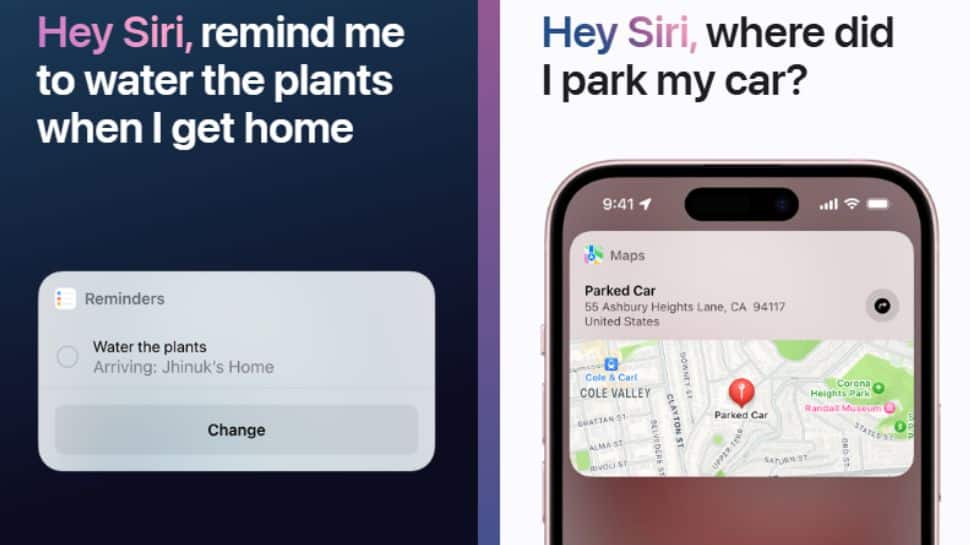
Apple Delays Some AI Improvements To Siri Until 2026- All You Need To Know | Technology News
Apple AI Upgrades In Siri: Apple has postponed the rollout of certain highly anticipated AI upgrades to Siri, its voice assistant, pushing the release to 2026 instead of the previously expected 2025 timeline. The new AI upgrade would supercharge Siri with the ability to take action inside other apps until next year. Apple has been enhancing Siri’s personalization by improving its ability to understand user context and execute tasks across apps. However, the company has not disclosed a reason for the delay. Last year, Apple unveiled “Apple Intelligence,” a suite of AI-driven features that included email rewriting and inbox summarization. In a statement, Apple acknowledged the delay, stating that it has “been working on a more personalized Siri, giving it more awareness of your personal context, as well as the ability to take action for you within and across your apps. It’s going to take us longer than we thought to deliver on these features and we anticipate rolling them out in the coming year.” AI-Powered Siri: What’s New The anticipated capabilities include seamless app integration, enabling Siri to access and utilize on-device data for task completion. Siri is also expected to offer context-aware responses, such as retrieving recommended podcasts or extracting flight details from messages. Adding further, Apple is focusing on enhanced privacy and security, ensuring that its AI infrastructure processes data securely on its chips. Apple’s Siri Upgrade Vs Gemini AI model Apple’s Siri upgrade comes at a time of growing competition in the AI space. Alphabet’s Google has integrated its Gemini AI model into its voice assistant, while Amazon has enhanced Alexa with new AI capabilities, offering premium features for $19.99 per month or free for Prime subscribers. Apple’s Cloud Evolution Apple is developing a large cloud computing infrastructure powered by its own chips to uphold its privacy standards while enhancing AI features. The company reports that Siri handles 1.5 billion user requests daily.
Want to Record Calls On Your iPhone? Follow These Simple Steps | Technology News
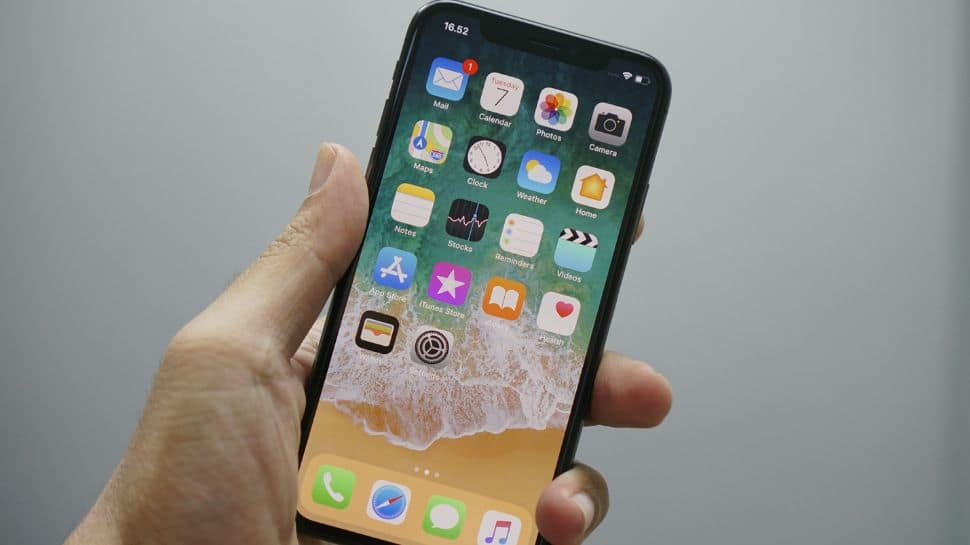
New Delhi: Apple has introduced a much-requested feature in iOS 18.1—built-in call recording with transcription. iPhone users can now easily record and transcribe phone calls without relying on third-party apps. This long-awaited addition was previously available only on Android which makes it more convenient to save important conversations, interviews, or personal discussions for future reference. How to Use the Call Recording Feature in iOS 18.1 Update Your iPhone: Ensure your device is running iOS 18.1 or later. Check for updates by going to Settings > General > Software Update. Enable Call Recording: Open Settings > Apps > Phone. Toggle on the Call Recording option. Start Recording a Call: Make or answer a call as usual. A waveform icon (sound wave) will appear in the top left corner of the screen. Tap the waveform icon to start recording. An automated voice notification will inform both parties that the call is being recorded. Stop and Save the Recording: The recording will automatically save to the Notes app when the call ends. To stop recording manually, tap the red Stop Recording button or simply end the call. This feature makes it easier for users to record conversations while keeping things transparent. The automatic transcription adds even more convenience by creating a written record of discussions. Although Apple has built-in privacy protections, users should still follow legal and ethical guidelines when recording calls.

India Offers Immense Potential For Telecom Services Expansion | Technology News
New Delhi: The Indian telecom industry is experiencing remarkable growth, both domestically and internationally, and there remains immense potential for expansion, according to the Cellular Operators Association of India (COAI). Lt Gen Dr SP Kochhar, Director General, COAI, said with approximately 1,187 million subscribers, urban tele-density has reached 131.01 per cent, while rural areas lag at 58.31 per cent. “Despite this disparity, there remains immense potential for expansion across both sectors. The roll-out of 5G is progressing rapidly, facilitated by artificial intelligence (AI), indigenous data sets, and the establishment of localised data centres,” according to Kochhar. The Indian government has implemented financial measures such as goods and services tax refunds and the removal of bank guarantees. Additionally, significant research is underway to develop cost-effective 5G handsets priced between Rs 6,000 and Rs 7,000. “Furthermore, satellite technology is being introduced to provide connectivity to remote regions where terrestrial networks are unfeasible,” Kochhar said in a statement. The Indian government has also prioritised domestic telecom manufacturing to reduce dependency on imports and position the country as a global hub. According to the COAI, policies such as the production-linked incentive scheme have attracted significant investments, fostering self-sufficiency and boosting export potential. India has emerged as a leader in data consumption, despite being one of the most cost-competitive telecom markets globally. The telecom sector has also adopted a two-pronged approach to mitigating cyber fraud and spam. AI-driven warning systems have been deployed to alert subscribers to potential scams, with significant success in blocking fraudulent calls. With a thriving domestic market and increasing global prominence, India’s telecom industry is poised for unprecedented growth, according to the COAI director general. Last month, state-owned telecom major Bharat Sanchar Nigam Limited (BSNL) reported a profit of Rs 262 crore in the third quarter of the current financial year, marking its first return to profitability since 2007. This milestone reflects the company’s focus on innovation, aggressive network expansion, cost optimisation, and customer-centric service improvements. The government’s support through strategic revival initiatives, including spectrum allocation, and capital infusion have played a key role in bolstering its operations.

Worried Someone Else Is Using Your Gmail? Here’s How To Find Out | Technology News
New Delhi: Gmail has become an essential part of our personal and professional lives. We use it to store our important documents, emails and other valuable data. Many users often forget to log out after use with the convenience of accessing it from any device. This small oversight can put your account at risk, making it vulnerable to unauthorized access and data theft. Here’s how you can check if your Gmail is logged in elsewhere and secure your account before it’s too late. If you often log into your Gmail account and forget which devices you’ve used. With these steps you can easily check where your account is logged in. How to Check Where Your Google Account is Logged In? Open Gmail – Click on your profile picture or Gmail ID in the top right corner. Go to Google Account Settings – Select “Manage your Google Account” from the dropdown. Access Security Settings – Navigate to the “Security” tab on the new page. Check Login Activity – View the list of devices where your account is logged in and sign out of any unfamiliar ones. Another Way to Check Where Your Google Account is Logged In: Login to Your Gmail – Scroll down to the bottom of the page. Check Last Account Activity – Click on “Last account activity.” View Login Details – A list of recent logins will appear. Click “Details” to see the times and locations. Log out from any unfamiliar sessions if needed.

Is Someone Else Using Your WhatsApp Account? Here’s How To Detect And Remove Unknown Devices | Technology News
WhatsApp Security: WhatsApp, a popular instant messaging platform used for private chats, calls, and important conversations with friends and family, continuously updates its features to enhance user experience and engagement. Have you ever noticed unusual activity on your WhatsApp—messages you don’t remember sending, online status changes at odd hours, or unrecognized devices linked to your account? With WhatsApp being a primary mode of communication for millions, security breaches can be alarming. Unauthorized access can lead to privacy violations, data theft, and even financial fraud. If you suspect someone else is using your WhatsApp, it’s crucial to act fast. However, WhatsApp’s parent company Meta ensures end-to-end encryption for messages and calls, hackers or unauthorised users can still access your account if they have your login details. To avoid this, there’s an easy way to remove unknown devices if your WhatsApp has been compromised. Who’s Using Your WhatsApp? WhatsApp has a built-in Linked Devices feature that lets you see where your account is logged in. If you spot a device you don’t recognise, you can remove it right away. What Is Linked Devices Feature WhatsApp’s Linked Devices feature lets you use your WhatsApp account on multiple devices, including your phone, computer, or tablet. You can link up to four devices at once to your primary phone. How To Remove Unknown Devices From WhatsApp Step 1: Open WhatsApp on your smartphone. Step 2: Tap the three-dot menu in the top right corner. Step 3: Select “Linked Devices” from the menu. Step 4: View the list of all devices where your WhatsApp account is active. Step 5: Check device details like Android, Windows, or browser sessions. Step 6: Remove unfamiliar devices by tapping on them and selecting “Log Out.” How To Secure Your WhatsApp Account Step 1: Go to Settings > Account > Two-step verification and set up a PIN for extra security. Step 2: Ensure no unknown devices are logged in under Linked Devices and remove any suspicious ones. Step 3: Avoid clicking on unknown links or sharing personal information with unverified contacts. Step 4: Set up a strong password, fingerprint lock, or Face ID to prevent unauthorized access to WhatsApp. Step 5: Always update to the latest version to protect against security vulnerabilities and new threats.

IT Minister Ashwini Vaishnaw Launches AI Compute Portal And AIKosha, 9 Times Larger Than DeepSeek | Technology News
AI Compute Portal: Electronics and IT Minister Ashwini Vaishnaw launched the AI Compute Portal in New Delhi. It is a digital platform providing researchers, startups, and government agencies access to high-performance GPUs and computing resources for AI tasks. At the launch, the Union Minister announced the establishment of 27 AI data labs and noted that the government is reviewing applications for developing foundational AI models. He highlighted India’s rapid progress in AI computing and semiconductor infrastructure to strengthen its digital economy. Adding further, the Minister also unveiled AIKosha, a comprehensive dataset platform providing users with resources, tools, and expert guidance to transform ideas into industry-ready solutions. Launched – AI Kosha A platform for India’s talented researchers, entrepreneurs and Startups providing them the right compute, datasets, tools and secure sandbox environment to build state-of-the-art AI applications and solutions. Explore it as https://t.co/BhrA2fQCjw pic.twitter.com/4x6C0mdVwJ — Ministry of Electronics & IT (@GoI_MeitY) March 6, 2025 IndiaAI Mission And GPU Marketplace With the approval of the IndiaAI Mission in 2024, the government allocated Rs 10,300 crore over five years to boost AI capabilities. A key initiative is a high-end computing facility with 18,693 GPUs, making it one of the largest AI infrastructures globally. This capacity is nearly nine times that of DeepSeek and about two-thirds of ChatGPT’s. Launched – IndiaAI Compute Portal Unleash the potential of advanced GPU computing with #IndiaAI Compute Portal, a platform that makes high-end computing both accessible and affordable—empowering your research & innovation. Learn more at Explore it as https://t.co/Gi6rIY0tIx pic.twitter.com/7aNXUsuGEr — Ministry of Electronics & IT (@GoI_MeitY) March 6, 2025 The first phase has deployed 10,000 GPUs, with more to follow, enabling AI solutions tailored to Indian languages and contexts. India has also launched an open GPU marketplace, expanding access to high-performance computing for startups, researchers, and students. AI Infrastructure Unlike many countries where AI infrastructure is dominated by large corporations, this initiative empowers smaller players to innovate. The government has selected 10 companies to supply GPUs, ensuring a strong and diversified supply chain. To boost domestic capabilities, India plans to develop its own GPU within three to five years, reducing dependence on imports. A new common compute facility will soon launch, offering researchers and startups access to GPU power at a highly subsidized rate of Rs 100 per hour, far below the global cost of $2.5 to $3 per hour. Semiconductor Manufacturing In parallel, India is advancing semiconductor manufacturing, with five semiconductor plants under construction, as per the IT and Electronics ministry. These developments will not only support AI innovation but also reinforce India’s position in the global electronics sector. (Inputs From ANI)

YouTube Music And Premium Surpass 125 Million Subscribers Globally Including Trial Users | Technology News
New Delhi: YouTube, owned by Google, announced on Thursday that it has surpassed 125 million subscribers for its Music and Premium services worldwide, including trial users. The platform emphasized its commitment to giving subscribers more ways to enjoy their favourite content. It continues to roll out new features to improve the experience across different devices. Beyond enhancing user experience, YouTube Music and Premium also provide additional revenue opportunities for content creators and partners. YouTube Creators YouTube announced last year that over one in four creators participating in its ad-sharing program are now earning revenue through its short-form video service, shorts. YouTube Revenue Since launching revenue sharing on shorts last year, over 25 per cent of channels in the YouTube Partner Programme (YPP) are now generating earnings through this revenue stream. The streaming platform revealed that over 80 per cent of creators who joined the YPP through shorts eligibility are now also earning through other monetisation features. These include long-form advertising, fan funding, YouTube Premium, BrandConnect, Shopping, and more. “This means that Shorts is opening the door for creators to earn in other ways on the platform, and they’re seeing the dividends,” the company informed. YouTube’s Massive Payout To Creators According to reports, YouTube has paid $70 billion to creators, artists and media companies over the last three years. The streaming platform stated that with Shorts receiving an average of over 70 billion views per day and new monetisation opportunities emerging the shorts community is flourishing, bringing fresh creativity and new voices to the platform. The growth in subscriptions reflects the increasing demand for ad-free viewing, offline downloads, and exclusive content, according to an official statement. Over the years, YouTube has expanded its services to cater to a global audience, ensuring a seamless and high-quality experience for both music lovers and premium content consumers. (With IANS Inputs)

Samsung To Release One UI 7 Update In April With AI Features For Galaxy Devices – Details | Technology News
Samsung One UI 7 Update: South Korean giant Samsung has officially confirmed that the Android 15-based One UI 7 update will begin rolling out to the Galaxy S24, Galaxy S23, Z Fold 6, and Z Flip 6 models. However, the eligible Galaxy devices will be able to access the new update next month in April. The company has already released the beta version and will expand the public beta version to Galaxy Z Fold 6 and Z Flip 6 this week in a limited region that will include India, Korea, the UK, and the US. The users can apply to join the beta program via Samsung Members. To recall, Samsung officially released the One UI 7 update with the Galaxy S25 series on January 22. The Samsung One UI 7 update brings a refreshed interface, enhanced features, AI-powered upgrades, and a more personalized user experience. It is important to note that Samsung releases the new One UI update between 1 and 3 months after Google releases the new Android. Samsung One UI 7 Update: AI Features Samsung’s One UI 7 introduces a range of visually appealing UI enhancements, including the AI-powered Now Bar and Now Brief, which analyze user interactions with apps. The new update update also debuts a redesigned Quick Settings Panel, now distinct from the notification panel. Adding further, the AI-driven features like an improved Circle to Search, Object Eraser, AI Writing Tools, and Interpreter elevate the smartphone experience, bringing the power of AI to users’ fingertips. Samsung One UI 7 Update: Security Features Samsung’s One UI 7 update strengthens security with the Knox Matrix system, providing a clearer and more user-friendly way to manage protection across connected devices. The update also simplifies data recovery with its Enhanced Data Protection feature. If users lose access to a trusted device, they can securely transfer their Samsung Cloud data to a new one by verifying the lock screen (PIN, pattern, or password) of the old device. Samsung One UI 7 Update: Secure Wi-Fi Networks The update also brings passkey login for Samsung Accounts, providing a more secure and convenient sign-in method. Additionally, the new Maximum Restrictions feature enhances network security by blocking 2G services and preventing automatic reconnection to less secure Wi-Fi networks. Samsung One UI 7 Update: Malicious Apps And Threats To protect against malicious apps, the Safe Install feature, along with Auto Blocker, warns users about downloads from untrusted sources. Adding further, One UI 7 enhances security for Galaxy devices with exclusive features, including the new Identity Check, which adds an extra layer of protection if a PIN is compromised. This complements existing tools like Theft Detection Lock, Offline Device Lock, and Remote Lock.